It’s 5:40 in the morning. You are standing at 4,130 meters with a cup of ginger tea warming your body. The sun hasn’t risen yet, but it’s already lighting the top of Annapurna I, and one by one the peaks around you are turning gold. You walked all the way here.
Most websites will tell you that you need ten days or more to see this. You don’t. You can do the Annapurna Base Camp trek in 6 days, and in 2027 more and more trekkers are choosing exactly that. It’s a fast schedule, so it needs some planning, but it works.
In this guide, we’ll take you through the route day by day, what it really costs, how hard it is, and who should add a few extra days.
Annapurna Base Camp Trek 6 Days at a Glance
| Duration | 6 days, 5 nights on the trail, starting and ending in Pokhara |
| Highest point | Annapurna Base Camp at 4,130 m |
| Walking per day | Roughly 4 to 7 hours |
| Difficulty | Moderate to challenging |
| Best Season | Spring (March - May) and Autumn (September - November) |
| Permits | Annapurna Conservation Area Permit and TIMS Card, which cost around US$40 together |
| Guide | A licensed guide is expected for international trekkers |
Can You Really Do Annapurna Base Camp in 6 Days?
Yes, if you are reasonably fit, start from Pokhara with a jeep ride covering the first phase. A short Annapurna Base Camp trek like this means 4 to 6 hours of walking a day and one big day on day 03. It’s realistic, but it leaves little room for rest days, so it suits healthy walkers more than complete first-timers.
Why do most itineraries run longer? Because extra days give your body time to adapt to thin air. When you squeeze the trek into 6 days, you save time but lose some of the comfort. For plenty of travelers, that’s a fair option, as long as you know about it before you go.
This short Annapurna Base Camp trek is a good fit if you have about a week of leave, walk or hike regularly, and are happy to go slowly on the climb. If you have never been above 3,000 meters, or you get headaches easily, we suggest 8 days or more. You enjoy it more, and you’ll be safe too.
6-Day Annapurna Base Camp Itinerary | Day by Day
The route goes from Pokhara up to Chhomrong through bamboo into the Annapurna Sanctuary, and back down past the Jhinu hot springs. You spend two days climbing in, one day reaching base camp, and three days walking out. Here’s how each day feels.
Day 01: Drive from Pokhara to Nayapul and trek to Chhomrong, 3 to 4 hours, plus the jeep.
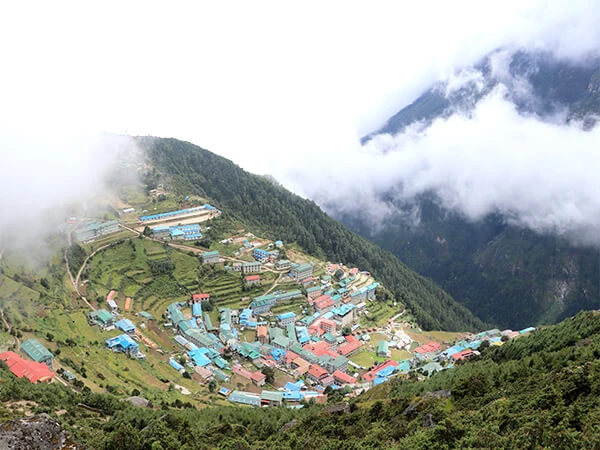
You’ll leave Pokhara early and take a jeep toward Nayapul, going as far as the road allows that season. Your guide will confirm the drop-off point before you travel. From there, you walk up to Chhomrong, a Gurung village on a ridge. If the clouds clear in the evening, Machhapuchare, the “Fishtail” peak, appears right in front of your teahouse.
Day 02: Chhomrong to Himalaya Hotel, 6 to 7 hours
This is your first real test. You walk down the famous stone staircase, cross a river, and then climb steadily through Sinuwa, Bamboo, and Dovan. Along the way, you pass waterfalls and forests of bamboo and rhododendron. Start early, eat a proper lunch, and don’t try to keep up with faster walkers. Everyone ends up at the same teahouse anyway.
Day 03: Himalaya to Annapurna Base Camp, 5 to 6 hours.
Today the landscape changes completely. You pass Deurali and Machhapuchare Base Camp; the trees disappear, and the air turns cold and thin. Then, the valley opens up, and you are standing inside the Annapurna Sanctuary, surrounded by snow peaks on every side. You’ll usually arrive in the afternoon. For the rest of the day, put on warm layers, eat dinner, and sleep early.
Day 04: Sunrise at ABC, then down to Bamboo, 6 to 7 hours.
Wake up before dawn, wear proper clothing, and step outside. This is the moment you came for. Watch the first light touch Annapurna I, Hiunchuli, and Machhapuchare, take your photos, have breakfast, and start heading down. Going down is faster, but it’s tough on the knees, so use your trekking poles. And you’ll feel better with every hundred meters you lose.
Day 05: Bamboo to Jhinu Danda, 6 to 7 hours.
This is the day we mentioned earlier. After a long morning, you have to climb back up to Chhomrong, which means hundreds of stone steps on tired legs. Many trekkers find it harder than the walk to base camp. Take it slowly and rest at the top. Then it’s downhill to Jhinu, where natural hot springs by the river await. After five days of walking, rest at the natural hot springs.
Day 06: Jhinu to Nayapul and back to Pokhara, 2 to 3 hours, plus a 1.5 to 2 hour drive.
The last day is easy. You walk out, drive back, and by lunchtime, you are beside the lake in Pokhara with some cold drinks in your hand. You have just done the Annapurna Base Camp Trek in 6 days, which many travelers complete in around 10 days.
Distance, Altitude, and Walking Hours Each Day
On this schedule, you walk 4 to 7 hours a day, and you sleep between 820 meters and 4,130 meters. Your highest night is on day three. The table below gives approximate figures, so treat them as a guide. Your own pace, the weather, and the trail conditions will change the real times.
| Day | Route | Sleeping Altitude | Walking (approx) |
| 1 | Drive from Pokhara to Nayapul and then trek to Chhomrong | 2,170 m | 3 to 4 hours and a jeep drive |
| 2 | Chhomrong to Himalaya | 2,920 m | 6 to 7 hours |
| 3 | Himalaya to Annapurna Base Camp | 4,130 m | 5 to 6 hours |
| 4 | ABC to Bamboo | 2,310 m | 6 to 7 hours |
| 5 | Bamboo to Jhinu Danda | 1,780 m | 6 to 7 hours |
| 6 | Jhinu to Nayapul to Pokhara | 820 m | 2 to 3 hours drive + drive |
How Difficult is the Annapurna Base Camp Trek for 6 Days?
The trek is moderate, but a 6-day schedule makes it feel harder. You don’t need climbing skills or special equipment. You do need stamina, because most of the trail is stone steps, both up and down, for several hours a day. A healthy person who walks regularly can do it. Someone who rarely exercises will struggle.
The hard parts aren’t where most people expect. They are the long staircase climbs on day 2, the thin air on day 3, and the descents on day 4 and 5. If you really dislike stairs, be honest with yourself about that before you book.
What about beginners? Many first-timers reach base camp, but we usually suggest taking 8 to 10 days. If six is all you have, a little preparation makes a big difference.
- Start training 6 to 8 weeks ahead, with two or three hikes a week.
- Add one long walk of 4 to 5 hours with a loaded daypack.
- Practice stairs and hills, especially walking downhill.
- Break in your boots before you fly. New boots and seven hours days don’t go well together.
Altitude Sickness on the ABC Trek: What You Need to Know
Altitude sickness can affect anyone above 2,500 meters; however, it depends on how fit the individual is. On a 6 day itinerary, the risk is higher than on a slower one, so it’s worth taking seriously. The good news is that it’s manageable. Walk slowly, drink plenty of water, and go down if symptoms get worse.
Watch for a headache that won’t go away, loss of appetite, dizziness, unusual tiredness, poor sleep, or being much more out of breath than the people around you. Mild symptoms are common at altitude.
Here’s how to lower your risk on this itinerary.
- Walk slowly, especially on day 3. Being last in the group is also completely fine.
- Drink water and skip alcohol on the way up.
- Let your guide check on you each evening. They carry a safety kit like a pulse oximeter, first-aid kit, and emergency protocols.
- Talk to your doctor before you travel, particularly if you have heart, lung, or blood-pressure conditions, and ask where altitude medication makes sense for you.
- If you want a gentle option, sleep at Machhapuchare Base Camp on day 3, and go up for sunrise. Adding an extra day is still the better option, though.
The rule we suggest for everyone is simple. If your symptoms are getting worse, go down. No sunrise photo is worth a medical emergency. The mountain isn’t going anywhere, and you can always come back.
Annapurna Base Camp Trek Cost in 2027
For a 6 day Annapurna Base Camp Trek, expect to spend roughly US$315 to US$450 on the essentials: permits, a licensed guide, food, and lodging on the trail. Add transport, insurance, extras, and a realistic total is about US$450 to US$700 per person. These are planning ranges, not quotes, and they change with the season.
| Item | Typical range (US$) | What to know |
| ACAP and TIMS Permit | About US$40 per person | ACAP is NPR 3,000 |
| Licensed Guide | US$25 to 35 per day, depending on the experience | About US$150 to US$210 for 6 days. Tips need to be paid separately |
| Food and teahouse lodging | US$25 to 40 per day | About US$125 to 200 over five days on the trail. Prices rise with altitude |
| Jeep from Pokhara to the trailhead and back | Depends on whether you choose to book a private or a shared one | Depends on group size and how far the road reaches |
| Porter | US$20-25 for each day. | Worth it if you have knee problems or prefer a lighter pack |
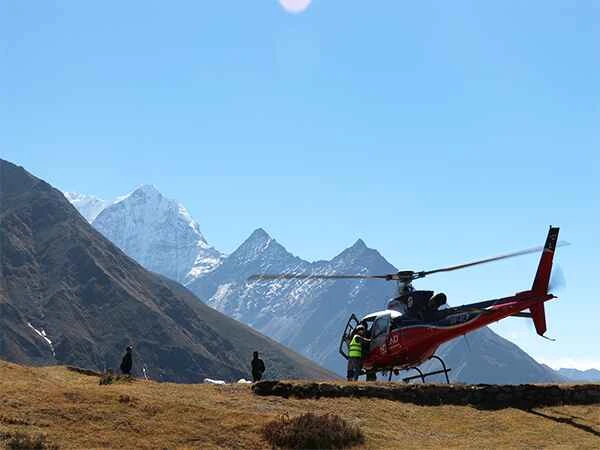
| Travel insurance | Depends on the policy you choose | Must cover trekking to above 4,500 m and helicopter evacuation |
| Kathmandu to Pokhara | Varies | By bus or a short flight. |
Don’t forget the small extras. Hot showers and phone charging cost extra money in most teahouses, and prices go up as you climb. Wi-Fi is slow and paid. You also want snacks, tips for your guide, and a little cash for the hot springs. There are no ATMs on the trail, so carry enough rupees.
ABC Trek Permits and Guide Rules
For this trek, you need the Annapurna Conservation Area Permit (ACAP). It costs around NPR 3,000. International trekkers must also hike with a licensed guide. If you book through an agency, they normally handle all of this for you.
The TIMS rule is a little confusing. Some sources say the independent TIMS Card was abolished in 2023 and that checkpoints now check only the ACAP. Others still list both. Fees also differ for SAARC Nationals, and Nepali citizens. That’s why we confirm the current rule before every trip.
Have these ready: a valid passport and a copy, two passport-size photos, your travel dates, and your insurance details. Permits are usually arranged in Kathmandu or Pokhara from the Nepal Tourism Board Office.
As for hiring a guide for the Annapurna Base Camp trek, it’s mandatory for international travelers and also a good idea to have one. They monitor the weather conditions, watch your health, and know which teahouse has the warmest dining rooms.
Best Time for Annapurna Base Camp Trek in 2027
Choosing the best time for the Annapurna Base Camp trek is something that needs careful planning. Spring and autumn are the most preferred seasons; early winter is also possible for trekking. Both seasons bring stable weather and clear mountain views. Monsoon brings rain, leeches, and clouds.
| Season | Months | What to expect |
| Spring | March to May | Rhododendron forests in bloom, warmer days, and good views. Afternoon cloud builds later in the season. |
| Monsoon | June to August | Heavy rain, leeches, cloudy views, and a higher risk of landslides. Not recommended for a short plan. |
| Autumn | Late September to November | Crisp, clear skies, and the most reliable views. This is also the busiest season. |
| Winter | December to February | Very cold at high altitude. Snow on the upper trail can limit access to base camp. |
Spring and autumn dates fill up sooner than the rest of the year, so book as soon as your holiday is confirmed. Heavy snow between Deurali and base camp can close the upper trail at any time, and your guide will make the call on the day.
How to Reach Trailhead from Kathmandu and Pokhara
Almost everyone starts the Annapurna Base Camp trek from Pokhara. From Kathmandu, you can take a tourist bus (about 6 to 8 hours) or a short flight (about 25 to 30 minutes). From Pokhara, a jeep or bus takes you to Nayapul in roughly 1.5 to 2 hours, and the jeep carries on as far as the road allows.
If your time is very tight, fly from Kathmandu to Pokhara and keep a spare day on either side. Flights get delayed by weather, and one missed connection can delay your first day. If you can, arrive in Pokhara the evening before you start. You can sort your permits, rent gear, and get a proper night’s sleep before the early departure.
Teahouses and Food on the Trail
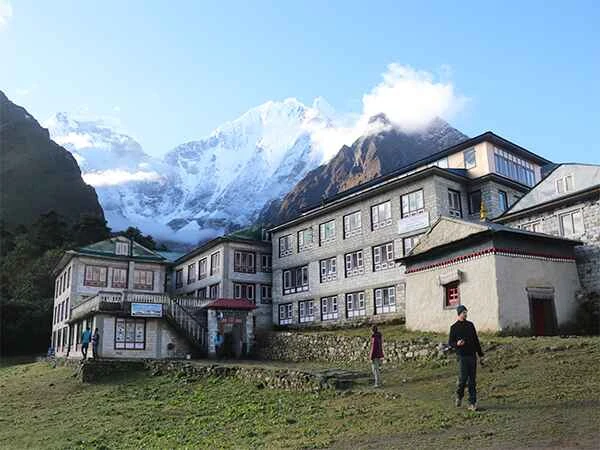
You sleep in simple teahouses: small, family-run lodges with basic twin rooms, shared bathrooms, and warm dining rooms where everyone gathers in the evening. Don’t expect luxury. Do expect hot food, friendly company, and plenty of local stories.
- Rooms are basic, with beds and warm blankets. A sleeping bag or liner is a good idea, because nights at base camp are mostly cold.
- Food options are dal bhat (rice, lentils, and vegetables, often with free refills). Other items include noodles, soups, fried rice, eggs, and pancakes.
- Prices rise with altitude because everything is carried up on foot.
- Extras such as hot showers, charging, and Wi-Fi usually cost extra and get less reliable higher up.
- Most people eat at the teahouse where they sleep. Order dinner when you arrive so they can serve you fast.
6 Days or More? Choosing the Right Length
6 days is the fast option, seven to eight days is the comfortable one, and nine days or more is the relaxed one. If your leave is fixed, six days works. If you have any flexibility, an extra day or two gives your body more time at altitude and gives you more time to enjoy the trail.
| Length | Pace and comfort | Altitude risk | Best for |
| 6 days | Fast, with long days and little rest | Higher, with tough ascent on day 3 | Fit trekkers with limited time |
| 7 to 8 days | Balanced, with time to adjust | Moderate | Most first-time trekkers |
| 9 to 11 days | Relaxed, with rest days and side trips | Lower | Anyone who wants a slow, scenic trek |
If even 6 days feels like too much, shorter treks such as Ghorepani Poon Hill are worth a look.
Safety and Travel Insurance
Buy travel insurance that clearly covers trekking up to at least 4,500 meters and helicopter evacuation. This matters more than most people think, because a rescue without cover can be very expensive. Check the altitude limit in your policy, since many standard policies stop at lower elevations.
- Carry printed and digital copies of your insurance, passport, and permits.
- Tell your guide about any medical conditions on day one.
- Mobile coverage is patchy in the valley, so your guide’s local contact matters a lot.
- If someone gets worse, the group slows down or descends. That’s our rule, and it should be yours too.
Who You’ll Be Trekking With
People often ask how they can tell if an agency is genuine. Ask who your guide will be, how long they have been guiding, what training they have, and what happens if something goes wrong. A good company answers all that quickly.
Frequently Asked Questions
- How many days does the Annapurna Base Camp trek take?
Most itineraries take 7 to 8 days, but a fit trekker can complete this in 6 days as well. The itinerary does include longer walking days and less time to adjust to the altitude.
- Is 6 days enough for the ABC trek?
Yes, if you are fit and start from Pokhara with a jeep for the first stretch of the trip. Go slowly, drink plenty of water, and be ready to descend if you feel unwell.
- Can beginners do the Annapurna Base Camp trek?
Many first-timers do it, though 7 to 8 days is usually more comfortable. If you only have 6 days, train for 6 to 8 weeks ahead, and tell your guide about your experience.
- How much does the Annapurna Base Camp trek cost?
Plan on about US$315 to US$450 for permits, a guide, food, and lodging over 6 days. With transport, insurance, and extras, the total gets roughly around US$450 to US$700.
- Do I need a guide for the ABC trek?
International trekkers must hike with a licensed guide in this region. Beyond the rules, a guide ensure safety navigation, coordinate with the teahouses, and help during emergencies.
- How cold does it get at base camp?
Nights can drop well below freezing, especially in spring and winter, and mornings are cold at higher altitude. A warm down jacket, hat, gloves, and a good sleeping bag are essential.
- What happens if bad weather or a landslide changes the plan?
Your guide adjusts the route or timing, and in rare cases you may not reach base camp. Therefore, it is a wise decision to check your agency’s policy before you pay.
- Which is better, ABC or Poon Hill?
Poon Hill is shorter and easier, with sunrise views over the Annapurna range. ABC takes you deep into the mountains. If you have 4 days or fewer, Poon Hill can be the better choice.
Ready to Plan Your 2027 Trek?
Six days isn’t the slowest way to see Annapurna Base Camp, but it may be the most realistic way to experience it. With some training, an honest guide, and respect for the altitude, it’s one of the best short Himalayan treks you can do.
So pick your month, check your fitness against the day-by-day plan above, and talk to someone who knows the trail. Then start training.