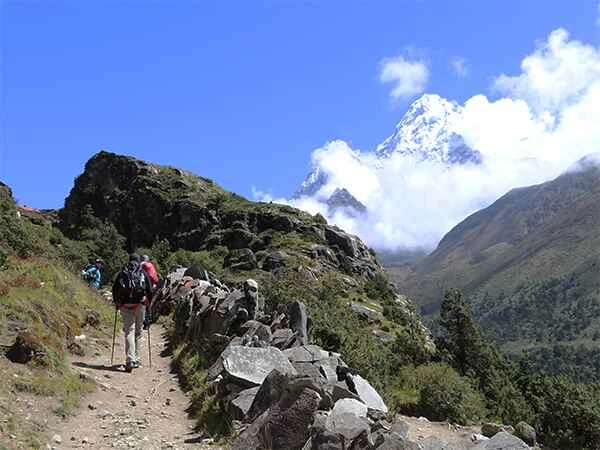
You do not have to reach Everest Base Camp to experience the Khumbu. If you have limited time, or you are not sure you want to commit to a long high-altitude trek, a short Everest trek for beginners may be a good option. The trail reaches Namche Bazaar and then heads towards Tengboche. It takes you through Sherpa villages, suspension bridges, and mountain landscapes that give a closer look at Ama Dablam peak.
The shorter route does not require technical climbing skills, but it is not a flat or effortless walk. You will tackle steep stones, walk for several hours on some days, and gain altitude as you go. As a perfect alternative to the classic Everest route, this is a great choice for first-time trekkers, but it needs proper preparation beforehand.
What Can You See on a Short Everest Trek?
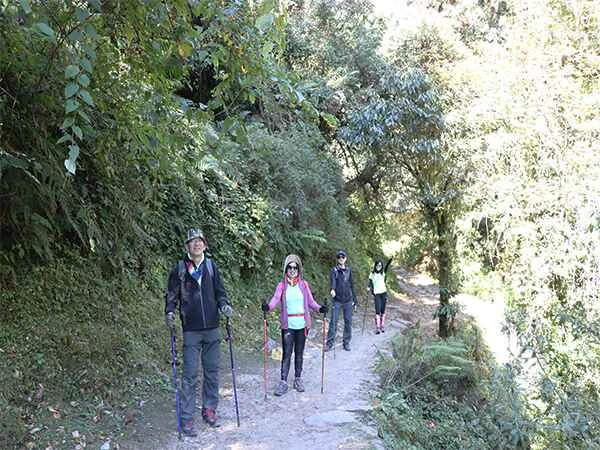
The appeal of this route is not just a distant view of Everest. The walk gives you time to experience the lower Khumbu, where the trail follows rivers, passes mani walls, and prayer flags. Pine and rhododendron forests cover parts of the lower trail, while the views open up as you gain height.
Namche Bazaar is a natural pause in the journey. You can find cafes, bakeries, small shops, and trekking supplies here, alongside the everyday life of a Sherpa town. Most of the itineraries include an acclimatization day and a gentle walk towards the Everest View Hotel, a popular viewpoint when the weather is clear.
Tengboche is another highlight. At around 3,860 meters, its monastery sits in a striking setting with mountains rushing behind the surrounding forest. The route is often described as an Everest View Trek, although names and exact itineraries vary between operators.
Lukla to Namche and Tengboche: Route Overview
The journey basically starts with an early morning flight from Kathmandu/ Ramechhap to Lukla, which is at 2,860 meters. However, there are possible flight delays, depending on the season and operating conditions. Most of the delays are only because of high winds and low visibility at Lukla. From there, you begin your first trek towards Phakding, following alongside the Dudh Koshi River and small settlements on the way.
The first day is usually shorter, given you time to settle into walking at altitude. The next day often feels harder. After crossing suspension bridges and passing the Sagarmatha National Park entrance area near Monjo, you begin the climb to Namche Bazaar at around 3,440 meters. This is where many beginners notice the combination of steep steps and altitude.
An acclimatization day in Namche gives you time to rest and explore. If your itinerary includes a short viewpoint walk, keep it comfortable rather than turning it into a race. From Namche, the trail traverses the hillside, descends towards the river, and climbs again through forest to Tengboche.
The uphill sections can be demanding, but on a clear day the monastery and mountain views make this a memorable stopping point. You then return towards Lukla along the same general route. Exact overnight stops and walking hours vary by itinerary, so use the day-by-day plan from your guide.
Days Required for the Short Everest Trek in 2027?
In 2027, the short Everest trek takes around 8 to 10 days in total, covering your arrival as well as the flight from Kathmandu to Lukla. The trek from Lukla begins on the same day of your arrival here, and the walking section usually covers 5 to 6 days, depending on the itinerary and how well you acclimatize to the altitude.
Just looking at the total distance does not give you ideas on how difficult this trek is. A short distance with a long climb can take more effort than a longer, flatter walk. Look at walking time, elevation gain, and overnight altitude together. If this is your first Himalayan trek, do not choose an itinerary simply because it has the fewest days.
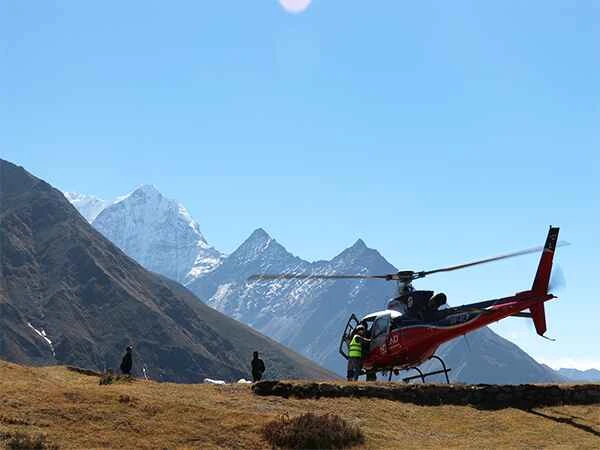
If possible, keep a spare day in Nepal after the planned return from Lukla. Flights can be delayed or cancelled when weather or operating conditions are unsuitable. A buffer day gives you more flexibility before an international flight.
How Difficult is a Beginner Everest Trek?
A short trek to Namche Bazaar and Tengboche is generally considered moderate, not effortless. You do not need ropes or technical climbing skills, but you should be ready for several hours of walking, long stone stairways, and repeated uphill and downhill sections. The climb to Namche is often the toughest day for beginners, and the climb from the river valley to Tengboche also takes steady effort.
If you can already walk for a few hours, build consistency over six to eight weeks. Walk three or four times each week and gradually extend one to two walks to two or three hours. Add hills or stairs when you can, and practise with the daypack you plan to carry. Step-ups, squats, and lunges can help your legs get used to repeated climbing.
Fitness does not prevent altitude sickness. The route reaches around 3,860 meters, and standing here, each person responds to altitude differently. Walk at a steady pace, follow the planned acclimatization schedule, and tell your guide if you get a headache, nausea, dizziness, or unusual fatigue. Worsening symptoms should never be ignored.
Short Everest Trek vs Standard Everest Base Camp Route
Both of the routes start in Lukla and share some of the early trail. The difference is how far you continue into the high-altitude Khumbu and how much time you can spend trekking. The short trip takes you to the final way to Tengboche, while the classic route continues to the Everest Base Camp.
| What to compare | Short Everest Trek | Everest Base Camp Trek |
| Total duration | About 8 to 10 days including travel | Often around 12 to 14 days |
| Highest point | Around 3,860 m at Tengboche on this route | Everest Base Camp is about 5,364 m, and Kala Patthar is at 5,545 m |
| Physical demand | Moderate with steep climbs | More demanding, with longer time at high altitude |
| Main experience | Sherpa villages, Namche Bazaar, Tengboche, and mountain viewpoints | High-altitude valleys, glaciers, and Everest Base Camp |
| Good match for | People with limited time or new to trekking | People with more time who want to trek deeper into the Khumbu |
Doing the Everest Base Camp trek is usually done by trekkers who already have years of previous high-altitude experience. If your main goal is to gain some insights about the Khumbu region in a short time, the Short Everest trek route can be a better match. This lets you enjoy the mountain scenery without needing to spend days on the tough trails.
Best Time for a Short Everest Trek
As of now, spring and autumn are the most favorable times for doing the short Everest trek. Even though this is a good season to plan, weather can still change quickly, but it equally rewards you with a balance of a well-managed trail and eye-catching mountain vistas.
Spring from March to May gives you longer daytime and trails that are full of blooming rhododendrons, especially at lower elevations. For better walking conditions, daytime is stable, while morning, evenings, and higher areas can feel cold.
Autumn is also one of the best times to plan your Everest trek. Ranging from September to November, the trails are mostly dry, and clear mountain views make it more engaging. As this is a busy season, flight and teahouse arrangements should be done in advance.
Winter brings colder nights and the possibility of snow or icy sections. Even though trekking is still possible, it requires extra preparation with extra warm layers, suitable footwear, and advice from expert guides. Some services may also be limited at this time, and mountain conditions can also change quickly.
The monsoon brings rain, slippery trails, leeches at lower elevations, and clouds that hide the peaks. Flights may also be disrupted. Trekking Everest is less preferred during this period, mainly because of less visibility and several chances of delays.
Everest Trek Weather and Temperature
There is no single stable temperature marked for the Everest region. Conditions vary with altitude, cloud cover, and the time of day. The figures below give estimates for the Namche Bazaar and Tengboche area, not a forecast or a guarantee. Check the current forecast close to departure.
| Season | Possible daytime conditions | Possible night-time conditions |
| Spring | Often cool to mild; roughly 5°-15°C in lower trekking stops | Near or below freezing at higher stops |
| Autumn | Often cool and clear; roughly 5°C-15°C in lower trekking stops | Can fall below freezing |
| Winter | Cold, sometimes around or below 5°C | Can fall well below freezing |
| Monsoon | Mild but wet, with clouds and rain | Cool, damp, and quick changes in the weather conditions |
These numbers are general guidance only. A sunny afternoon can feel very different from a windy morning or a night in an unheated room. Pack layers so you can adjust as you walk, and bring a waterproof outer layer even when the forecast looks promising.
What Does a Short Everest Trek Cost?
The total cost of a short Everest Trek depends on the trekking agency and whether you plan to trek in a group or solo. Along with this, accommodation arrangements, season, and what services you choose to include also decide the cost. There is no single price allocated for every trek, so compare the inclusions rather than choosing by headline figure alone.
Main Costs to Budget For
- Flights to and from Lukla, including any change in departure airport or ground transfer provided as per the itinerary.
- Accommodation and meals options on the trek, as well as hotel nights in Kathmandu.
- Sherpa Guide and local porter services, including their meals, accommodation, insurance, and transportation.
- Sagarmatha National Park Area Entry Permit.
- Khumbu Pasang Lhamu Rural Municipality Permit.
- Travel insurance that covers high-altitude trekking, emergency helicopter evacuation, and medical treatment.
- Personal expenses such as trekking equipment, hot showers, charging, and using WiFi.
Before you book your Short Everest trek, make sure to get a proper understanding of what’s included and excluded. Confirm if Lukla flight, airport transfer, permits, meals, accommodation, guide, and porter are included in the package cost.
Permits for the Everest region
This route specifically requires obtaining the Sagarmatha National Park Entry Permit as well as the Khumbu Pasang Lhamu Rural Municipality Permit. These must be obtained from the Nepal Tourism Board Office in Kathmandu if you really want a hassle-free start to your trip. Sometimes, the permit requirements might change, so better check for latest updates, and ask relevant authorities.
Be mindful to keep your passport and permit documents in your daypack as they are checked on the way. If you book through an agency, ask whether permits are included in the quoted cost and what documents you need to provide.
Teahouse Accommodation and Food
Most nights are spent in family-run teahouses. The rooms are simple and often have two single beds, mattresses, and blankets. Bathrooms may be shared; hot showers, Wi-Fi, and charging devices may cost extra. Facilities differ between villages and lodges, and rooms are not usually heated like a hotel room.
The dining room is often the warmest place to sit in the evening. Meals commonly include dal bhat, noodles, soup, rice, potatoes, eggs, porridge, and momos. Menus can be more limited and more expensive higher up because supplies are carried along the trail. Carry cash for small expenses and ask your provider what bedding or sleeping equipment you should bring or rent.
Mistakes That Can Make the Trek Harder
- Walking too fast on the climb to Namche instead of keeping a pace you can sustain.
- Skipping or overloading the acclimatization day.
- Carrying more than you need, especially on long stair sections.
- Wearing new boots that have not been tested on longer walks.
- Ignoring early rubbing or blisters until walking becomes painful.
- Assuming good fitness means altitude sickness cannot affect you.
Frequently Asked Questions
- Is a short Everest trek suitable for beginners?
It can suit beginners who can walk for several hours, prepare beforehand, and follow a sensible pace. This route is not too technical, but steep climbs and high altitude is what really make it hard for a beginner to trek.
- How difficult is it to complete the short Everest Base Camp?
Considered to be a moderate-level trek in Everest, this is probably the safest and shortest journey that can be done by someone who is new to trekking here. The route simply passes through Phakding, Namche Bazaar, and a final ascent towards Tengboche.
- Is there any best time to plan a short Everest trek?
The most predictable times are spring and autumn, offering you stable temperatures, great mountain visibility, and accessible routes. During this time, teahouses are also opened on the way, with chances to encounter with the Sherpa locals as well.
- How many days does the short Everest Trek require to be completed?
Around eight to ten days is estimated, including Kathmandu arrival and flight to and from Lukla, along with the walking portion that needs to be covered on the same plan.
- What is the highest point on this route?
As per the itinerary for now, Tengboche around 3,860 is the highest point to be reached for this trek. However, other itineraries can have a different highest point to reach.
- How much does a short Everest trek cost?
The price depends on flights, group size, season, accommodation, meals, guide and porter services, permits, and personal expenses. However, always check the revised price rather than relying on the older one for a better understanding.
- What permits are needed to be required for this trek?
To do this trek, you need to have the Sagarmatha National Park Entry Permit and a Khumbu Pasang Lhamu Rural Municipality Permit. This can be easily obtained from the Nepal Tourism Board Office in Kathmandu, but check for the latest updates as well.
- Do I need to have travel insurance for this short trek?
It is highly recommended to have travel insurance for this trek. Just ensure that your policy specifically covers high-altitude trekking, medical treatment, and emergency helicopter evacuation.
Is this the Right Everest Trek for You?
This route can be a better choice if you want to spend time in the Khumbu, visit Namche Bazaar, and Tengboche in less time. Doing this trek, equally blessed you with the breathtaking mountain vistas that are towering from a distance.
For a beginner, this trek can be a better introduction to high-altitude trekking in Everest. If you have limited time, can handle walking for 5 to 6 hours each day, and can adjust to the altitude, then this can be easily done by you.
However, for someone who dreams of reaching Everest Base Camp, the classic route is what they must plan for.