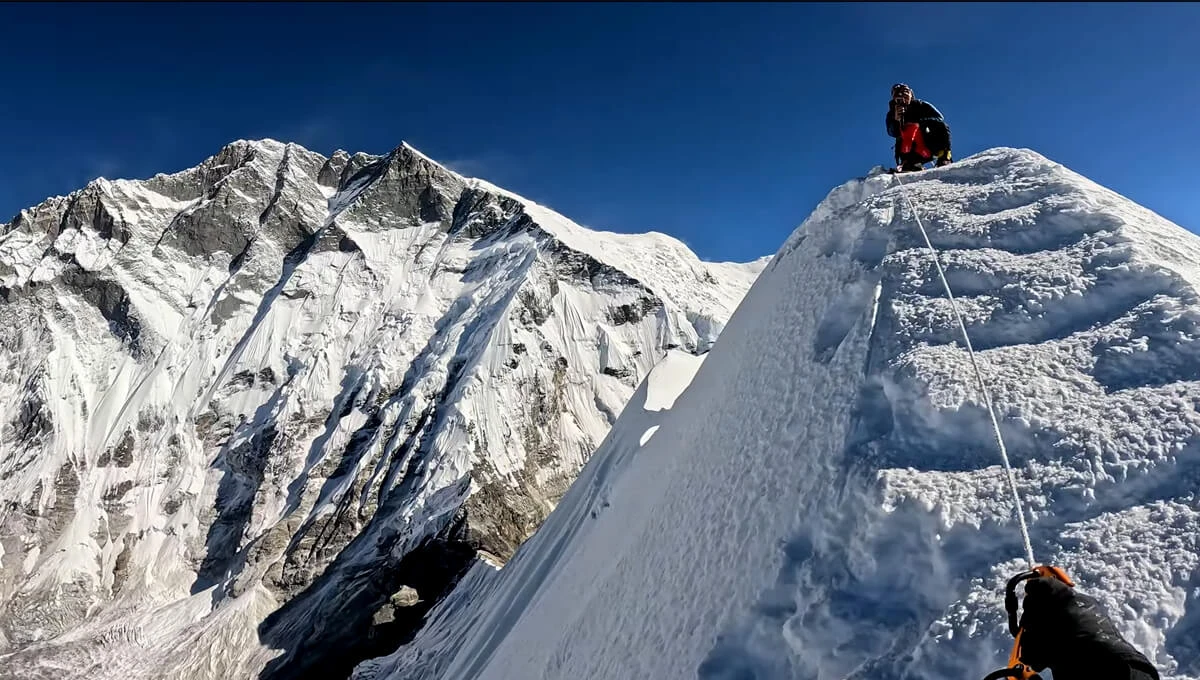
Final ridge to Island Peak summit with climbers using fixed ropes on a steep
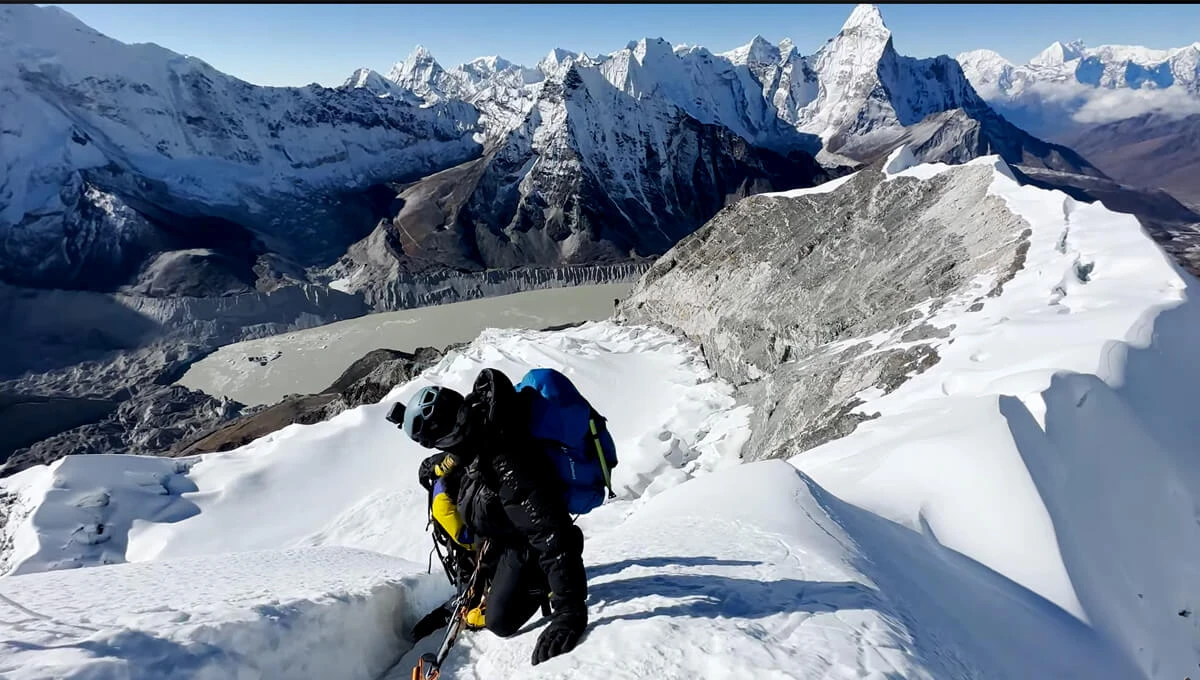
Island Peak climbing route via Everest Base Camp showing Imja Valley glacier path and summit trail

Island Peak Climbing with EBC - 19 Days

31 reviews in Trip Advisor
11 reviews in Google Reviews
Recommended by 99% of travelers
Duration
19 Days
Trip Grade
Strenuous
Country
Nepal
Maximum Altitude
6,188 M (20,304 ft)
Starts
Lukla
Ends
Lukla
Best Time
Spring and Autumn

Trip Overview of Island Peak Climb with Everest Base Camp

The Island Peak Climbing with Everest Base Camp is the most thrilling adventure that rewards with a true Himalayan odyssey from the very beginning. Instead of choosing between trekking to Everest Base Camp or climbing the summit peak, this trip lets you experience both in a single expedition. 

Located in the Upper Khumbu region within the Sagarmatha National Park, the Island Peak lies near the village of Chhukung. This village is just south of the Everest Base Camp, where you see towering Himalayan giants from a distance. The area rewards you with the dramatic alpine landscapes and glacier valleys, offering fresh mountain air. 

The trek follows through Sherpa villages, suspension bridges, and high alpine valleys before steeping into the climbing route of Island Peak. For trekkers wanting a classic trek, this journey adds a thrill of standing on a 6,000-meter summit. This adventure starts with an impressive mountain flight to Lukla and follows the familiar route of the Everest Base Camp route. Along the way, you ascend through beautiful settlements such as Namche Bazaar and Tengboche. 

The Everest Base Camp trek with Island Peak Climb offers a great balance of culture, scenery, and adventure at higher altitudes. The best highlight of this is reaching the base camp, as you stand at the foot of the world’s highest mountain peak. This point gives you an experience of how it feels to be surrounded by towering glaciers and mountains.  

The Island Peak, also considered the Imja Tse, is the best climbing peak, yet one of the most exciting challenges you take on in your life. However, having proper guidance and basic mountaineering skills in using crampons, ropes, and ice axes might make the journey even safer and more secure. A lot of trekkers wish to combine the Island Peak Summit via the EBC route, which is known to be getting more popular in 2026/2027. 

As you reach the summit of Island Peak, you are treated to the sweeping views of Everest, Lhotse, Makalu, and other nearby peaks. The overall journey is not just about reaching the top, but all about a journey through the heart of the Himalayas. If you ask most climbers who complete this trip, they say the same thing, as it feels more like a journey you will always remember. 

Important Highlights of Island Peak Summit via EBC

  • Start your adventure with an impressive flight from Kathmandu to Lukla, offering panoramic views of the Himalayas from above. 
  • Trek through the popular Everest Base Camp Trail, one of the most visited trekking spots in Nepal. 
  • Enjoy the magnificent views of peaks such as Mount Everest, Lhotse, and Ama Dablam. 
  • Take a short early morning hike to Kala Patthar (5,545 m), providing stunning sunrise views over snow-capped mountains.
  • Get a chance to walk through the Sagarmatha National Park Area, a UNESCO Site that offers chances to encounter endangered wildlife.
  • Ascend through the impressive Imja Valley and spend time at the quiet village of Chhukung.
  • Visit and spend time at Sherpa villages, as you navigate through places such as Namche and Tengboche. 
  • Standing at the summit of Island Peak (6,189 m), the most accessible and basic mountaineering skills are required for novice climbers. 
  • Gain a real sense of achievement as you stand at the top of Island Peak and appreciate the unmatched views of the Khumbu range.   

Where is Island Peak Located in Nepal?

The Island Peak, also recognised as Imja Tse, is a popular trekking peak, lying in the Khumbu region, mainly within the Sagarmatha National Park. considered as one of the protected Himalayan areas in Nepal, this region serves as home to the world’s highest mountains in the world. It is also known to be the most trekked region because of the accessible and well-managed trail conditions. 

Elevated at approximately 6,189 meters, the Imja Tse (Island Peak) is very close to Chhukung Village. This peak lies just south of Everest Base Camp, which offers stunning landscapes and the experience of trekking in higher mountain areas. From the summit of Island Peak, you can see the dramatic panoramas of towering peaks such as Mount Everest, Lhotse, and Ama Dablam. 

The top reason why the Island Peak is great is that trekkers want to gain experience of trekking in mountain trails. This is one of the most easily accessible trekking peaks in the Everest region, which gives trekkers memorable chances to encounter stunning peaks from up close. The combined Everest Base Camp trek with Imja Tse Peak Climbing is what makes this trek better and easily accessible. 

Cost of Island Peak Expedition via Everest Base Camp

The EBC trek with Island Peak is one beautiful adventure that includes trekking and mountaineering in a single journey. So, the cost can be a bit expensive, still, it all depends on group size, itinerary, guide services, climbing permits, and trekking arrangements. While you travel in a group, the price becomes more affordable. Below is the group discount price for the Island Peak Climb cost with the Everest Base Camp Trek.

Group Size Price Per Person
1 Pax US$2499
2 – 4 pax US$2299
5 – 10 pax US$2249
11 – 15 pax US$2199
16 – 20 pax US$2149

These costs include experienced trekking guides, climbing guides, accommodations, meals, basic climbing equipment, and the Island Peak Climbing Permit. While the price may change depending on the services and itinerary, choosing a reliable trekking company ensures better safety and climbing support throughout the expedition. 

How Difficult is the Island Peak Climb with EBC, and What Experience is Required?

Climbing Island Peak together with the trek to Everest Base Camp is regarded as a moderately challenging adventure. This journey combines long trekking days, high-altitude conditions, and mountaineering experience on a 6,000-meter peak. This follows the classic route through the Khumbu region, giving enough time for acclimatization. 

The final climb of Island Peak is considered the most technical part of the trip. It involves glacier travel, steep snow slopes, and a short section requiring fixed ropes, especially as you near the summit ridge. For this challenging but worth it adventure, you do not need to be a professional climber, but some previous trekking experience is highly recommended. 

This Island Peak Everest Base Camp 19-day trek is perfect for fit trekkers who want to step into the world of mountaineering. So, having proper acclimatization, experienced guides, and a positive mindset can provide a successful journey towards the Island Summit. 

Why do I combine Island Peak Climbing with Everest Base Camp?

Combining the Island Peak Climbing with the Everest Base Camp can be a rewarding Himalayan expedition. Instead of only reaching the base camp, you also get the chance to climb a 6,000-meter peak. This is perfect for trekkers who want to experience both the famous Everest trail and the peak summit, all in one expedition. Here are reasons why choosing the Island Peak with EBC might be better. 

  • Trek to Everest Base Camp and climb Island Peak, all in the same journey, offering unique achievements. 
  • Continue your trek from the Base Camp, heading towards the beautiful Imja Valley. 
  • Trek through the Khumbu region, as it allows your body to adjust to higher elevation before you attempt the summit. 
  • See the magnificent mountain views from the summit, as the peaks, including Mount Everest, Lhotse, and Ama Dablam, are easily seen. 
  • Take on the Island Peak Climb with the Everest Base Camp Trek, offering both trekking and climbing in one quest. 

Who is this Island Peak Expedition via Everest Base Camp for?

If you ever felt that just reaching Everest Base Camp might not be enough, and you want something more challenging, this trip can be for you. It is a perfect choice for fit trekkers who enjoy long days of walking and are curious about stepping into real Himalayan climbing without needing to be an expert. 

This is a great choice if you are ever dreaming of standing on a summit such as Island Peak and want that extra sense of accomplishment. You don’t need serious climbing experience, a positive mindset, some preparation, and a willingness to push yourself beyond your comfort zone. 

Reasons to Choose Our Team for the EBC with Island Peak Climb in 2026/2027

High Camp Adventure and its team have years of experience in helping trekkers and climbers to plan their voyage more perfectly. Choosing the EBC Trek with Island Peak Climb with our team can make the summit approach successful. Here are the reasons why choosing the team of HCA can be a rewarding opportunity for you. 

  • For trekking to the Everest Base Camp with Island Peak Climb, our company ensures a highly-experienced Sherpa guide who helps to guarantee your safety and make the journey even smoother.
  • With a properly planned itinerary that includes acclimatization days and other useful plans for a successful summit, our team never compromises on anything that is required for the safety of trekkers. 
  • Our team provides basic mountaineering skills training prior to the attempt, such as using crampons, ropes, and ice axes. 
  • Systematic planning for securing permits, managing accommodations, meals, and providing climbing equipment for trekkers' safety. 
  • Friendly and highly experienced team that can help you stay motivated during the summit push.  
  • Proper balance of quality service with no hidden costs for the Island Peak and Everest Base Camp trek
  • 25/7 assistance throughout the trek that makes it easier for you, even during your adventure.  

Island Peak Climbing with EBC - 19 Days Itinerary

Start Point: Lukla
End Point: Lukla
Expand All

As you arrive at the Tribhuvan International Airport in Kathmandu, one of our team representatives will be waiting to welcome you. After a warm greeting, you will be transferred to your designated hotel inside Kathmandu Valley, which can help you have access to all the major places. As you reach the hotel, our representatives will help you with formalities, and then you can rest and unwind from the long journey. In the evening, everyone gathers to get a briefing about the Island Peak Climbing with Everest Base Camp journey. Clear all your doubts and prepare yourself for the journey the next day. 

Max Altitude: 1,340 m (4,396 ft)Meals: BreakfastAccommodation: Hotel

On Day 02, you have an extra day in Kathmandu to explore and get some insights about this place. If you have any queries regarding the trek, you may even ask on this day. After your breakfast, you are given the chance to go sightseeing around the UNESCO Sites. Our tour guide will be assisting you throughout the major sites, as you explore places such as Swyambhunath, Boudhanath, Pashupatinath Temple, and finally Durbar Square. Make sure to finalise your trekking gear and equipment that are more comfortable for you. If not, renting those items is also possible in Kathmandu. In the evening, stroll around the streets of Thamel and get enough rest, as we begin our journey tomorrow. 

Meals: breakfastAccommodation: Hotel

Your Island Peak and EBC trek adventure finally begins on Day 03, as you take a scenic morning flight from Kathmandu. The flight rewards you with the stunning views of snow-capped mountains, green hills, and flowing rivers from different perspectives. As you land in Lukla, you feel yourself being surrounded by high hills, offering a peaceful experience and fresh mountain air. From here, you start your trek towards Phakding, taking you over dense forests and well-marked routes till you reach the final spot. 

Max Altitude: 2,610 m (8,562 ft)Meals: breakfast, lunch, & dinnerAccommodation: Tea house

On Day 04, you proceed from Phakding to Namche Bazaar, the bustling capital of the Khumbu region. As you begin your walk, the route takes you alongside the Dudh Koshi River, crossing over several suspension bridges that are filled with prayer flags. The trail from Monjo can be steep, with some uneven sections at times, so be a bit extra careful. So, after trekking for about 5 to 6 hours, you reach Namche, a place to see the magnificent views of the Himalayas and get a great experience of spending quality time as you explore the area. 

Max Altitude: 3,400 M (11,289 ft)Meals: breakfast, lunch, & dinnerAccommodation: Tea house

You have an extra day for acclimatization in Namche Bazaar on Day 05, as it gives you enough time to adjust to the higher altitudes. Even on this day, which is provided for rest, you can take short hikes to nearby areas, such as the Everest View Hotel, offering a great place to catch the stunning sunrise views. After you return, spend time at the cafes and take a chance to interact with the local people, as they are very friendly to everyone.

Meals: breakfast, lunch, & dinnerAccommodation: Tea house

On this day, you trek from Namche Bazaar further towards Tengboche, a perfect place to see clear sights of Mount Everest, Lhotse, and Ama Dablam from a distance. The walk can be beautiful and amazing, but some initial sections of the routes can be tough. You pass through highland meadows, where the landscape gets more dramatic and impressive. From here, you can also see the breathtaking river valleys and incredible glacial streams. After trekking for about 5 to 6 hours, you finally reach Tengboche. This place is well-known for its highly spiritual monastery, called the Tengboche Monastery.

Max Altitude: 3,860 m (12,664 ft)Meals: breakfast, lunch, & dinnerAccommodation: Tea house

On Day 07, you move from Tengboche, higher towards Dingboche, a stunning spot to acclimatize and enjoy the calm atmosphere. The journey starts from passing through vibrant rhododendron forests, offering spectacular views of high mountain peaks, which can make the walk even more beautiful. Along the way, the gradual shift in the landscape amazes you with its beauty, as you encounter fluttering prayer flags in the mountain air. Upon reaching Dingboche, a tranquil mountain village, located in the Imja Khola Valley gives perfect resting place.

Max Altitude: 4,410 m (14,468 ft)Meals: breakfast, lunch, & dinnerAccommodation: Tea house

On Day 08, you have an extra day to spend and explore more around Dingboche. This day is essential before you head towards the Everest Base Camp, as it reduces the chances of altitude sickness. In spite of this day being for rest, you take a short hike to Nangkarsthang Peak (5,083 m), a perfect place to acclimatize and see the jaw-dropping views of Ama Dablam, Makalu, Lhotse, and Kantega. This peak can easily be reached within 2 to 3 hours from Dingboche Village.

Max Altitude: 4,410 m (14,468 ft)Meals: breakfast, lunch, & dinnerAccommodation: Tea house

Trekking from Dingboche to Lobuche on Day 09 can be a bit tough, but the magnificent views of the surrounding mountains make it worth it. The route takes you through rocky landscapes in the Khumbu Glacier, giving basic ideas of the trail conditions in the coming days. As you reach Lobuche, the facilities might be basic, yet the views seen from here are something you should experience once. The walk might feel tough at the start, but as you maintain a steady pace with frequent rest stops, the journey gets more comfortable. 

Max Altitude: 4,940 m (16,207 ft)Meals: breakfast, lunch, & dinnerAccommodation: Tea house

Trekking towards Everest Base Camp from Lobuche on Day 10 is one rewarding parts of the entire journey. The walk starts after an amazing morning breakfast, passing through glacial terrain, high-altitude areas, and rocky trails that might feel tough at times. There are even times when you need to navigate through steep sections with limited oxygen. The total distance is roughly 10 km (6.6 miles), featuring dry and dusty trails, which can even be slippery in winter. 

You finally reach the base of Everest, after trekking for about 3 to 5 hours, as the views from here are something you love it. The vistas are unobstructed with tents, mostly set up by climbers attempting the Everest summit. You get to see major views such as Khumbu Icefall, Nuptse, Everest, Pumori, Khumbuste, and the Khumbu Glacier. Later, you head back to Gorakshep, an excellent place that serves as the resting spot for trekkers. 

Max Altitude: 5,364 m (17,598 ft)Meals: breakfast, lunch, & dinnerAccommodation: Tea house

On Day 11, you will be making your early morning hike to Kala Patthar to catch the impressive golden sunrise views over the mountain peaks. The route takes you through a gradual climb, steep rocky sections, which can be challenging due to severe cold, high winds, and low oxygen levels. As Kala Patthar is situated at 5,545 meters, the air can be thin, which makes breathing difficult. So, it is highly recommended to take frequent treks when needed. After enjoying the magnificent sunrise views, you descended back to Gorakshep for mouthwatering morning meals. Later, you begin your trek towards Lobuche. 

Max Altitude: 5,545 m (18,192 ft)Meals: breakfast, lunch, & dinnerAccommodation: Tea house

Making your trek from Lobuche to Chhukung includes passing through rugged paths, mainly alongside gradual slopes. Today’s trek might be challenging, as you cross via the Kongma La Pass, the highest mountain pass in this region. So, having a guide is suggested, as without them, the journey might feel tough. Arriving in Chhukung, a quiet place, offers a great place to rest before making your way to the elevated areas. 

Max Altitude: 4,730 m (15,518 ft)Meals: breakfast, lunch, & dinnerAccommodation: Tent

The trek from Chhukung to Island Peak Base Camp takes approx 3 to 4 hours, covering 7 km through the Imja Valley. Along the way, the views are dazzling with clear sights of Lhotse and Ama Dablam. The journey traverses through rocky terrain alongside the Imja Khola, so careful footing should be considered. One of the tough parts is the rocky paths, steep moraine slopes, and high-altitude surroundings that make the walk even more demanding. As you reach the base camp, our supporting crew members will set up the camps, where you will spend your overnight. Be sure to acclimatize properly and consider the extremely cold temperature, as it might get below freezing point at times. So, having proper gear and clothing items is required.

Max Altitude: 5,100 m (16,732 ft)Meals: breakfast, lunch, & dinnerAccommodation: Tented Camps

The summit of Island Peak starts early in the morning from the Base Camp, between 1:00 AM - 3:00 AM. During this time, the mountain weather is stable and predictable, making it easier for you to reach the summit and descend, giving it a great start to the day. The ascent starts through the Imja Glacier, as you need to navigate through fixed ropes, steep rocky sections, and you should know how to use crampons. Make sure you ascend through and use the fixed rope, as it helps to reach the top of Island Peak. 

After reaching the summit of Island Peak, you get the spectacular 360-degree views of towering peaks such as Lhotse, Nuptse, and the impressive Ama Dablam. On clear days, you can even spot direct views of the southern face of Mount Everest and Makalu. Afterwards, you descend back to the Island Peak Base Camp, returning with a sense of accomplishment and memories that you truly cherish for a lifetime. The journey then proceeds towards Chhukung, passing through mountain trails that feel easier now.  

Max Altitude: 6,165 m (20,226 ft)Meals: breakfast, lunch, & dinnerAccommodation: Tea house

On making your trek from Chhukung to Tengboche, the journey might feel more comfortable as you gain some experience of trekking at a higher altitude. So, for you, descending might be easier and rewarding at the same time. The way traverses through steep ascents and descents, offering distant views of the snow-covered peaks. Upon reaching Tengboche, you can visit the Tengboche Monastery, one of the highly spiritual monasteries in the Khumbu region. Take time to talk with the local monks and get some insights about the culture and tradition. This gives a great opportunity if you want to get more information about the Khumbu region. You can explore the nearby areas and share your experience of summiting the Island Peak.

Max Altitude: 3,860 m (12,664 ft)Meals: breakfast, lunch, & dinnerAccommodation: Tea House

On Day 16, you will be trekking from Tengboche to Namche, the most comfortable and easiest walk till now. The route is well-managed, offering spectacular views of distant peaks. The walk involves moving through rocky and steep sections, mainly around Phunki Tenga. It provides you with a quiet environment, as you get to pass through blooming rhododendron forests. As you descend, the temperatures start to feel warmer compared to high-altitude areas. Reaching Namche Bazaar, you can spend quality time enjoying the surrounding landscape and having a sip of coffee at nearby cafes in the evening.

Max Altitude: 3,440 m (11,286 ft)Meals: breakfast, lunch, & dinnerAccommodation: Tea house

On Day 17, you trek towards Lukla from Namche Bazaar, covering approx 18 to 19 km of descent, in 7 to 9 hours. The journey mostly includes gradual downhill sections, mainly through Monjo, Jorsalle, and Phakding, with certain uphill trails. As you cross the Hillary Suspension Bridge, you near the Sagarmatha National Park Area, where, after a few hours, you reach Phakding for lunch. After that, you begin your final trek to Lukla, the major gateway to the Everest region. 

Max Altitude: 2,860 m (9,383 ft)Meals: breakfast, lunch, & dinnerAccommodation: Tea house

You will be taking a short morning flight from Lukla to Kathmandu/ Ramechhap, depending on your condition. Most of the flights to and from Lukla are directed to Ramechhap, as the peak trekking season makes the airport too busy. The flight is known to treat you with a different perspective of the snow-capped peaks, green hills, and settlement areas. After you reach Kathmandu, you will be escorted to your designated hotel, where you can rest and unwind from the long journey. In the evening, get ready, as our team has arranged a farewell dinner at an authentic Nepali restaurant. Share your experience with the fellow trekkers and taste the real dishes for the last time. 

Max Altitude: 1,340 m (4,396 ft)Meals: Breakfast and Farewell dinnerAccommodation: Hotel

Your Island Peak Climbing with Everest Base Camp Trek finally ends on Day 19. The team representative will drop you off at the International Airport, as per your flight time. This ensures a comfortable end of the journey, ensuring you are safe and reach the airport on time. Be sure to arrive at the airport 3 hours prior to your flight, as during peak seasons, the airport is mostly packed.

Let us help You Plan Your Perfect Holiday
Looking for a customized trip? Let us know your estimated holiday time, budget, travel style, etc. We will design an amazing personalized itinerary for you.

Cost Details

Includes

  • Pickup and Transfer to and from the Tribhuvan International Airport to your designated hotel in Kathmandu. 
  • Three days' accommodation at a 3-star comfortable hotel in Kathmandu. (breakfast included). 
  • Comfortable mountain teahouse accommodation throughout the trek. 
  • Standard and Delicious meals three times a day during the Peak climb with EBC Trek. 
  • Experienced and Licensed Sherpa Guides and local porters for Peak Climbing. (High Camp Adventure is responsible for looking after all costs related to accommodation, permits, meals, and gear required for the journey). 
  • Khumbu Pasang Lhamu Rural Municipality Area Permit. 
  • Sagarmatha National Park Area Permit. 
  • Nepal Mountaineering Association Permit. 
  • Transportation as per the Island Peak Climb with EBC Itinerary. 
  • Domestic Flight Ticket (Kathmandu - Lukla - Kathmandu). 
  • Sightseeing at UNESCO Sites in and around Kathmandu. 
  • First Ait Kit. 
  • Duffle Bag. 
  • Basic trekking gear and climbing equipment that are essential for the summit push.
  • Company’s Service Charge. 
  • Government Taxes. 
  • Farewell Dinner before Final Departure from Kathmandu.

Excludes

  • International Flight tickets to and from Nepal. 
  • Visa for Nepal. (On arrival, a visa is also possible for certain countries, as it can be obtained in the Tribhuvan International Airport. For more details, you can even check with the Department of Immigration). 
  • Major meals during your stay in Kathmandu. (Breakfast is already included). 
  • Personal Trekking and Climbing Gears for the Peak Climb with Base Camp Trek. (You can even rent the trekking and climbing gears from Kathmandu, Lukla, or even Namche Bazaar). 
  • Tips for Sherpa Guides and Local Porters for the trek. 
  • Personal expenses during the trek, such as phone bills, extra luggage costs, snacks, drinks, laundry, and other related costs. 
  • Travel Insurance. 
  • Cost associated with cancellations, trail detours, political instability, 

Dates & Availability

These are upcoming fixed departure dates. If you are looking for a different date, feel free to contact us.

Essential Information

Itinerary Disclaimer

If you are thinking of planning the Island Peak Climbing with Everest Base Camp, be mindful that there are times when sudden changes in the itinerary might occur. This is common while attempting the summit at elevated heights. During your approach to higher altitude, the mountain weather might get challenging at times, this create huge difference in your climb. 

So, during such conditions, you must wait for the weather to be more stable; however, the Sherpa guide ensures all the safety measures. Our team and guides try their best to stick to the provided itinerary, but it all depends on the mountain weather conditions. In these situations, we hope you stay calm and have proper coordination with the guide, as this is done to guarantee a safe and better approach to the summit. 

Experienced Sherpa Guide and Local Porters

Having an experienced Sherpa guide and local porters can make the overall journey safer and more secure. For the Island Peak with Everest Base Camp Trek, the Sherpa guide can help you plan a successful summit to the top of Island Peak. Having years of experience in helping climbers ascend through the routes of the Island Peak, the Sherpa guides are well-known for their great expertise and knowledge. 

In the same way, porters are required to help you carry your heavy gear and luggage. This makes it easier for you to ascend through tough trails, mainly to the elevated heights. Hiring a local porter can also help boost the economy of this region. The porter can also give you some local insights into this region, ensuring you stay on the well-marked routes. 

Accommodation and Food for Everest Base Camp and Island Peak Itinerary 

Accommodation for the overall journey is mostly provided at local mountain teahouses, offering basic yet sufficient amenities. The rooms include twin beds, warm blankets, and shared bathrooms, mostly at elevated altitudes. These teahouses are known to offer an experience of the local way of living in mountain areas, which also provides insights into this region. They are usually run by the locals of the area and give warm hospitality as you arrive. 

Meals for the Island Peak Climbing with Everest Base Camp are simple yet fulfilling for the longer days of the journey through higher altitudes. The food is provided at the local teahouses, giving an authentic taste, as they are cooked using local ingredients. The options available are Dal Bhat, noodles, pasta, Thupka, fried rice, and hot drinks, usually in the morning. You can even check the Accommodation and Meals available for the Everest region trek, as it gives you more detailed insights about the facilities. 

Gear and Packing for EBC Trek with Island Peak Summit

Packing smart is key to a smooth journey to Everest Base Camp and climbing Island Peak. So, having layered clothing, a warm down jacket, sturdy trekking boots, gloves, and a good sleeping bag to protect from extra cold nights is strongly suggested. 

For the climb, basic mountaineering gear like crampons, a harness, a helmet, and an ice axe is required. Our team will provide you with the basic climbing items that are necessary for climbing Island Peak. Carry only essentials in your daypack, while heavier gear is carried by the local porters. For the more detailed lists, check Complete Everest Region Packing List: Essential Gear for Trek & Climb. 

Best Season for EBC trek with Island Peak Climbing 

If you want a peaceful and better trekking experience in the Everest region, choosing the best months is very important. The perfect times make the journey easier, as they offer predictable mountain weather, clear skies, and great mountain visibility. 

Spring and autumn are known to be the ideal times for climbing Island Peak with EBC. Both seasons bring favorable conditions, well-marked mountain trails, and stable temperatures even at higher altitudes. Spring makes the trails full of blooming rhododendron forests, great mountain vistas, and proper availability of teahouses along the way. Meanwhile, autumn brings vibrant forest trails and stunning views that are beyond your imagination. 

Summer and winter are not highly recommended, as it brings tough challenges along the way. Summer is known to bring slippery trails at lower altitudes, while winter can cover the trail with heavy snow. So, before you think of planning this trek, be sure to choose the season first for a safe and secure trek to the Everest region. 

Permits Required - Island Peak Expedition with Base Camp Trek

If you think of planning the Everest Base Camp with Island Peak Climbing, knowing about the permits is equally important. Having all the essential permits and documents ensures you get legal entry into the region, offering hassle-free experiences from the start. 

Khumbu Pasang Lhamu Rural Municipality Entry Permit 

This permit is the most crucial one to be obtained and mandatory if you are trekking in any areas of the Everest region. The main objective of this permit is to provide legal access to this region, as is gurantee you follow all the safety guidelines implemented by the people of this region. It can easily be secured from Kathmandu or the entry point of the Khumbu region. But don’t forget to obtain them, as they are checked at various points along the routes. 

Sagarmatha National Park Permit  

Another most important permit for the Island Peak Climb and the Everest Base Camp trek is the Sagarmatha National Park Permit. This permit gives you legal access to the National Park Area, as the route to the base camp and Island Peak passes through this area. The park serves as home to a wide range of wildlife and plant species, which also protects them, so having a permit for the National Park Area is equally important. The permit can be secured from the Nepal Tourism Board Office in Kathmandu. 

Fees for the Sagarmatha National Park Permit 

  • NRP 3,000 per person for Foreign Trekkers 
  • NRP 1,500 per person for SAARC Nationals 
  • NRP 100 for Nepali Citizens

Nepal Mountaineering Association Permit (NMA)

The Nepal Mountaineering Association Permit is mandatory if you are planning to climb Island Peak in Nepal. This permit is required for climbers wanting to summit the peaks, as this one is categorised as a “Trekking Peak”, especially designed for trekkers wanting experience. The NMA Permit must be obtained through a registered agency in Kathmandu from the Nepal Mountaineering Association, as they are mostly required to handle the application process on your behalf. The main motto of this permit is to monitor your trekking activities to ensure safety along the trails. 

Fees for Nepal Mountaineering Association Permit (NMA)

  • USD 250 for Foreign Nationals (Spring), USD 125 (Autumn), and USD 70 (Winter and Summer).
  • NRP 4,000 for Nepalis (Spring), NRP 2,000 (Autumn), and NRP 1000 (Summer & Winter). 

Note: 

For the latest permit fees, rules, and regulations, please refer to the Service Charges for Foreign Climbers, per person, in US dollars. 

Travel Insurance

For the Island Peak Climbing with Everest Base Camp, you need to have travel insurance. As the journey involves passing through high-altitude mountain paths with limited medical facilities, having travel insurance is highly recommended. But, before, make sure your insurance policy covers high-altitude trekking above 6,000 meters, helicopter evacuation, trip cancellations, and medical treatment. Having travel insurance can help you have a hassle-free experience in the Everest region with no worry about unexpected events.

Island Peak Climbing with EBC - 19 Days FAQs

No really. You don’t need to be a professional climber, but being fit and doing some treks before can be more than enough. Our Sherpa guide will teach you basic skills like using ropes, crampons, and an ice axe before the summit push. 

This adventure is considered a strenuous one, requiring trekking for a long time. The climb itself is a bit more demanding because of the altitude and some technical sections. But this can be overcome with proper guidance.

The most preferred seasons are spring and autumn. Both of this offers stable mountain weather, clear skies, that gives you dazzling vistas of towering peaks. The trails are also well-managed with the availability of accommodation facilities along the way. 

The Imje Tse Climb takes you to an altitude of approximately 6,165 meters, which is the most accessible trekking peak in the Khumbu region

This voyage can be completed in around 18 to 20 days. Yet, all it depends on is the itinerary, acclimatization days included, and the final push to the summit of Island Peak. Rest days are an important part of the journey, as it gives you enough time to adjust to mountain conditions.

Appreciating the stunning vistas of Mount Everest from a distance is possible, especially if you reach the Everest View Hotel and hike to Kala Patthar.  Seeing Mount Everest up close is honestly one of the most unforgettable parts of the whole journey.

For this expedition, you just have to be in good shape and have prior trekking experience. If you are confident enough to handle 5 to 7 hours of walking for multiple days, you can restfully complete the entire voyage.

Some basic climbing equipment, such as crampons, a harness, a helmet, and ice axes, is mandatory for this expedition. If you don’t have and want a budget-friendly odyssey, you can easily rent everything you require from Kathmandu. 

Yes, many novice ones do. Maintain a steady pace, follow the instructions of the guide, and stay mentally prepared. This can help you achieve a summit if you are well prepared.

The rate of success ranges between 70% to 90%, depending on various factors. Some of them are the weather conditions, the seasons you choose, the days included for acclimatization, and your fitness level. 

At the summit and higher altitudes, the temperature might get extremely cold. During the day, it can feel comfortable, but mornings and nights can drop below freezing.

Generally, this Himalayan journey is safe when done with a professional team. The guide helps to monitor your health, plan acclimatization properly, and make bold decisions based on the weather conditions. Our team mainly prioritizes safety first, even when the conditions are meant to return.

Yes, but it can be unreliable sometimes. In major towns and villages, you get Wi-Fi and charging facilities. As you go higher, it becomes slower and more expensive, so it is good to be prepared for such conditions.

That’s completely okay, as there are situations where trekkers are not able to reach the top. So, in that case, you can spend your time at a lower altitude and enjoy the spectacular beauty of the Himalayan peaks.

Yes, local porters are offered by our team, as they assist in carrying your heavy gear and luggage, ensuring you walk freely. But, be mindful, as you need to carry your small daypack, which only includes necessary items such as water, snacks, and extra layered clothing.

No, drinking tap water is not recommended unless an emergency occurs. You can buy boiled or filtered water from the teahouses. However, most of them carry water purification tablets and sealed water bottles to stay safe.

The major change is in the experience you get, as trekking to EBC itself is amazing. So, adding Island Peak Climb can provide a whole new level of expertise, turning the journey into something more personal and rewarding.

For most people, the summit day might feel tough, but the rewards you get are something that you cherish for a lifetime. You start very early, walk on glacier sections, and climb using fixed ropes. The altitude also makes everything feel harder, but reaching the top makes it all worth it.

No, supplemental oxygen is not required for climbing Island Peak. As this is located at 6,000 meters, most climbers complete it without oxygen, but the high mountain areas can still feel challenging.

The summit day usually starts very early, often around midnight, 2:00 AM – 3:00 AM. This helps you reach the top before strong winds start.

Maybe, as the mountain weather keeps changing, during unfavorable conditions, the flight might get delayed. If not, your flight gets shifted the next morning, so better to add a buffer day to your itinerary.

For this trek, carry Nepali Rupees in cash. Once you leave Kathmandu, there are no ATMs, and most places do not accept cards, especially up in the Khumbu region.

Yes, in lower regions, you can find showers for an extra cost. As you go higher, showers become limited, and many trekkers skip them due to the freezing temperatures.

It is hard to describe until you reach there. Standing on the top after days of trekking and climbing, the views of peaks all around give you a real sense of achievement.

Need Help? Call Us+977 9851031822