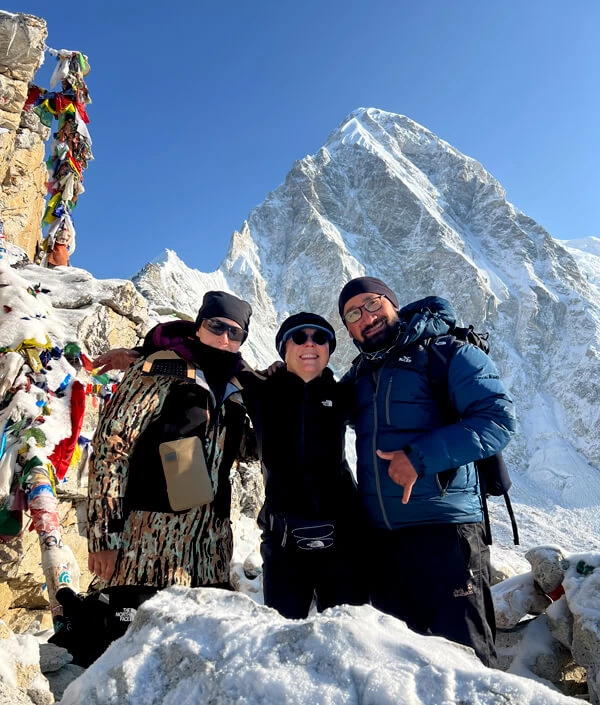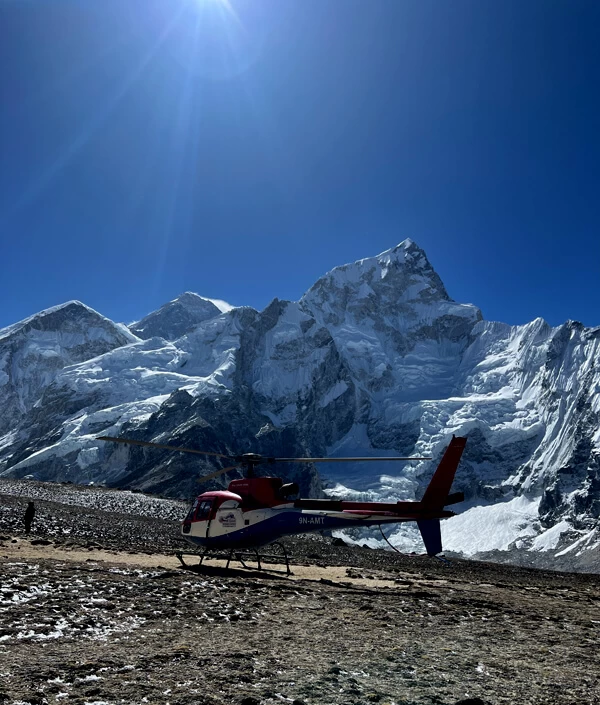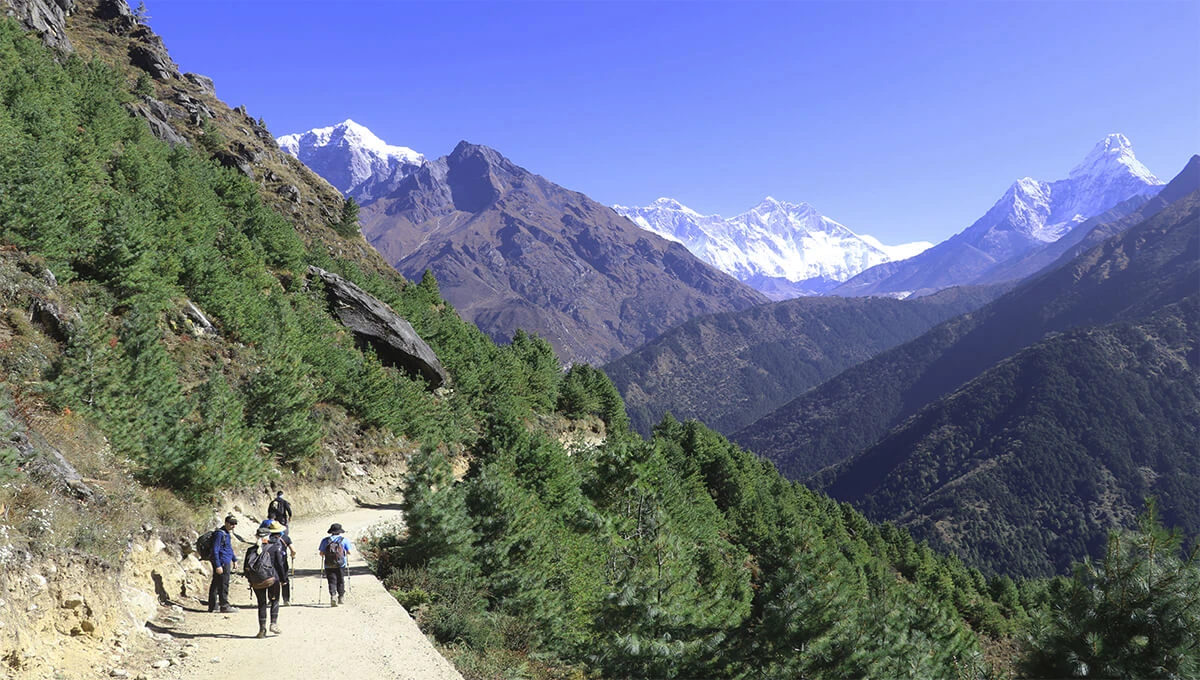
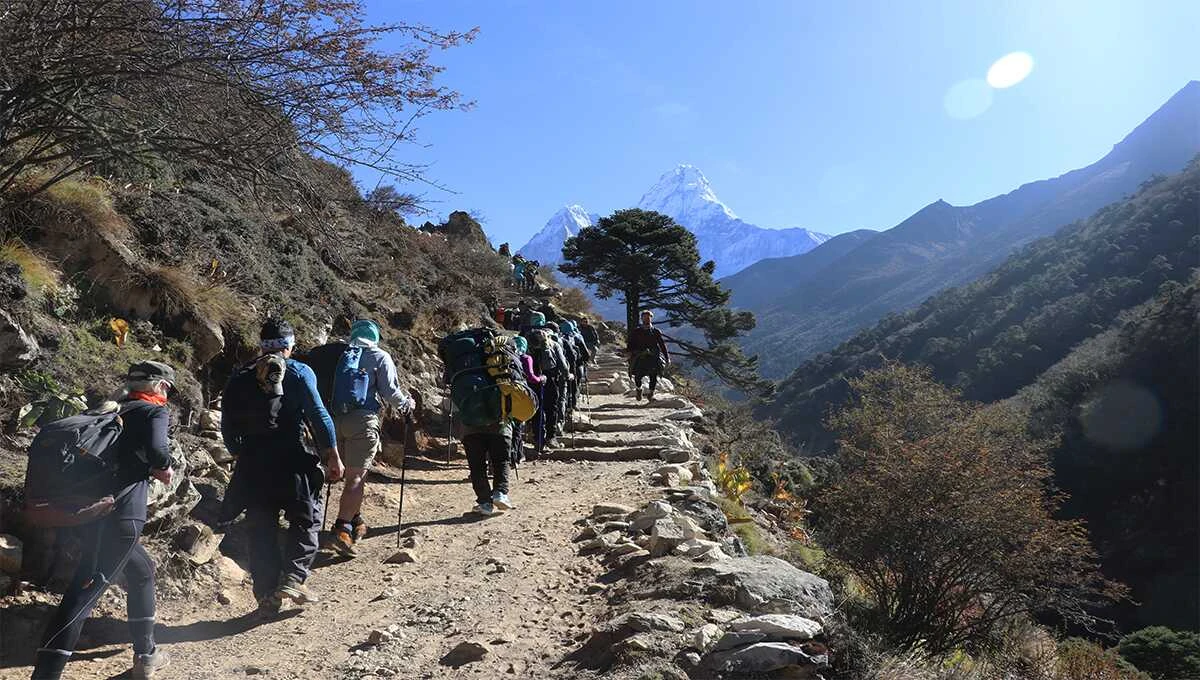
Trekkers on Everest Base Camp trail with Himalayan mountains
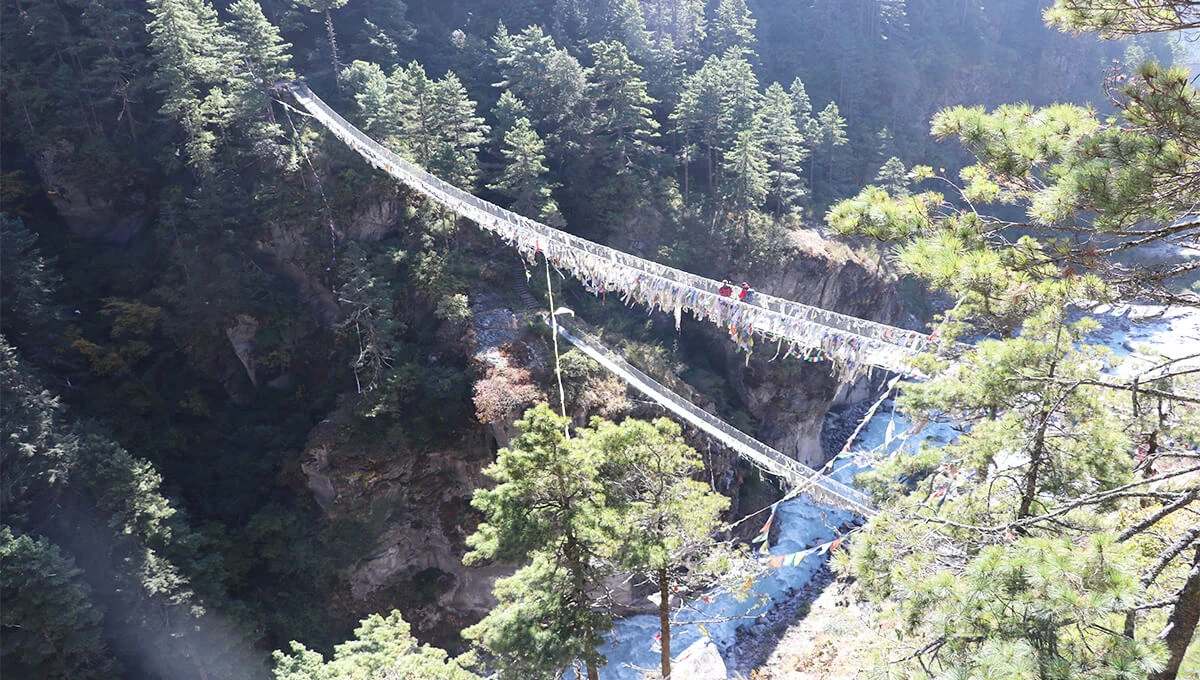
Hanging bridge over Dudh Koshi River on Everest Base Camp trail
Trekkers walking Namche Bazaar to Tengboche trail, Nepal

Everest Base Camp Trek - 12 Days

31 reviews in Trip Advisor
11 reviews in Google Reviews
Recommended by 99% of travelers
Duration
12 Days
Trip Grade
Moderate
Country
Nepal
Maximum Altitude
5,545 m / 18,192 ft (Kala Patthar)
Starts
Kathmandu
Ends
Kathmandu
Activities
Trekking & Hiking
Best Time
Spring (Mar-May) & Autumn (Sep-Nov)

12 Day Everest Base Camp Trek Overview 

If you want to reach Everest Base Camp but don’t have time for a longer itinerary, the 12 Days Everest Base Camp trek gives you a more compact way to get there. You fly from Kathmandu to Lukla, walk through the Khumbu Valley, and gradually climb from the lower villages toward the high mountain settlements around Everest. 

The first few days feel quite different from the landscape you might picture when you think of Everest. It takes you through Phakding and Namche Bazaar, with beautiful suspension bridges, forested sections, stone houses, and busy trails around Namche. From there, the route now heads towards Tengboche, Dingboche, and Lobuche as the air gets thinner and the landscape starts getting rugged. 

Then comes the section that you have been waiting for. From Gorakshep, the trail continues to Everest Base Camp at 5,364 meters. The base camp itself does not serve as the viewpoint of Everest’s summit, but you stand among the glaciers and enormous peaks of the Khumbu. 

The highest point of the trek is Kala Patthar at 5,545 meters. To reach it, you get up early, as it can be tough, especially after several days at higher altitude, but this is where the route gives you the clearest sights of Mount Everest,Lhotse, and Nuptse. 

Trekking to Everest Base Camp for 12 days, the biggest challenge is not just the distance. Altitude is the main factor to be considered, mostly for the sections above Dingboche, Lobuche, and Gorakshep. 

If you are prepared for that, you get enough time along the way to adjust as you climb. So, this is the itinerary that gives you direct access to the heart of the Everest region without the 14-day Everest Base Camp trek. 

Important Highlights of the Everest Base Camp 12 Days

  • Seize the chance to stand at Everest Base Camp at 5,364 meters and walk into the famous base camp area, surrounded by glaciers, moraine, and towering Himalayan peaks. 
  • Make an early climb to Kala Patthar (5,545 m) for one of the most eye-catching sunrise views and a closer look at the snowy peaks, including Everest, Nuptse, and Lhotse. 
  • Experience the short flight from Kathmandu to Lukla, as it treats you to the stunning mountain landscapes from a different perspective. 
  • Spend your time exploring the bustling Sherpa town, Namche Bazaar, where you can walk through the narrow streets and interact with the locals. 
  • Visit Tengboche Monastery, one of the most important Buddhist monasteries, with Ama Dablam visible in the distance. 
  • Walk through Sherpa settlements, giving you an encounter with mani walls and prayer wheels, stone houses, and villages where traditional mountain life is still part of the landscape. 
  • From Gorakshep, the approach to Everest Base Camp can feel much harsher, with rocky and glacial terrain. 
  • See different sides of Ama Dablam, Thamserku, Lhotse, Nuptse, and other peaks as they appear from various sections of the trail rather than all at once. 
  • Stay at simple mountain teahouses, where a warm meal, dining rooms, and a hot drink can feel better after long hours of trekking. 

Short Itinerary for 12 Days EBC Trek

Day 01: Early morning flight from Kathmandu / Ramechhap (1,218 m / 3,996 ft) to Lukla (2,860 m / 9,383 ft) and then trek to Phakding (2,610 m), 30-35 min flight and 3-4 hours of trek.

Day 02: Trek from Phakding (2,610 m / 8,563 ft) to Namche Bazaar (3,440 m / 11,286 ft), 5-6 hours.

Day 03: Acclimatization day in Namche Bazaar with a short hike toward Everest View Hotel (3,880 m / 11,730 ft), 3-4 hours of hiking.

Day 04: Trek from Namche Bazaar (3,400 m / 11,286 ft) to Dingboche (4,410 m / 14,468 ft), 5-6 hours.

Day 05: Trek from Tengboche (3,860 m / 12,664 ft) to Dingboche (4,410 m / 14,468 ft), 5-6 hours.

Day 06: Acclimatization day in Dingboche with a gradual hike to Nangkarshang Hill (5,083 m /16,677 ft), 3-4 hours of hiking.

Day 07: Trek from Dingboche (4,410 m / 14,468 ft) to Lobuche (4,940 m / 16,207 ft), 5-6 hours.

Day 08: Trek from Lobuche (4,940 m / 16,207 ft) to Gorakshep (5,164 m / 16,942 ft), then continue to Everest Base Camp (5,364 m / 17,598 ft), then return to Gorakshep, 7-8 hours.

Day 09: Early morning hike from Gorakshep (5,164 m / 16,942 ft) to Kala Patthar (5,545 m / 18,192 ft) and then trek down to Pheriche (4,240 m / 13,911 ft), 7-8 hours.

Day 10: Trek from Pheriche (4,240 m / 13,911 ft) to Namche Bazaar (3,440 m / 11,286 ft), 6-7 hours.

Day 11: Trek from Namche Bazaar (3,440 m / 11,286 ft) to Lukla (2,860 m / 9,383 ft), 6-7 hours.

Day 12: Early morning flight from Lukla (2,860 m / 9,383 ft) to Kathmandu / Ramechhap (1,218 m / 3,996 ft), approx. 30-35 min flight, followed by transfer to Kathmandu if flying via Ramechhap.

Everest Base Camp Route for 12 Days 

The 12 Days Everest Base Camp trek starts with the flight into Lukla, followed by the first walk along the Dudh Koshi Valley. The trail passes through Phakding before reaching Namche Bazaar, where the route begins to climb. This Sherpa town is also where you start seeing the landscape change from green hills and forests to the larger peaks of the Khumbu. 

Beyond Namche, the trail heads through Tengboche and continues towards Dingboche. The walk gets more demanding here, not because of the steep sections, but cause you gain altitude each day. After Dingboche, the route passes through Lobuche and reaches Gorakshep, where the surroundings become much more rocky and exposed. 

From Gorakshep, you make the walk to Everest Base Camp before returning to Gorakshep. The next morning, the climb to Kala Patthar takes you to the highest point of the trek. From there, the route descends through the Khumbu Valley, and the descent is easier on the lungs. 

How Difficult is the Everest Base Camp Trek for 12 Days? 

Trekking to Everest Base Camp is categorized as a moderate to challenging journey. So, you don’t require any ropes, climbing equipment, or technical mountaineering skills. The only thing to focus on is long walking days on uneven mountain trails. However, there are some days that can be manageable with proper rest stops along the way. 

Altitude is a major difference that makes the Everest trek difficulty from the Annapurna Base Camp and Langtang treks. You start at Lukla and reach Everest Base Camp and Kala Patthar. At these elevations, even a familiar uphill section can feel much harder than it would at lower altitude. 

The only way to tackle these difficulties is not to rush. Walk at a steady pace, get enough rest each day, and pay attention to how your body is feeling as you gain altitude. If you are reasonably fit and can regularly walk uphill for several hours, you can prepare for the route. 

12 Days Everest Base Camp Trek Cost for 2027

The Everest Base Camp Trek for 12 days Cost starts at US$1199 per person. But the final rate depends on how many people are joining this trek. For a solo traveler, the cost can be higher than for someone who plans to book the Everest Base Camp trek with a group. 

No. of Persons Price Per Person
1 pax US$1359
2 pax US$1255
3-7 pax US$1230
8-12 pax US$1199
13-20 pax US$1099

If you are planning the trek with friends or family, your group size can make a difference to the per-person rate. For a solo trekker, the individual rate applies, while groups are charged according to the ranges shown above. 

Before booking, it’s worth checking exactly what your package includes. Accommodation, meals, permits, Lukla flights, and guide or porter services. That gives you a much clearer idea of the actual 12 Days Everest Base Camp trek cost rather than looking at the package price alone.

Best Time to Trek to Everest Base Camp 

For the 12-day Everest Base Camp trek, spring (March to May) and autumn (September to November) are the main seasons to consider. The weather is usually more suitable for long days on the trail, and the mountain views tend to be better than during the monsoon. 

Even the Nepal Tourism Board lists spring and autumn among the best periods for trekking in Nepal. Spring is a good time if you want a mix of moderate conditions and changing scenery in the lower Khumbu. During this time, the temperatures become more comfortable at lower elevations, though mornings and nights can be cold. 

Autumn starts after the monsoon and is especially popular for the Everest region. October and November often bring clearer skies, which can make a real difference when you are hoping to see Everest and other surrounding peaks. 

Winter is possible, but you need to be prepared for much colder conditions and potential risk of snow at higher elevations. The monsoon months from June to August can be less favorable, as the conditions are not suitable. During this time, the mountain visibility is blocked due to heavy clouds, and there are delays in Lukla flights. 

Weather and Temperature During the Trek

The weather on the Everest Base Camp Trek changes as you climb from Lukla toward Everest Base Camp. While lower villages such as Lukla and Namche can feel relatively comfortable during the day, Dingboche, Lobuche, and Gorakshep are much colder. 

Trekking Area Daytime temperatures Night temperatures
Lukla (2,860 m) 10°C to 20°C 0°C to 8°C
Namche Bazaar (3,440 m) 5°C to 15°C -5°C to 5°C
Tengboche (3,860 m) 3°C to 12°C -7°C to 2°C
Dingboche (4,410 m) 0°C to 10°C -10°C to -2°C
Lobuche (4,910 m) -2°C to 7°C -12°C to -5°C
Gorakshep (5,164 m) -5°C to 5°C -15°C to -8°C
Everest Base Camp (5,364 m) -5°C to 5°C Below -10°C

These are approximate ranges rather than fixed forecasts. The actual temperatures can vary with the season, cloud cover, wind, and current weather conditions. 

Why Book the 12 Days Everest Base Camp Trek with Us?

Booking a 12 day Everest Base Camp Trek can require a registered and experienced trekking agency. They not only plan your itinerary, but also ensure your stay in Nepal and the Khumbu is safe and secure. The team helps you manage an expert Sherpa guide, arrange permits before you leave Kathmandu, and manage accommodation in advance, so there won’t be any hassle when you reach the Everest region. 

  • We provide a clear day-to-day plan that lets you know about the walking route, overnight stays, accurate walking duration, and altitude needed to be gained on each day. 
  • Whether you are traveling alone or with friends, the trek is available across different group sizes, with the per-person rate changing accordingly. 
  • Airport pickup and drop-off are arranged as part of the trip, so you don’t have to figure out your Kathmandu transfers after a long flight. 
  • The itinerary allows time around Namche Bazaar and Dingboche before the route moves towards the higher elevations. 
  • Pre-trek preparation is provided to you before leaving from Kathmandu. You get guidance on the itinerary, packing, permits, and other practical details that are easier to sort out. 
  • Mountain trekking does not always run exactly as scheduled. Weather delays and other several things are there that need to be considered, even at the end of your trip. So, with an experienced team, everything is handled by us smoothly.
Everest Base Camp Trek - 12 Days Itinerary

Start Point: Kathmandu
End Point: Kathmandu
Expand All

The first day involves taking an early morning flight from Kathmandu or Ramechhap to Lukla. This depends on the current flight arrangements. Taking a flight takes around 30 to 35 minutes, which gives you mind-blowing snow-capped views of the mountains that are towering in the distance. You leave the busy Kathmandu Valley behind and land in the hills of the Khumbu. 

As you arrive in Lukla, there is a little time to organize everything before walking. There you meet the trekking team, check your bags, and then follow the trail toward Phakding. The route is short and gentle, giving way to smaller settlements and along sections of the Dudh Koshi Valley. 

The final walk to Phakding takes around 3 to 4 hours. After reaching the village, you can check into your teahouse and get some good rest before having a delicious meal. 

Max Altitude: 2,610 m / 8,563 ftMeals: breakfast, lunch, & dinnerAccommodation: Tea house

After breakfast, you leave Phakding and continue north along the Dudh Koshi Valley. The trail moves through small villages, pine and rhododendron forests, and several suspension bridges. The start is pleasant, but as you gain elevation, the trail starts to get harder. 

This is the day you finally enter Sagarmatha National Park, with a steeper section to walk from here. On this day, you cross the famous Hillary Suspension Bridge before beginning the longer uphill section toward Namche. 

With roughly about 5 to 6 hours of walking, you reach Namche Bazaar at 3,440 m. The town is much busier than the villages you have passed so far. Once you settle into the teahouse, take the evening slowly. 

Max Altitude: 3,440 m / 11,286 ftMeals: breakfast, lunch, & dinnerAccommodation: Tea house

Today is an extra day for you to spend in Namche Bazaar. It’s mostly provided to rest and acclimatize to higher altitude. However, this day lets you gain some altitude during the daytime and return to Namche again. In this way, your body gets acclimatized perfectly to the higher regions of Khumbu. 

You will have a nutritious breakfast and then hike uphill toward the Everest View Hotel at around 3,880 m. The climb from Namche is steady, and the trail opens up as you gain height. On a clear morning, you can see Everest, Ama Dablam, Lhotse, and Thamserku from the higher sections of the route. 

After spending some time at the viewpoint, you return to Namche Bazaar, making the day roughly 3 to 4 hours of walking. The afternoon is yours to take it easy. You can walk around town, have a coffee, sort your trekking gear, or simply rest. 

Max Altitude: 3,880 m / 11,730 ftMeals: breakfast, lunch, & dinnerAccommodation: Tea house

After breakfast, you leave Namche Bazaar and take the trail that winds along the hillside above the Dudh Koshi River; this section is not just a constant climb. There are a few gradual ups and downs, with long stretches where the trail feels fairly comfortable.

On clear days, Everest, Lhotse, Ama Dablam, and Thamserky stay in view across the valley. The trail eventually drops toward the river before the route turns uphill again. The final climb through the forest toward Tengboche is where you feel the elevation gain.

After about 5 to 6 hours, you reach Tengboche at 3,860 m. The village is home to the well-known Tengboche Monastery, and the surrounding mountains make this one of the memorable overnight stops on the route. 

Max Altitude: 4,410 m / 14,468 ftMeals: breakfast, lunch, & dinnerAccommodation: Tea house

On day 05 of the trek, you simply make your way from Tengboche and move further towards Dingboche. The route crosses through peaceful forests before you ascend over the Imja Khola River. The first climb gets you through the charming Pangboche villages, where few trees and wide mountain valleys start opening up. 

The higher you gain altitude, the harder the trail starts to get. On the way, you get to see traditional stone houses and yak pastures. After a relaxed walk of about 5 to 6 hours, you finally reach Dingboche, the most scenic settlement in the Khumbu region. 

This village is surrounded by dramatic peaks and more alpine terrain. Give yourself some time to rest in the quieter atmosphere and get well acclimatized before you gain altitude in the coming days. 

Max Altitude: 4,410 m / 14,468 ftMeals: breakfast, lunch, & dinnerAccommodation: Tea house

This is one of the most important days of your 12 Days Everest trek. On this day, you have an acclimatization day, which ensures you get a proper day to adjust to the higher surroundings. Even though this is said to be a rest day, you take an early morning hike to Nangkarshang Peak. 

This peak is considered to be the best viewpoint spot, which lies just above Dingboche. The start of the hike can be challenging due to the thin mountain air, but each step gives you jaw-dropping sights of Ama Dablam, Makalu, Lhotse, and other surrounding landscapes. 

Reaching here, give yourself time to appreciate the beauty of the scenery and mountains that you see in front. After a rewarding moment here, you descend back to Dingboche. This climb is not just for the views but an opportunity for you to adjust to the altitude while giving you confidence for the coming days. 

Max Altitude: 5,083 m / 16,677 ftMeals: breakfast, lunch, & dinnerAccommodation: Tea house

After having a nourishing breakfast in Dingboche, you now proceed further to Lobuche. The initial section of the trail gives you an uphill climb and wide alpine valleys. With gaining altitude, the landscape starts to get even more stunning, and a opportunity to pass through the memorial site of Thukla. This is a stone monuments which honors climbers and trekkers who lost their lives while summiting Everest. 

From there, the route now passes along the edge of the Khumbu Glacier before you make your final walk to Lobuche. The evening is a good time to rest, stay hydrated, and prepare for the next day’s walk to Everest Base Camp. 

Max Altitude: 4,490 m / 16,207 ftMeals: breakfast, lunch, & dinnerAccommodation: Tea house

Your day 08 is the most fulfilling day of your entire Everest Base Camp Trek. This is the day when you make your final way toward the base of the world’s highest peak, Mount Everest. 

The trek basically begins early in the morning from Lobuche and includes reaching Gorakshep first. After having a short break in Gorakshep, you leave all your main bags at the teahouses and just begin a short hike through the rugged trail, that too beside the Khumbu Glacier. 

You then finally reach Everest Base Camp, which lets you enjoy a sense of achievement upon conquering a bucket-list adventure for many foreign travelers. Standing here, you get to see colorful expedition tents, mainly if you are trekking during peak climbing seasons, with the incredible Khumbu Icefall behind. 

After enjoying some time here, you now descend back to Gorakshep. This is a perfect place to rest after long hours of walking and a place to enjoy the stunning vistas around you. 

Max Altitude: 5,364 m / 17,598 ftMeals: breakfast, lunch, & dinnerAccommodation: Tea house

Making your early morning hike from Gorakshep to Kala Patthar can give you an unforgettable moment that you will surely cherish for a lifetime. As this is the highest point of your EBC trek, the climb can feel much harder than you think. Especially getting up early and walking in the cold morning air after several days at higher altitude. On this day, there is nothing to hurry, as it can be done at a steady pace as well. 

From the top, you get a wide view of Mount Everest, Nuptse, Pumori, and the surrounding peaks. If the weather is clear, this is one of those moments when the early start feels worthwhile. After spending some time at the viewpoint, you descend to Gorakshep for breakfast and a short break. 

Now, you make your return down the Khumbu Valley toward Pheriche. The descent can feel easier as you lose altitude. Walking for about 7 to 8 hours, you finally approach Pheriche. This is a great place to rest, enjoy a delicious meal, and start a conversation with fellow trekkers in the dining hall. 

Max Altitude: 5,545 m / 16,942 ftMeals: breakfast, lunch, & dinnerAccommodation: Tea house

Your day 10 trek is all about trekking from Pheriche and descending to Namche Bazaar. The start of the descent retraces through the Khumbu Valley. Even though the route involves most of downhill sections, staying extra careful is necessary, and maintain a constant walking pace. Along the way, you pass through familiar villages and cross suspension bridges as the trail heads towards lower altitude. 

The landscape also begins to change. The dry, open terrain around Pheriche gives way to more vegetation the moment you descend. On the way, there are some uphill sections, so don’t just expect the entire day to be an easy downhill walk. 

By the time you reach Namche, you get back to a lower altitude compared to previous days. The lower elevation can feel noticeably more comfortable after the days spent around Gorakshep and Everest Base Camp. Simply rest in your teahouse, enjoy a proper meal, and take the evening slow. 

Max Altitude: 3,440 m / 11,286 ftMeals: breakfast, lunch, & dinnerAccommodation: Tea house

On day 11, you leave Namche, as this is your final day of walking. The trail goes through the Dudh Koshi Valley, taking you back through the sections you have seen on the way. But this time the difference is noticeable. 

Here, the air starts to feel much warmer, with thick vegetation and trails that keep on descending. On the way, you need to cross several suspension bridges and pass through Phakding to reach Lukla. 

With around 6 to 7 hours of walking, you finally make your way to Lukla. As you arrive, the rest of the day is yours to relax, interact with the local people, and simply rest and watch the surrounding green hills around you. 

Max Altitude: 2,860 m / 9,383 ftMeals: breakfast, lunch, & dinnerAccommodation: Hotel

Your final morning in the Khumbu starts early. You head to Lukla airport for the flight to Kathmandu or Ramechhap. This depends on the current flight arrangements and possible conditions at that moment. The flight takes around 30 to 35 minutes, and lets you enjoy the mountain landscapes and later gives way to the lower hills and a different perspective of Kathmandu Valley. 

If the flight operates to Ramechhap Airport, you continue the journey to Kathmandu by road. The drive takes longer than the flight, so keep that extra travel time in mind. Once you reach Kathmandu, your 12-day Everest Base Camp Trek comes to an end. 

Now, the entire day is yours to relax, rest at your hotel, explore more of the city, or continue with your further plans. 

Max Altitude: 1,400 m / 4,593 ftMeals: breakfastAccommodation: Hotel
Let us help You Plan Your Perfect Holiday
Looking for a customized trip? Let us know your estimated holiday time, budget, travel style, etc. We will design an amazing personalized itinerary for you.

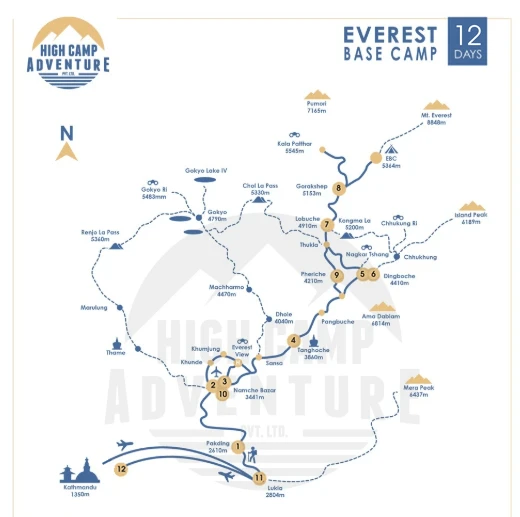
Route Map

Everest Base Camp 12 Days Trek Map

Cost Details

Includes

  • Private Airport pickup and drop-off in Kathmandu on your arrival and departure days. 
  • Accommodation in a 3-star hotel in Kathmandu with breakfast. 
  • Two-way flights between Kathmandu/ Ramechhap and Lukla based on the operating flight schedule. 
  • If Lukla flights are operating from Ramechhap, transportation between Kathmandu and Ramechhap Airport is included. 
  • A licensed English-speaking trekking guide accompanies you throughout the trekking route and helps with daily trail arrangements, accommodation, and general trekking support. 
  • A porter is provided to carry the main trekking baggage. 
  • Teahouse accommodation throughout the trekking journey. 
  • Three meals (breakfast, lunch, & dinner) are provided on each trekking day. Meals are served at the teahouses along the route. 
  • Safe drinking water arrangements are provided during the trek. 
  • Sagarmatha National Park Entry Permit is included in the package. 
  • Khumbu Pasang Lhamu Rural Municipality Fee. 
  • Guide and porter expenses including food, accommodation, and required insurance during the trek, are covered by the company. 
  • Basic First aid kit for minor issues. 
  • The company provides a duffle bag for carrying your trekking equipment during the trek. 
  • Permits and Documentation Assistance for the trek. 
  • Government taxes and the company’s service charge. 
  • A farewell dinner in Kathmandu is included after completing the trek.

Excludes

  • International flights to and from Nepal are not included in the trek package. 
  • The Nepal Visa fee is paid separately by the travelers. 
  • Personal expenses such as snacks, bottled drinks, coffee, tea, laundry, Wi-Fi, hot showers, charging, and other personal purchases. 
  • Additional accommodation in Kathmandu or teahouse stays caused by flight delays, bad weather, or any changes to the itinerary. 
  • Personal trekking gear, including trekking boots, warm clothing, backpack, trekking poles, sleeping bag, and other personal equipment. 
  • Additional transportation outside the planned itinerary. 
  • Tips for your guide, porter, driver, and other trekking staff. 
  • Travel insurance that covers high-altitude trekking and emergency evacuation. 
  • Additional expenses caused by flight delays, bad weather, road conditions, strikes, natural events, or other circumstances outside the company’s control.

Essential Information

Transportation For Your 12-day Everest Trek

Your 12 days Everest Base Camp transportation starts with a transfer to the airport for the flight to Lukla. The flight usually takes around 30 to 35 minutes when operating as per the schedule. However, depending on current flight operations, flights may depart from Kathmandu or Ramechhap Airport (Manthali). 

If your flight is operating from Ramechhap, you travel from Kathmandu to the airport by road before boarding the Lukla flight. Once you reach Lukla, the rest of the journey to Everest Base Camp is on foot. 

After completing the trek, you fly from Lukla back to Kathmandu or Ramechhap. Be extra cautious as mountain weather can affect these flights, so it’s better to leave some flexibility in your plans. 

Accommodation and Meals

For your 12-day Everest Base Camp Trek, accommodation is mostly at a 3-star hotel in Kathmandu and local teahouses during your trekking days. The rooms are mostly simple yet comfortable for overnight stay with sharing basis, depending on the altitude. However, keep your expectations low, as the more you climb, the facilities start getting more basic on a shared-bathroom basis. 

Meals are also provided at the teahouses with three meals: breakfast, lunch, and dinner each day, included in your trek package. The menus vary from one teahouse to another, but you usually find familiar options such as dal bhat, noodles, pasta, soups, eggs, potatoes, bread, and Thupka. One of the best food options is dal bhat, which is available and offers filling choices as well. 

Guide and Porter Requirement 

A licensed trekking guide will accompany you throughout the Everest Base Camp route. They help with navigation, keep track of the daily walking schedule, and coordinate arrangements at the teahouses. If you have a problem on the trail or aren’t feeling well, your guide is also the person you should speak to so the situation can be assessed properly. 

A porter carries your main trekking luggage, which means you can walk with a lighter daypack. However, keep your passport, money, phone, water, medications, documents, and other items you need in your own backpack. 

Gear and Packing Required for EBC Trek

For the 12 Days Everest Base Camp Trek, your packing needs to cover cold temperatures, long walking days, and extreme conditions at higher elevation. One of the easiest approaches is to pack in layers rather than carrying bulky clothes for every possible temperature. 

Upper Body 

  • Moisture-wicking base layers to help move sweat away from your skin while walking. 
  • Fleece or warm mid-layers to prevent temperature drops, especially in the morning and evening. 
  • Down or insulated jacket for higher sections. 
  • Waterproof and windproof jacket to protect you from rain, snow, and strong wind.
  • Warm hat and gloves for cold mornings. 
  • Sun hat to protect your head from the cold. 

Lower Body 

  • Trekking trousers that are comfortable to wear and allow easy movement. 
  • Thermal trousers that are useful for cold nights. 
  • Waterproof trousers for an extra layer of protection during rain. 
  • Trekking underwear and socks. 

Footwear 

  • Well-broken-in trekking boots that have good grip and can support in rocky or uneven trails. 
  • Camp shoes or sandals.
  • Gaiters for muddy sections. 

Other Essentials 

  • Daypack with rain cover. 
  • Duffle bag that is usually carried by the porter. 
  • Four-season sleeping bag for higher elevation and comfortable sleep. 
  • Easily adjustable trekking poles to reduce strain on your knees. 
  • Sunglasses and sunscreen. 
  • Headlamp with extra batteries. 
  • Water bottle and water purification tablets. 
  • Personal medications and basic-first aid kit. 
  • Power bank to charge devices. 

Permits Required 

Before leaving from Kathmandu, make sure to obtain all the valid permits to do the Everest Base Camp Trek. Despite the fact that the permits can also be obtained from the entry point of the trek, it is highly recommended to get them from Kathmandu. 

The two main permits include the Sagarmatha National Park Entry Permit and the Khumbu Pasang Lhamu Rural Municipality Entry Permit. Both of these can easily be secured through a registered trekking agency. These allow you to enter the protected area and trek through the Khumbu region. 

You need your passport details when the permits are being arranged. Although the permit rules can change, it’s better to confirm with the Nepal Tourism Board Office or through your trekking agency. Booking your trek with an agency can handle all the paperwork for you. 

Wi-Fi, Drinking Water, and Hot Shower 

Wi-Fi is available at many teahouses along the Everest Base Camp route, but the connection is not always fast or reliable. The higher you go, the more limited internet access can become, and some teahouses charge an additional fee for using it. In the same way, taking about the mobile network coverage, it depends, as having a strong connection throughout the trek is not possible. 

Drinking water is available at teahouses and shops along the trail. You can carry a reusable bottle and refill it at suitable water sources, using purification tablets. Hot showers are available at many teahouses, although they cost extra. The availability gets more limited at higher elevations, where heating water requires more effort. 

Altitude Sickness

Altitude sickness can happen when your body does not adjust well to the reduced oxygen available at higher elevations. It can affect every trekker even though they have proper fitness, so reaching Everest Base Camp is not just about physical endurance. 

Along the way, you get to see common symptoms such as headache, dizziness, unusual tiredness, nausea, loss of appetite, and difficulty sleeping. Moderate symptoms can occur as you gain altitude, but they should be considered on time. Tell your guide if you are feeling unwell so they can help you decide what to do next.

The best way to avoid altitude-related problems is to ascend gradually, walk at a normal pace, stay hydrated, and eat properly. Make sure you don’t skip any of the rest days that are provided in your itinerary and strictly follow the instructions your guide tells you to.

Travel Insurance

Travel insurance for your Everest Base Camp Trek is something that needs to be considered first. Having proper insurance not only protects you from unwanted medical expenses but also gives you peace of mind. For that, you need to ensure your policy covers high-altitude trekking above 5,000 meters, medical treatment, and emergency helicopter evacuation. Depending on your travel plans, you may also want coverage for trip cancellation, interruption, flight delays, or cancellations. 

You May Also Like

Mount Thamserku
Trekkers Choice

Everest Base Camp Trek - 14 Days

Price From
US$1449US$1599
Explore
Everest Base Camp with Gokyo Lake Trek view from Kala Patthar

Everest Base Camp with Gokyo Lake Trek - 17 Days

Price From
US$1499
Explore
Need Help? Call Us+977 9851031822