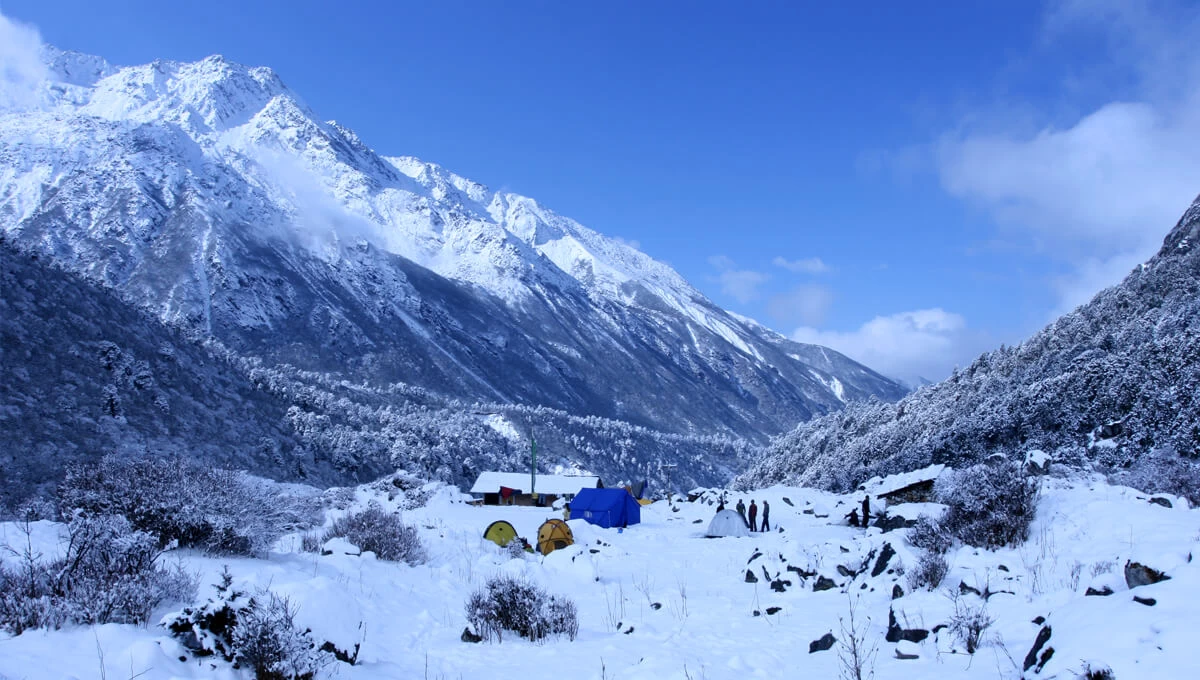
Snowy Kanchenjunga Base Camp trail in eastern Nepal
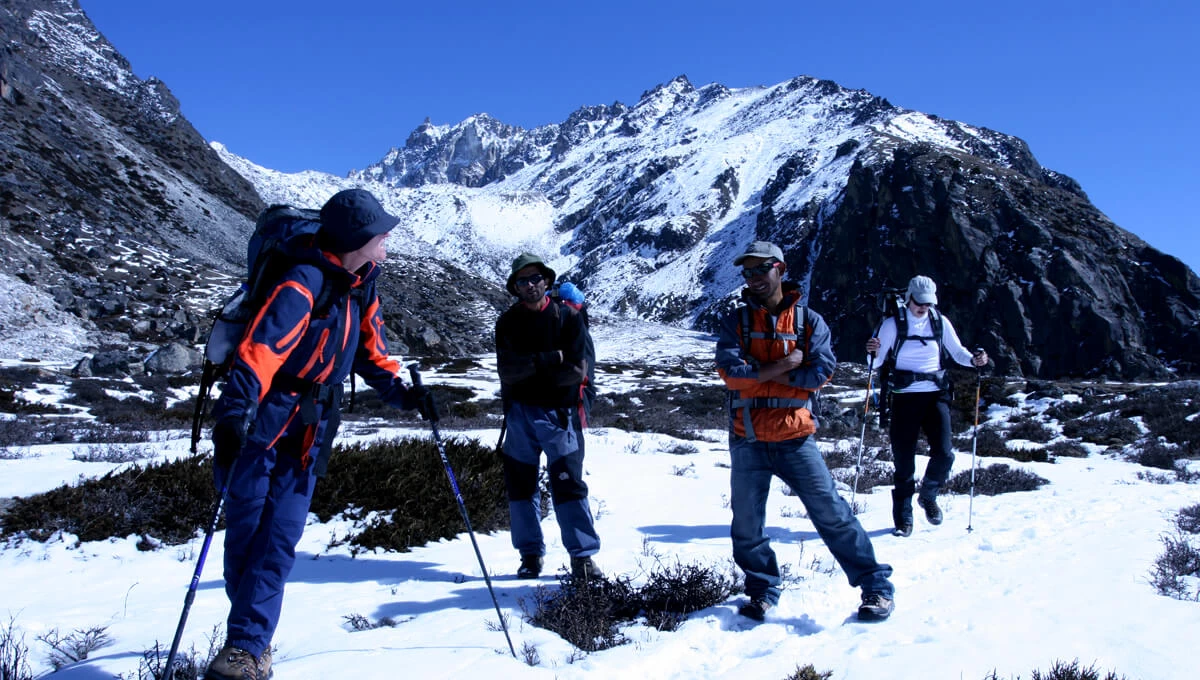
Trekkers hiking in the Kanchenjunga region of Nepal
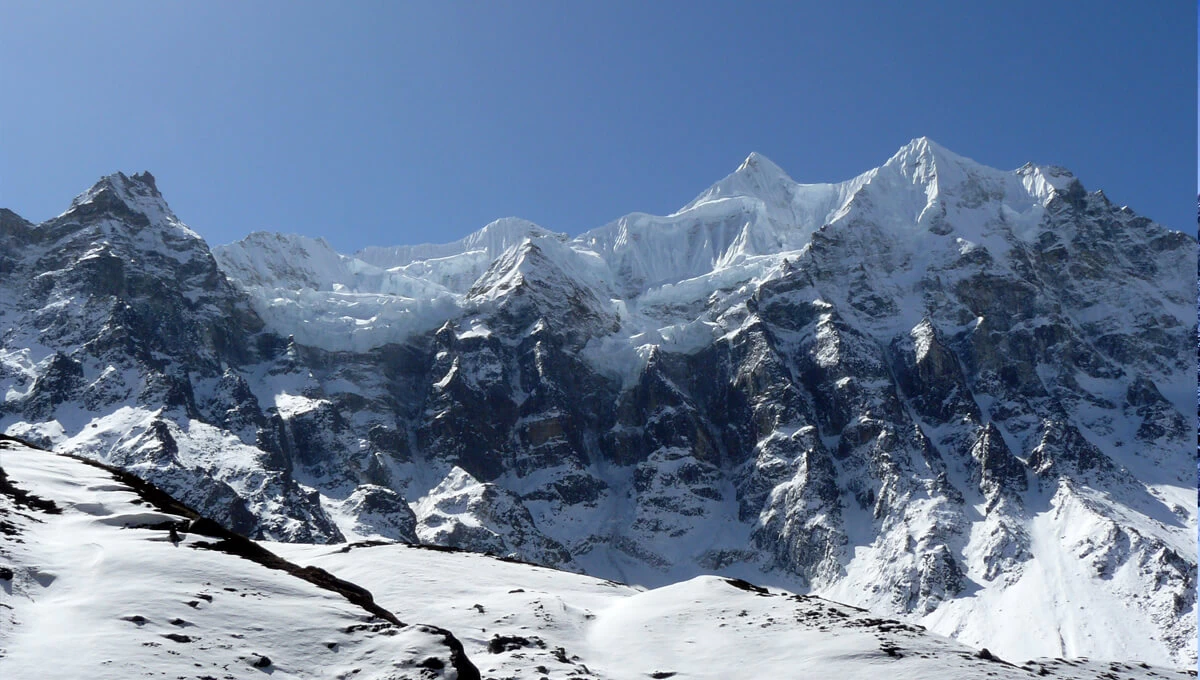
Panoramic view of the Kanchenjunga Himalayan mountain range

Kanchenjunga Circuit Trek - 20 Days

31 reviews in Trip Advisor
11 reviews in Google Reviews
Recommended by 99% of travelers
Duration
20 Days
Trip Grade
Technical Challenging
Country
Nepal
Maximum Altitude
5,143 meters (16,873 ft)
Group Size
1-20
Starts
Sekathum
Ends
Yamphudin
Activities
Flight, Drive & Trek
Best Time
Spring (Mar - May) & Autumn (Sep - Nov)

Introduction to Kanchenjunga Circuit Trek Nepal

The Kanchenjunga Circuit Trek is not just a remote Himalayan route in Nepal. But a journey located in the far northeastern corner, mainly within the Taplejung District. This region borders both the Tibetan Autonomous Region of China and the Indian state of Sikkim. It is a full Kanchenjunga Circuit Trek in Nepal that takes you to both the North and South Base Camps, walking through the protected lands of the Kanchenjunga Conservation Area. 

From the very first day of the trial, we begin to understand why this place is marked as one of the most challenging treks in Nepal. Here, you see paths that climb through forests, rivers, and high alpine valleys before you reach Kanchenjunga North Camp at Pangpema. Later, you cross the high passes towards the Oktang viewpoint near the South Base Camp. The landscapes change every few days, keeping the journey feeling more alive and engaging. 

Many trekkers ask about the Kanchenjunga Circuit Trek difficulty. So, for them, let us tell, as it is considered a demanding one, but can be done with proper acclimatization and rest days included. Our detailed Kanchenjunga Circuit Trek itinerary allows your body to adjust safely to higher altitude while you still enjoy the adventure. 

As this region is restricted, having proper legal permits and well-planned logistics is highly recommended. So, the team of High Camp Adventure helps manage all the Kanchenjunga Circuit trek permits, transportation from Kathmandu to Taplejung, and ensures that local guides who know these mountains very well are used.

If you are a foreign trekker in search of an authentic Himalayan experience at a lower price than the Kanchenjunga Circuit Trek cost can be a great choice. This remote adventure gives you a golden chance to have a deep connection with the mountains and the people of this region more peacefully. 

Important Highlights of Kanchenjunga Circuit Trek

  • Get a chance to experience standing at both the Kanchenjunga North Base (5,143 m) at Pangpema and the South Camp at Oktang (4,730 m). 
  • Cross the dramatic Sele La Pass at approx 4,290 m, treated to the impressive wide Himalayan views stretching towards Everest and Makalu on clear days.
  • Walk through the protected Kanchenjunga Conservation Area that serves as the home to red pandas, blue sheep, and ancient forests. 
  • We tend to follow a strict Kanchenjunga Circuit trek itinerary that includes proper acclimatization days to ensure safety and comfort. 
  • Witness a great change in the landscape each day from subtropical valleys to icy glaciers near Kanchenjunga Base Camp. 
  • Stay in traditional villages like Ghunsa and Yamphudin, as it is mostly influenced by Tibetan culture.

Why Choose the Kanchenjunga Circuit Trek in 2026?

The Kanchenjunga Circuit Trek 2026 gives a feeling of stepping into an untouched side of the Himalayas. If we compare this to the popular Everest Base Camp or Annapurna Circuit, this is much quieter and less busy. It is what truly gives you a raw mountain experience and landscapes that are less touched by travelers. Each day is known to give you new landscapes that are more fabulous to see, from deep river valleys to high alpine ridges. 

One of the main reason, what really makes this route special is the remote area that provides a sense of space and silence. We see small villages, traditions that are strongly influenced by the Tibetan style, and a genuine connection to nature. This journey is not just about walking through remote trails of Nepal, but an opportunity to pass through a living environment that gently changes with every step. 

This is also the reason many trekkers start looking for the Kanchenjunga Circuit Trek when they want something beyond the usual route. It is not just about reaching base camp, but about experiencing a slower, deeper journey where every moment on the trail feels more meaningful and connected to the mountains. 

Kanchenjunga Circuit Trek Itinerary Overview 

The itinerary for the Kanchenjunga Circuit trek is designed for a full journey that takes you to both the northern and southern sides of the region. This is perfect for trekkers to provide a complete experience of this remote Himalayan landscape.

The journey basically starts with your first arrival at the bustling city of Nepal, Kathmandu. Here, you have an extra day to acclimatize, rest, prepare, and explore the major sites that are present in and around Kathmandu in a more peaceful manner. The next morning, you take a scenic flight to Bhadrapur, followed by a drive to Taplejung on the same day.  

From here, the journey proceeds through quiet villages like Sekathum, Amjilosa, and Ghunsa, which give you a deeper connection to this region. Throughout the trip, we get to witness a gradual change in the landscapes, as sometimes it's more isolated and impressive to watch. As you stand at the base camp, the Kanchenjunga Circuit journey makes you feel more amazing due to each day being blessed with spectacular vistas. 

As the trek takes over the high points like Lhonak, Kanchenjunga North Base Camp, Sele Le Base Camp, the vistas around are more astonishing.  

How difficult is the Kanchenjunga Circuit Trek? 

The Kanchenjunga Circuit Trek is one of the most demanding treks in Nepal. This is not because of the technical trials, but all due to the duration, altitude, and remote setting. You will be walking for nearly three weeks, with several days above 4,000 meters and high points like Pangpema at 5,143 meters. The distance between the villages can be long, and facilities are simple compared to the more commercial routes. 

When people ask about the Kanchenjunga Circuit Trek being difficult, the honest answer is that it is best suited for trekkers who are physically and mentally ready for a remote Himalayan journey. You do not need climbing skills, but you should feel comfortable walking 5 to 7 hours on uneven terrain. Having good stamina and maintaining a steady pace is what really matters for this odyssey. 

The itinerary for Kanchenjunga Circuit is mainly designed for trekkers of each type. It includes proper rest days to reduce the chances of altitude sickness. Having proper preparation and a well-planned itinerary is not only important, but with an expert and government licensed guide, each day is safe and comfortable from start to end of your trip. So, if you are among those who seek remote adventures that are far from crowded trails, this trek is something you need to try once.

What is the Cost for the Kanchenjunga Circuit Trek in 2026/2027

Understanding the Kanchenjunga Circuit Trek cost is one of the most important parts while you plan your remote journey. Because this region is restricted and far from major cities, the overall price depends mainly on group size, permits, guide support, transportation, and the number of trekking days. The Kanchenjunga trek package cost marked by our team has no hidden charges, so you can know exactly what you are paying. 

The table below shows the updated cost for trekking Kanchenjunga in 2026 or 2027. This is for the full 20 days circuit package covering all your necessary facilities.

Group Size Price Per Person (USD)
1 person US$1999
2 - 5 pax US$1699
6 - 10 pax US$1599
11 - 15 pax US$1549
16 - 20 pax US$1499

The cost includes restricted area permits, Kanchenjunga Conservation Area permits, domestic flights, private ground transfers, a licensed guide, porter support, accommodation during the trek, and full board meals on the trail. 

Since the Kanchenjunga Circuit Trek requires a minimum of two trekkers for the restricted permit, solo travelers are arranged with a partner or can book a private departure. For personalized travel based on your travel dates, feel free to contact us directly. 

Group Joining vs Private Kanchenjunga Trek

If you are getting confused between a group joining trip and a private departure for the Kanchenjunga Circuit Trek. Then, let us tell you it all depends on your travel style, budget, and flexibility. Both of the options follow the same route and itinerary, but the experience can feel much better in a private trek. 

Feature Group Joining Kanchenjunga Trek Private Kanchenjunga Trek
Departure Date Fixed departure dates Flexible as you choose your own dates
Group Size Usually 4 - 10 trekkers Only you or your chosen group
Cost Lower per person Slightly higher but more personalized
Pace of trek Follows group pace Can be adjusted as per your comfort
Customization Fixed itinerary Can modify itinerary if needed
Guide and support Shared guide and porter team Dedicated guide and porter team
Best for Solo travelers and those who wants budget trek Couples, friends, families, or those wanting privacy

A group joining the Kanchenjunga Circuit trek package is ideal if you enjoy meeting other trekkers and want to reduce the overall cost. In the same way, if you choose the private Kanchenjunga trek, you get more flexibility, comfort, and a pace that can perfectly match your walking. 

Both options include the same permits, safety support, and experienced local guides. The choice simply depends on how you want to experience this remote Himalayan adventure. 

Why Book your Kanchenjunga Circuit Trek with Us?

Choosing the right team for the Kanchenjunga Circuit Trek makes a real difference, especially in such a remote region. Here is what you can expect when you book with the team of High Camp Adventure. 

  • Our guides are government-certified and have led multiple Kanchenjunga Circuit Treks in Nepal. They gain years of experience and understand the terrain and local culture that are along the trail of Kanchenjunga. 
  • The company is a Nepal-based company that majorly focuses on trekking to the Himalayas and has years of expertise for a safe and secure trip. 
  • We provide proper gear, clear instructions, insurance, and fair wages to ensure a safe and hassle-free start of the trek. 
  • Our team handles everything from logistics, permits, and accommodation, making the journey feel less burden to trekkers.
  • No hidden charges, as we promise a transparent Kanchenjunga Circuit Trek cost. Therefore, the cost for guides, accommodation, logistics, as well as permits, is clearly explained to you before you book.  
  • We carefully monitor your health, along with altitude sickness, ensuring proper acclimatization schedules. Along with this, our team suggests having travel insurance that particularly includes helicopter evacuation and high-altitude conditions. 

Kanchenjunga Circuit Trek - 20 Days Itinerary

Start Point: Sekathum
End Point: Yamphudin
Expand All

As soon as the arrival happens at the Tribhuvan International Airport, one representative from the team will be there. He will be offering a warm greeting and then transferring to the hotel around Kathmandu city. The drive is short, but along the way, we get the first glimpse of local life, busy streets, and colorful surroundings. After the hotel check-in process, spend the time relaxing, freshening up, or taking a short walk to the nearby areas.

Max Altitude: 1,400 m (4,593 ft)Accommodation: Hotel

Today is all about preparing for the trek, as we will be providing a short briefing, where trekkers will go through the Kanchenjunga Circuit Trek plan together. You can ask questions, check your gear, and make sure everything feels right before heading into the mountains. If anything is missing, we will help you arrange it in Kathmandu to avoid any last-minute delays. Later, we explored some major UNESCO Sites of the Kathmandu Valley, visiting cultural and historical sites. On this day, you visit Kathmandu Durbar Square, Boudhanath Stupa, Swayambhunath, and Pashupatinath. It is truly a relaxing day, offering time to adjust, walk around, and prepare your mind for the adventure ahead. 

Meals: BreakfastAccommodation: Hotel

We start early today on day 03. After a quick transfer to the airport, we will be taking a short flight from Kathmandu to Bhadrapur. If the weather is clear, you might catch the beautiful views of the Himalayan range from the window seat. As you land in the lowlands at 91 meters above sea level at Bhadrapur, the scenery begins to change quickly. 

From Bhadrapur, we begin a long but beautiful drive towards Taplejung. The journey is amazing, as we pass through impressive hills, rivers, small towns, and tea gardens that are more astonishing to watch. In the evening, you reach Taplejung, as we be spending overnight here, resting, recovering, and interacting to the locals of the areas. 

Max Altitude: 1,825 M (5,987 ft)Meals: breakfast, lunch, & dinnerAccommodation: Tea house

On day 04, we will make your early-morning drive from Taplejung to Sekathum. Today’s drive is short as it covers approximately 39 kilometers in about 4 to 6 hours. Some sections of the road are bumpy, but the stunning landscapes around make it even more brilliant to see. This is where the adventure starts to feel real, as after around 4 to 6 hours on the road, we finally arrive at Sekathum. This is a small riverside village that is well known to be the starting point of your trek.

Max Altitude: 1,650 M (5,413 ft)Meals: breakfast, lunch, & dinnerAccommodation: Tea house

Today is your first day of trekking. On this day, you leave from Sekathum and follow through peaceful narrow valleys, dense forest sections, and a few suspension bridges that are along the way. The path involves several uphill climbs and peaceful surroundings, offering the amazing sound of the river that flows alongside. The higher we move into the region, the more remote and less developed the area starts to feel. Similarly, as we walk for about 5 to 6 hours, we arrive in Amjilosa, a quiet village surrounded by stunning hills and forests, making the place feel much more peaceful. 

Max Altitude: 2,500 M (8,202 ft)Meals: breakfast, lunch, & dinnerAccommodation: Tea house

After breakfast, we continue our walk through beautiful forests that are completely filled with bamboo, pine, and rhododendron trees. The walk today feels much quieter and more peaceful, as from here the journey begins to head towards remote mountain areas. Today’s route includes a mix of gradual climbs with small streams passing via wooden suspension bridges from time to time. After around 5 hours of trekking, we arrive in Gyabla, a small Tibet-influenced village surrounded by hills and forests. 

Max Altitude: 2,730 M (8,956 ft)Meals: breakfast, lunch, & dinnerAccommodation: Tea house

Trekking from Gyabla to Ghunsa is among the most rewarding days of your journey. On this day, we get the first look at the mountain vistas, which tend to make the walk more amazing and engaging from the start. Leaving from Ghunsa, the trail is well-marked, passing through forested paths, open sections, and small settlements of the locals. Here, the atmosphere feels calmer and cooler to make your long walk feel much easier. Arriving in Ghunsa, a great village to enjoy the mountain surroundings and immerse with the locals of the teahouses.

Max Altitude: 3,420 M (11,220 ft)Meals: breakfast, lunch, & dinnerAccommodation: Tea house

After spending the night in Ghunsa, we continue further into the high Himalayan region. The trail today follows through rocky paths, pine forests, and open landscapes, that treats to the amazing vistas. As the altitude increases, the surroundings start to feel more rugged and dramatic. The walk feels much easier, but consider having a proper adjustment for even better and easier travel to the higher section. Arriving at Khambachen, a small settlement surrounded by towering mountains and glacier views, makes the stay feel more relaxing here.

Max Altitude: 4,050 m (13,287 ft)Meals: breakfast, lunch, & dinnerAccommodation: Tea house

On day 09, you will be getting an extra day for acclimatization, mainly due to the higher altitude. These are the most crucial days of the trek, as it makes us have proper adjustments to the thin mountain air and make the coming days of the trek feel easier and more relaxed. Even though this is a rest day, we still take a morning hike to nearby viewpoints. This place is well known for offering stunning points, where we easily witness snow-capped peaks from a distance. After spending a memorable time at these points, we descend back to Khambachen to rest.

Meals: breakfast, lunch, & dinnerAccommodation: Tea house

We will be starting our day 10 from Khambachen and moving towards Lhonak. The starting section of the route provides an open and rugged scenery with some rocky terrain, glacial rivers, and massive mountain walls. The walk is steady with gradual uphill sections, so we just maintain a steady pace to gain a comfortable walk. Along the way, the views start to be more impressive as the snowy peaks seem much closer. 

Max Altitude: 4,795 M (15,731 ft)Meals: breakfast, lunch, & dinnerAccommodation: Tea house

Today is one of the biggest and most rewarding days of the trek. On this day, we will be making your hike from Lhonak towards the Kanchenjunga Base Camp. This is located at around 5,143 meters, at Pangema, offering great, unmatched views and experiences. Leaving from Lhonak, the route passes through rocky terrain, uneven sections, and routes that can get tough as you near the base camp.

Upon reaching the base camp, the very first thing we notice is the towering north face of Mount Kanchenjunga that stands in front. This is among the major highlights of the trek, giving us chances to immerse ourselves in the beauty of the landscapes and peaks that surround us. At this time, the area even rewards to peaceful and fresh atmosphere with incredible snowy trails, ice, and towering peaks behind. After enjoying some time at the base camp, we start our descent to Lhonka for an amazing overnight stay. 

Max Altitude: 5,143 m (16,873 ft)Meals: breakfast, lunch, & dinnerAccommodation: Tea house

On day 12, we will be making your journey from Lhonak to Ghunsa after an unforgettable visit to Kanchenjunga North Base Camp. The journey gets back to the same valley, but the views this time feel completely different while walking down. The brilliant snowy peaks, rocky hills, and glacial landscapes make the walk feel much more rewarding throughout the day. The route feels quite similar, as we already passed through it, but this time with a sense of accomplishment upon standing at the base camp of Kanchenjunga.

Max Altitude: 3,420 M (11,220 ft)Meals: breakfast, lunch, & dinnerAccommodation: Tea house

On day 13, we will be leaving from Ghunsa to Sele Le Base Camp. This day’s walk feels much quieter and more isolated, mainly because of the higher alpine sections that are near the circuit route. The path involves crossing through forested areas that get more rocky and challenging, but still, the great views of snowy peaks make it easier. Along the way, you get to see colorful prayer flags that are fluttering in the fresh mountain air with snow-covered peaks that are clearer and more stunning. As we trek for around 5 to 6 hours, we finally make our way to Sele Le Base Camp, an important stop to stay and appreciate the beauty of the rugged Himalayan landscapes.

Max Altitude: 4,245 M (13,917 ft)Meals: breakfast, lunch, & dinnerAccommodation: Tea house

On day 14, you will be making your trek from Sele Le Base Camp and heading towards Tseram. As we leave from Sele La Base Camp, the journey leads through high ridges and alpine terrain, where the views start to open up in every direction. During clear days, we even get to catch glimpses of distant snow-covered Himalayan peaks. This day’s journey involves a gradual climb through high grounds and valleys that are more amazing to see. After about 6 to 7 hours of trekking, we arrive at Tseram, a quiet village surrounded by forests and mountains.

Max Altitude: 3,870 M (12,869 ft)Meals: breakfast, lunch, & dinnerAccommodation: Tea house

On day 15, we make your journey from Tseram towards Ramche and then a short hike to Oktang viewpoint. This day is considered one of the most rewarding times of your entire trip. As you leave Tseram, the trail takes you through stunning alpine landscapes, glacial streams, and open valleys that feel more eye-catching. This is what makes the walk feel much easier, engaging, and relaxed. 

Upon reaching Ramche, we stop for some hours, and then begin the hike towards Oktang viewpoint, a great point to watch the stunning peaks around. This place is also popular from the name of South Base Camp, giving a closer look at Mount Kanchenjunga, the third-highest mountain in the world. Standing here, the experience is something that we never even imagined. After spending some time here, we take our descent back to Ramche for the night and then start our journey towards Kathmandu. 

Max Altitude: 4,740 M (15,551 ft)Meals: breakfast, lunch, & dinnerAccommodation: Tea house

On day 16, we trek from Ramche to Tortong, making it one of the most memorable days of your descent. The route includes passing through quiet valleys, rocky sections, and forests that get denser as we go deeper. Here, the air starts to feel warmer and easier to breathe if we compare it to the higher areas. As you near Tortong, you can immerse yourself in the local way of living.

Max Altitude: 2,995 M (9,826 ft)Meals: breakfast, lunch, & dinnerAccommodation: Tea house

from Tortong to Yamphudin passes through narrow and steep trail conditions which can be the challenging parts of the journey. The routes include some rocky sections with gradual descent. The journey can be easier as you will be making your way through some uphill sections. You will be getting to see the beautiful views of the surrounding peaks varieties of plants and animals. The charming villages provide you with a mesmerizing experience and serve as a perfect spot to observe the warm hospitality of the locals.

Max Altitude: 1,690 M (5,544 ft)Meals: breakfast, lunch, & dinnerAccommodation: Tea house

drive starts with a morning breakfast at Yamphudin where you get to see well-managed road conditions. However, during off seasons the route can be a bit challenging with unpaved roads. Your drive includes passing with witnessing the stunning views of mountains and valleys which give you an experience of the local culture. Reach, Kanyam where you can observe the landscape changes from higher elevations to lower valleys.

Max Altitude: 1,200 M (4,002 ft)Meals: breakfast, lunch, & dinnerAccommodation: Tea house

Your drive from Kanyam to Bhadrapur is mostly well-managed with some bumpy sections that provide you beautiful views of surrounding hills and valleys. The route is mostly packed during peak seasons with unmanaged roads and traffic.

The flight from Bhadrapur to Kathmandu offers you stunning views of the Himalayas from your window. Get a good experience of the flight as this is your last day of the trek where you get to see the stunning mountains.

Max Altitude: 1,400 M (4,593 ft)Meals: breakfast & lunchAccommodation: Hotel

On day 20, you will have your final day in Kathmandu. As per your flight departure time, one of our team representatives will help you reach the airport, ensuring a smooth end of your journey with us. Be sure to reach the airport 3 hours before your final flight, as most of the time, the airport is packed, which can even lead to flight delays, so be extra cautious.

Meals: breakfast
Let us help You Plan Your Perfect Holiday
Looking for a customized trip? Let us know your estimated holiday time, budget, travel style, etc. We will design an amazing personalized itinerary for you.

Cost Details

Includes

  • Pickup and transfer to and from the International Airport to your designated hotel in Kathmandu. 
  • Comfortable 3-star hotel accommodation during your stay in Kathmandu. 
  • Teahouse accommodation throughout the Kanchenjunga Circuit Trek. 
  • Standard and Delicious meals during your circuit trek. 
  • Experienced and Government-licensed guide and local porters for every two individuals during your trek to the Kanchenjunga Circuit. 
  • Kanchenjunga Restricted Area Permit Fees. 
  • Kanchenjunga Conservation Area Permit Fees. 
  • Flight transportation (Kathmandu - Bhadrapur - Kathmandu). 
  • Roadway transportation (Bhadrapur - Taplejung - Sekathum and Yamphudin - Kanyam - Bhadrapur). 
  • Basic trekking equipment (sleeping bag, sleeping pad, down jacket, and trekking poles). 
  • First aid kit that includes essential medications. 
  • Trekking map of the Kanchenjunga region. 
  • Government Taxes. 
  • Duffle bag. 
  • Company’s Service Charge. 
  • Farewell Dinner at the end of your trek in Kathmandu.

Excludes

  • International flight tickets to and from Kathmandu. 
  • Visa for Nepal (an on arrrival visa is easily possible to obtained from the Tribhuvan International Airport, but only certain countries can secure this. So, for detailed information check from the Department of Immigration Nepal).
  • Major meals during your stay in Kathmandu (breakfast is included). 
  • Personal expenses such as laundry, telephone calls, bar bills, drinks, and snacks during the trek. 
  • Facilities of hot showers, charging electronic equipment, and personal expenses during the trek. 
  • Tips for Guides, porters, and team staff. 
  • Travel insurance for the Kanchenjunga trek. 
  • Expenses occurred due to cancellations and events beyond our control, such as weather delays, trail detours, political unrest, illness, and other events. 

Essential Information

Itinerary Disclaimer

The planned Kanchenjunga Circuit trek itinerary is carefully designed to give you a safe and enjoyable experience in the Himalayas. However, a mountain trek can sometimes be unpredictable. Several things, such as weather conditions, flight delays, and trail detours, can help do some delays to your journey. Even after all this, we still try our best to stick to the planned itinerary as far as possible. In case any changes are required, the guide will keep you informed to ensure a smooth and relaible trekking to Kanchenjunga. 

Accommodation and Meals for the Kanchenjunga Trek

Even though the Kanchenjunga is a remote location in Nepal, we offer accommodation at comfortable teahouses. They are usually run by the locals of this area, offering simple rooms with twin beds, blankets, pillows, and a bathroom that are on a shared basis at higher areas. Similarly, during your stay in Kathmandu, you will stay at a comfortable hotel, which gives you modern amenities to have a great stay at the start.

For the meals during the trek, they are fresh, filling, and prepared using local ingredients. The options are basic but fulfilling, such as dal bhat, noodles, fried rice, soup, potatoes, eggs, tea, and coffee in the morning. Most of the time, dal bhat is the only item you get at a different altitude. This even helps to provide you with enough energy and chances to refill it. 

Expert Guide and Porter

Having a government-licensed guide and a local porter who has great expertise about this region is important. As the Kanchenjunga region is remote in nature, having them by your side not only helps with legal entry but also assists with proper navigation. 

Our team’s guide has gained years of experience in the Kanchenjunga trek, as they have done this many times. So, they are much more familiar with the trails, local villages, weather conditions, and challenges that can be due to altitude. The guides are also responsible for managing accommodation, permits, and safety transportation from the start to the end of your journey. 

The porters are another crucial element to give a better and more relaxed trip to Kanchenjunga. They carry all your heavy luggage and gear, ensuring you fully immerse yourself in trekking, rather than having a burden of things. 

Fitness and Physical Requirements for the Kanchenjunga Trek

If you are comfortable enough to walk for multiple days in the mountain terrain, the Kanchenjunga Circuit Trek might be a great choice. However, technical climbing experience is not required, but basic physical fitness and stamina are important for crossing through steep and high-altitude sections. 

Most of the time, you trek for around 5 to 7 hours, through trails that can be more challenging to ascend. It crosses via remote valleys, rocky paths, forested trails, and high mountain passes, which makes the walk feel more engaging. So, being in good physical condition is extremely recommended for an enjoyable and relaxed walk. 

Before joining the trek, it helps to stay active with regular walking, hiking, cardio, exercise, or light strength training for a few weeks or months. Even including activities like stair climbing, jogging, cycling, or day hikes with a backpack can help improve endurance for the trail. 

Gear and Packings Required

Having ensured that all the gear and essentials for the Kanchenjunga Circuit Trek are what’s needed to have a relaxed and safe journey. This helps you have a comfortable stay in the remote Himalayas, which has great challenges to overcome. Here are some of the required gear and packing items that are necessary for this trek. 

Clothing 

  • Down jacket for cold temperatures
  • Waterproof jacket and trekking pants
  • Thermal inner layers
  • Warm fleece or sweater
  • Quick-dry t-shirts and trekking pants
  • Warm hat, sun hat, and gloves
  • Extra socks and undergarments 

Footwear

  • Comfortable trekking boots with good grip
  • Lightweight sandals or camp shoes
  • Gaiters (optional during snow season)

Trekking Equipment 

  • Duffle bag and small daypack
  • Sleeping bag suitable for cold weather
  • Trekking poles
  • Water bottles or hydration bladders
  • Sunglasses and a headlamp
  • Personal Essentials
  • Sunscreen and lip balm
  • Personal medicine and first aid items
  • Toiletries and wet wipes
  • Power bank and charging cables

Best Season to Attempt 

To do the Kanchenjunga Circuit Trek, the best time is during spring and autumn. Both of the season makes the atmosphere feel vibrant, emerging with crystal-clear skies and better mountain visibility. 

Spring is one of the most beautiful times to visit the Kanchenjunga region. At this time, the forest in the lower sections blooms with rhododendron, and the temperature is more comfortable. The mountain views are also very clear during this season, especially when you look from the base camp areas. 

Autumn is another excellent season for the Kanchenjunga Circuit Trek in Nepal. As this season starts after the monsoon, the air starts to be fresher, and the landscapes get greener and cleaner. It offers dry trails, stable conditions, and stunning Himalayan views. 

Winter and summer treks are also possible to do, but are highly recommended only to those with experience in tough conditions. So, you see most of the trekkers attempt during the spring and autumn, making it the safest and most rewarding season for this trip. 

Permits Required 

If you are planning for the Kanchenjunga Circuit Trekking, having ensured with valid permits are necessary. 

As the Kanchenunga region is known to be a restricted and protected region of eastern Nepal, trekkers need to obtain a special permit. Since the trek passes through a restricted zone near the border areas, solo trekking is not allowed and also not possible. So, if you want, you'd better travel through a registered trekking agency. 

Another permit is the Kanchenjunga Conservation Area Permit (KCAP). This is mainly issued to manage tourism, protect local culture, and support the conservation work that is inside the region. If you are traveling solo, we can help arrange a shared permit with another trekker joining around the same dates. 

Our team is responsible for taking care of all the legal permits before starting the trek, keeping in mind the processing time. This is what helps you start the trek on the departure time without any hassle. 

Safety Tips for the Kanchenjunga Circuit Trek

As the Kanchenjunga Circuit Trek is a remote high-altitude journey in Nepal, making you feel safe and fully immerse in the journey is what matters. So, taking care of your health and safety along the way is what we mostly focus on. Here are the safety tips that are essential to provide a safe and equally rewarding journey here. 

  • Be sure to maintain a steady pace and avoid rushing too quickly, mainly during your ascent to higher areas. 
  • Always keep yourself hydrated from the start, and take a sip of water even if you don’t feel thirsty. 
  • Include proper acclimatization days in your itinerary to avoid severe risk of altitude sickness. 
  • The mountain weather in Kanchenjunga can change rapidly, so always carry warm layers and waterproof clothing each day. 
  • Keep your personal essentials such as medicines, gloves, a water bottle, snacks, and a headlamp for safe travel in higher areas. 
  • Carry an adjustable trekking poles with you to navigate through steep climbs and downhill sections. 

Guides for Trekking to Kanchenjunga Circuit

Internet and Mobile Network 

Mobile network coverage is available in some lower villages, but the signal becomes weak or unavailable in higher sections of the trek. Wi-Fi is limited and may not work consistently, so it's best to inform family and friends beforehand that communication can be irregular during the journey. 

Charging Facilities 

Most teahouses offer charging facilities for phones, cameras, and power banks, usually for an extra cost. Charging becomes more limited as you move to higher elevations, so carrying a fully charged power bank is highly recommended during the Kanchenjunga Circuit Trek. 

Hot Showers

Hot showers are available in some lower villages at lower elevations, usually for an additional charge. In higher areas, facilities become more basic, and hot water may be limited depending on weather and accommodation conditions. 

Travel Insurance

Travel insurance is strongly recommended for the Kanchenjunga Circuit Trek because of the remote region. This is mainly essential during times of emergencies or medical treatment. But before that, you must ensure yourself with insurance that covers high-altitude trekking, trip cancellations, medical coverage, and helicopter evacuation. But before that, it is equally important to check what your policy actually covers before insuring. 

Kanchenjunga Circuit Trek - 20 Days FAQs

Yes, the Kanchenjunga Trek is regarded to be one of the restricted areas in Nepal. The rich culture and biodiversity conservations make the region a restricted area as it helps in the tourism growth of Nepal.

The Kanchenjunga Trek is located in the eastern part of Nepal, which shares its border with India. This place offers stunning views of mountains and a rich culture where different groups of people settle.

As per the itinerary, the Kanchenjunga Trek usually lasts around 20 Days. However, in case of any emergencies or unfavorable weather conditions, there might be possible changes in the itinerary which can extend the duration of the trek for your safety concerns.

Trekking through a registered agency will help you obtain all the permits required for you to trek. The permits can easily be obtained in Kathmandu from the National Tourism Board Office. An extra permit of the Conservation Area Permit can be attained from the entry point of the Area.

Yes, Spring and Autumn are regarded to be the prime time to trek Kanchenjunga. Spring lasts from March to May whereas Autumn lies from September to November. Be sure about the trekking seasons as the time determines the challenges to be faced during the trek.

Basic facilities of accommodations and meals are offered to you during the trek. All the facilities are selected based on trekkers' review and comfort. Meals provided include breakfast, lunch, and dinner during your ascend.

The major highlight of the trek is navigating your way through stunning hills and mountains. You get a chance to encounter wildlife which makes your journey full of excitement. After that, you get an opportunity to visit ancient monasteries with a chance to engage with the locals.

Yes, it is possible to rent your gear from Kathmandu. However, High Camp Adventure will offer you with basic trekking gear and equipment. Having your trekking boots can help you for a better experience of trekking.

No, during your journey there won’t be any language issues as High Camp Adventure provides you with an English-speaking guide and porter for your journey. They help you throughout the trek for a better experience of trekking.

During the trek to Kanchenjunga, people of this region mostly follow Buddhism and Hinduism religion. You will get an opportunity to experience their culture and traditions as you ascend higher.

For vegetarians, the trek to Kanchenjunga is doable as you will be provided with veg options for the meals. However, our team advises its trekkers not to consume meat products throughout the trek as it can hamper your trekking experiences. Meat during your journey is hard to digest which creates immunity-related problems.

Yes, the Kanchenjunga trek is a perfect spot for beginner trekkers as the journey includes some challenging terrain conditions which can easily be completed with an experienced Guide who will be assisting you throughout the journey.

During your Kanchenjunga trek, the mountains seen along the trekking route are Mount Kanchenjunga, Khumbhakarna Peak, Mount Janna, Mount Kabru, Mount Pandim, and many other surrounding glacial moraines.

No, the Kanchenjunga trek cannot be completed without a Licensed Guide. The Guide is mandatory for trekkers who are trying to trek some of the restricted areas in Nepal. Therefore, you need a guide and all the permits for the journey.

Need Help? Call Us+977 9851031822