Introduction to 1 Day Everest Base Camp Helicopter Tour from Kathmandu
When the mountain sightseeing flight from Kathmandu starts we feel that the experience starts before Everest comes into view. Kathmandu is still busy when you leave, and the first part of the flight can feel surprisingly ordinary. Then, slowly, the city starts to disappear and gives way to hills that feel much more enriching. That transition is part of the experience people tend to remember.
As the flight continues towards the Khumbu, the change happens faster than many first-time visitors expect. The valleys start to become deeper, settlement areas appear smaller below, and the mountains begin to dominate the view. From a helicopter, you can understand the shape of the region in a way that is difficult to appreciate.
That is also why a flight into the Everest region should not be thought of simply as a faster version of trekking. Trekking lets you experience the villages, trails, forests, changing altitude, and close encounters with the mountains. The helicopter tour to Everest gives a much broader perspective, even after spending less time in the landscape.
Another thing worth knowing is that the clearest part of the flight is not always when you expect it. The mountain cloud can appear or move across the route, and a good view from Kathmandu does not guarantee the same conditions in the Khumbu region. It's better to set the expectations honestly than promise a perfect Everest panorama.
For travelers with limited time, the helicopter tour can make sense when your priority is seeing the Everest region from above. This is a perfect alternative to spending a short time in the mountains rather than taking a multi-day trek.
Important Highlights Covered Throughout the Everest Heli Tour
- A helicopter tour lets you experience the Everest region without spending about two weeks on the trail. This is especially useful for visitors with limited holiday time in Nepal.
- Trekking gives you a view from the trail, while the helicopter lets you look across valleys, villages, and mountain ranges from above.
- Not everyone wants to spend many days walking at high altitude. Therefore, for them, the Everest Base Camp Helicopter Tour can offer a shorter mountain experience.
- For those wanting to just see glimpses of Everest and other snow-capped peaks without the long trekking, this mountain flight can be a better fit for you.
- The flight into the Everest region lets you enjoy the aerial vistas and take a short mountain exploration, while trekking gives enough time to meet local Sherpas, stay in mountain teahouses, and reach Everest Base Camp at a slow pace.
Why Knowing Everest Helicopter Landing is More Important
The word landing can sometimes be confusing. When a tour says it includes an Everest Base Camp landing, travelers ask exactly where the helicopter is scheduled to land or stop. Everest Base Camp and Kala Pathhar are not the same place, and the exact landing or viewing point can depend on the flight operation and conditions on the day.
An Everest Base Camp Helicopter Landing Tour should therefore not be understood as a guarantee of landing at one exact spot in every situation. Various factors like weather, visibility, altitude, aircraft performance, and the pilot’s operational decisions can affect it. This is one of those details that should be understood before booking rather than finding out on the morning of the flight.
Once the helicopter reaches the high mountain area, the stop feels unique from the normal sightseeing trips. It can be cold, windy, and much more exposed than Kathmandu. You will usually have limited time outside, so there is no reason to carry unnecessary items on this trip. Just have your warm layers and your camera or phone ready, and simply follow the crew’s instructions around the aircraft.
For the helicopter landing, the exact time on the ground and landing arrangements should be confirmed with High Camp Adventure before booking. It's better to explain those details clearly than make a landing sound guarantee when mountain conditions can still change the plan.
Which To Choose: Everest Helicopter Tour or Everest Trek?
Both options let you experience the Everest region, but they still offer different experiences. While the helicopter tour is all about catching a glimpse of the mountains from above and standing in the Everest region in less time. The Everest Base Camp Trek is a journey that combines crossing through traditional villages, forest trails, and valleys of the Khumbu region.
The right choice depends less on which is better and more on how much time you have and what you want to experience.
| What Matters | Everest Helicopter Tour | Everest Base Camp Trek |
| Time needed | Usually a short one-morning experience | Requires two weeks to complete the overall journey, but depends on the itinerary you choose. |
| Best For | Travelers with limited time who mainly want to see the Everest region in just one day | Great opportunity for trekkers who want to experience Sherpa culture, stay at a mountain teahouse, and have interaction to the locals of this region |
| Main Highlight | Aerial views and a short mountain visit for travelers with limited time to stay in Nepal | Walking through the varied landscapes that keep on changing each day and enjoying the walk to its fullest with a stunning mountain backdrop. |
| Physical Effort | Much less walking than a full trek, as you just stroll around. | Requires regular walking for multiple days for about 6 to 7 hours each day. |
| Khumbu Villages | Seen from above or visited only if included in the flight plan | You spend time walking through and staying around places like Namche Bazaar and other popular villages |
| Mountain Views | Wide views of the snow-covered peaks are visible only if the weather is clear | The mountain vistas keep on changing gradually as you gain altitude. |
| Cultural and Local Life | Limited time for interaction | More opportunity to experience the Sherpa village and watch the daily lifestyle of the locals here. |
| Weather Flexibility | Flight timing and landing can change with mountain conditions | Trekkers can also be affected by weather, as most of the Lukla flights depend on the weather conditions. |
| Landing | Planned landing arrangements can change depending on conditions | No helicopter landing is required |
| Best choice if time is limited | Yes | Not usually |
| What you miss | The gradual walk, village stays, warm Sherpa hospitality, and feeling of approaching Everest on foot | You spend much more time and physical effort on the trail with a sense of accomplishment upon standing at the Everest Base Camp. |
| Overall | A short aerial and mountain experience | A longer physical and cultural journey. |
Reasons why Helicopter Cannot Fly Even When Conditions Looks Favorable in Kathmandu
A clear sky in Kathmandu does not tell you much about what is happening in the Khumbu region. As this area has its own mountain weather, the conditions can change as the helicopter gets closer to the high mountains. You may leave Kathmandu under good skies and still find cloud, wind, or poor visibility along the route.
This is why a weather-dependent helicopter tour cannot always follow the planned time exactly. The crew needs suitable conditions throughout the flight route, not just at the starting point. Visibility in mountain are especially important as the pilot needs a safe view of the route and landing area.
Sometimes the safest choice is simply to wait. If conditions are expected to improve, passengers may spend some extra time at the airport before the Everest helicopter flight begins. If the conditions do not become suitable, the flight may need to be delayed, rescheduled, or cancelled according to the policy.
A helicopter tour trip to the Everest region should have some flexibility. That small amount of extra time can make the weather change much easier to handle. Before booking, it is worth asking our team when the flight cannot operate as planned. Check the actual arrangements for flight delays, rescheduling, cancellation, and refunds, rather than assuming every company follows the same policy.
What You Actually See Between Kathmandu and Everest Base Camp
The flight begins with Kathmandu below you, where bustling roads and busy parts of the valley still appear. As the helicopter moves north, the view slowly opens up. The trip starts to feel tranquil, as the hills and valleys start taking up more of what you can see from the window.
The further you continue, the landscapes become more rugged. The hills rise higher, the valleys look deeper, and small settlements start to be seen. As per the actual flight route and visibility, you may spot some parts of the Everest region below. The closer you get to the Khumbu region, the change in the vistas gets easier to notice. The softer hills give way to a much more open mountain landscape, with larger peaks coming into view.
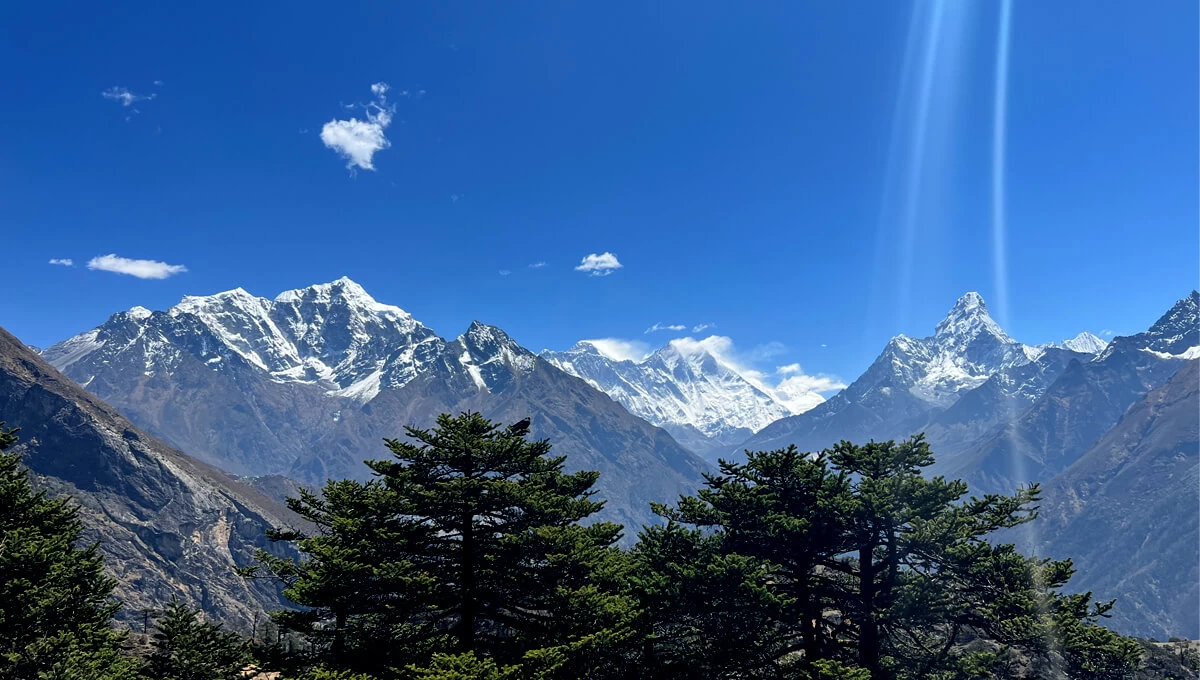
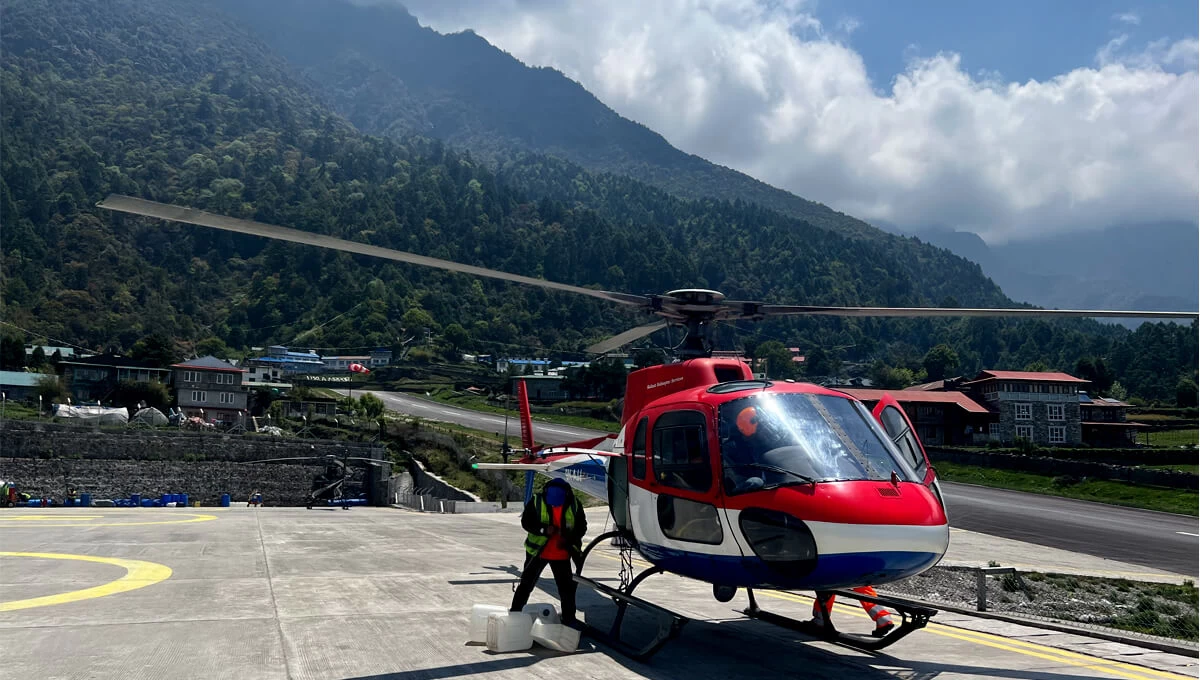
Lukla and Namche Bazaar are those places that can be easily visible from above; in fact, Lukla serves as the fueling point of this helicopter trip. But to catch glimpses of Namche, it all depends on the flight path, cloud, and your seat arrangements. The deeper you fly into the Everest region, the more you feel the snow-capped peaks surrounding you. Even on crystal-clear skies, Mount Everest, along with other towering neighbouring peaks, comes into view.
In the same way, the return travel gives way to a varied environment that is mesmerizing to watch from different perspectives. Your return treks to high mountains slowly start to fade, which later on gets replaced by crowded cities and small towns, which later on gives a fulfilling achievement. This sudden change in the landscapes is what makes the interesting parts of the Everest Base Camp Helicopter Tour.
What the Price of an Everest Helicopter Tour Really Covers
The price for an Everest Heli Tour is easy to understand when you know what is actually included in the package. For doing the Everest Base Camp Helicopter Tour, the main cost is in the helicopter itself, along with the final cost that includes services like airport transfers, airport-related charges, landing arrangements, taxes, and other necessary fees. These inclusions can even be checked before booking your Everest Helicopter Tour Package.
The ground transportation from your hotel to the airport is included in the package. It is equally worth considering whether the Everest helicopter tour cost is a per-person price for a shared flight or the total price for a private charter. Even group size can make a major difference to the final cost. Passenger weight and baggage may also matter for high-altitude helicopter operations, so accurate information should be provided when booking.
Most times, seasonal pricing can change as well. Before comparing one operator with another, look beyond the headline price and check what is included, what is excluded, and what happens if the flight is delayed or rescheduled, or cancelled because of weather or other operating conditions. The final price, group rates, private charter cost, inclusions, and additional charges can be confirmed by High Camp Adventure before.
The People Who Usually Enjoy This Tour Most Are Not Always Trekkers
The Everest Base Camp Helicopter Tour often suits travelers who want to see the Everest region but do not have enough time for a multi-day trek. If you have only a short stay in Nepal, flying can give you a chance to see the high mountains without using most of your trip on the trail.
It can also work well for first-time visitors who want to explore Everest in less time. Families, older travelers, and people who simply do not want to commit to long days of walking may also prefer this type of experience. This tour can also make sense if you are planning for a short gateway to mountain areas.
You do not need to be a trekker to enjoy seeing this part of the Himalayas. Sometimes, you simply want to see what the Everest region looks like from above. But flying is not for everyone. If what you really want is to walk through Namche Bazaar, spending evenings in the mountain villages, the Everest Base Camp Trek gives the perfect background to this region.
What Happens if the Weather Changes While You Are Already in the Everest Region?
Mountain weather can change even after your helicopter has already reached the Everest region. You might leave Kathmandu with good visibility and still find clouds, wind, or reduced visibility around the higher mountains. This could be important around Kala Patthar, where conditions at high elevation can be different from those at lower points such as Lukla.
If the weather changes before your planned landing, the pilot may decide that landing is no longer suitable. You could be asked to remain in the helicopter, wait for a change in conditions, or follow an alternative arrangement. The return journey can also take longer than expected if conditions need to improve before the helicopter can continue.
During a sudden change in the conditions while you are already in the Everest region, the best thing is to follow the pilot and crew instructions rather than trying to judge the weather yourself. Mountain visibility can look acceptable from where you are standing while conditions elsewhere along the routes may be less suitable for flight.
What Happens Inside the Helicopter Matters More than the Tour
Once you are inside the helicopter, the experience is not quite like sitting in a normal passenger aircraft. The space is limited, and where passengers sit can depend on the aircraft being used, the group size, and the day’s operating arrangements. We would recommend checking the seating arrangement with High Camp Adventure if having a particular view from the window matters to you.
Passenger weight and baggage also have a practical role in a high-altitude helicopter flight. The helicopter carries people, luggage, fuel, and other important equipments that makes it necessary and important factor in load balance. This is why the operator may ask for accurate passenger weights before the flight. Check the actual baggage allowance before departure and keep only the things you genuinely need during the flight and mountain stop.
Keep your phone or camera secure, avoid moving around the cabin just to get a better photograph, and wait for instructions before getting in or out of the helicopter. At a high-altitude landing point, simple things such as staying close to the permitted area and listening to the crew make a difference.
Is a Private Everest Helicopter Tour Worth the Extra Cost?
For travelers who value more privacy, flexibility, or simply want the experience of flying to Everest with their loved ones. Then, definitely, the Private Everest helicopter tour might be the one you need. But if your goal is to simply see the Everest region from the air and get a feeling of standing here, a shared flight can equally be a rewarding moment.
A private charter becomes more useful when you are traveling with family, friends, or a small group that prefers not to share the helicopter with other passengers. It can also make the experience feel less rushed because you are traveling with your own group rather than coordinating around other travelers.
| What matters | Shared Helicopter Tour | Private Helicopter Tour |
| Overall Experience | You experience the Everest region alongside other passengers. It is a practical choice if you mainly want the mountain flight and planned stops. | The experience is reserved for your own group, which can make the morning feel more personal and relaxed. |
| Who it suits | A good option for solo travelers, couples, or travelers who are comfortable sharing the helicopter with others | Often more suitable for families, friends, couples, or groups who want to keep the experience among themselves |
| Cost | Generally the most affordable choice because the flight cost is shared among passengers | Costs more because the helicopter is arranged privately for your group rather than shared with other travelers. |
| Privacy | You may be traveling with people you have not met before. | You travel only with the passengers included in your private booking, giving you greater privacy. |
| Group Experience | You may need to coordinate seating and general arrangements around other passengers | Your group can enjoy the flight and mountain stops together without other passengers joining the experience. |
| Flexibility | Usually follows the confirmed shared-flight arrangement and operating schedule | Depending on the charter arrangement, there may be greater flexibility, but this should be confirmed with the team before booking. |
| Photography | You can photograph the landscape, but you are sharing the aircraft and viewing opportunities with other passengers. | A private arrangement can feel more comfortable for groups who want to focus on photography together without sharing the experience with strangers |
| When the extra cost may not be necessary | If you are mainly interested in seeing Everest and the surrounding mountains, sharing the flight may be perfectly suitable. | If privacy is not important to you, paying extra for a private charter may not add enough value. |
What to Know About the Helicopter Used for Your Everest Flight
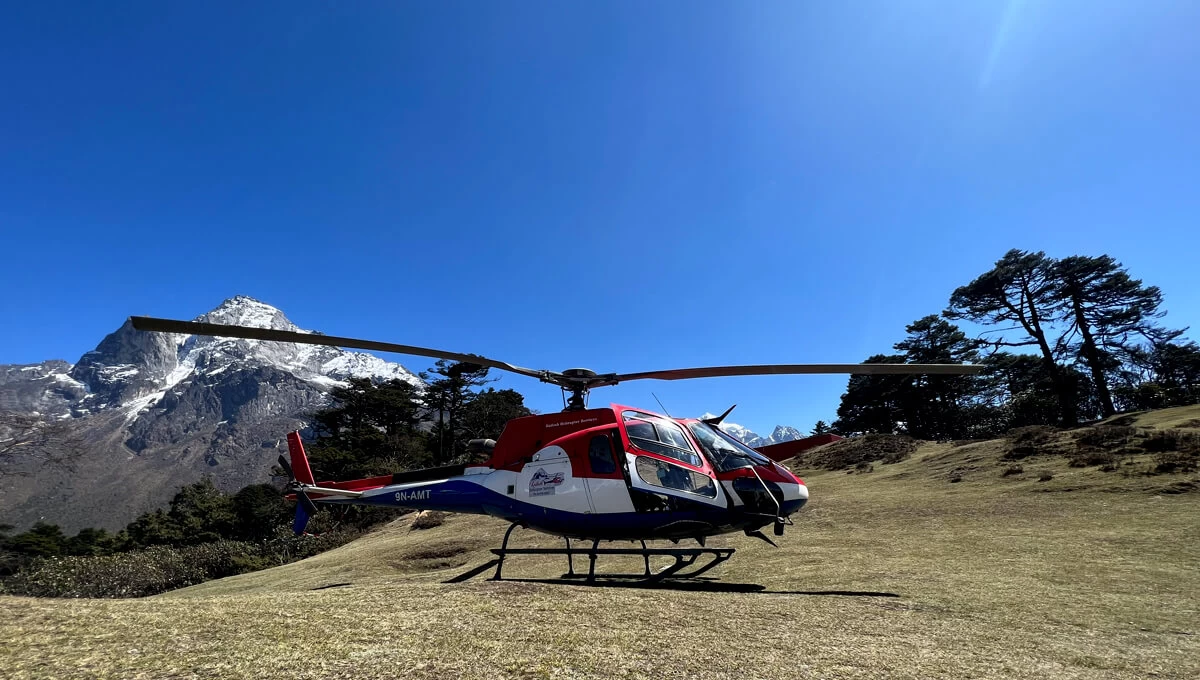
We operate the Airbus H125, also known as the AS350 B3e, for the Everest Base Camp Helicopter Tour. This is a single-engine helicopter designed for demanding work in high-altitude conditions. That matters here because flying towards the Everest region is not the same as taking a normal sightseeing flight around a low-altitude destination.
The H125 is known for its high-altitude performance and is widely used for passenger transport and other mountain operations. Airbus lists a maximum flight altitude of 7,010 meters and a maximum takeoff weight of 2,370 kg for the dual hydraulic configuration. These figures describe the aircraft’s capabilities, not a promise that every flight will operate at those limits.
Passenger numbers and total weight matter more than many travelers realize. The helicopter has to carry passengers, baggage, fuel, and other necessary equipment within its operating limits. The manufacturer's published configuration should not be interpreted as the passenger capacity for every Everest flight. Actual passenger numbers can depend on altitude, fuel, baggage, weather, aircraft configuration, and operating requirements.
The Airbus lists configurations of one pilot with up to six passengers, but the number carried on a particular Everest flight can depend on the actual operating costs.
This is also why High Camp Adventure may ask for accurate passenger weight information before the flight. It is not simply for the booking formalities. For travelers, the main thing to understand is that the H125 is built for this type of demanding environment, but no helicopter model removes the limits created by weather, wind, altitude, payload, or visibility. The crew is responsible for making the final operating decision on the day.
Things to Consider Before Booking your mountain flight to Everest
If this is your first helicopter trip into the Everest region, the first thing we would say is not to think of the itinerary time as completely fixed. The mountain weather can change the plan, so keeping some extra days in your schedule is useful. Here are some of the important things we would recommend before you book the Everest Base Camp Helicopter Tour.
- Pack a warm jacket, gloves, and other useful layers, as Kathmandu can feel cold in the morning while the high mountain area is cold and windy.
- Do not plan an important international flight or another fixed activity immediately after the helicopter tour.
- The planned landing can change because of weather, visibility, wind, altitude, or the pilot’s operating decisions.
- Do not expect the same experience as trekking. A helicopter can take you to the Everest region in a short time, but it does not give you the days of walking through settlements and witnessing a gradual change in the landscape each day.
- Follow instructions and listen to the crew about seating, baggage, getting out of the helicopter, and where you can move around.
- Before confirming your mountain sightseeing flight, be sure about the booking policy, especially for delays, cancellations, refunds, landing changes, or any last-minute charges.
- Even though the Everest helicopter tour is the quickest way to reach the mountain, the mountain weather and operational delays might cause trouble. So, it is advisable to stay calm, have peace of mind, and ensure flexibility in your next day’s plan.
- During unfavorable mountain conditions, we cannot guarantee a perfect opportunity to catch the beauty of the snow-capped peaks.