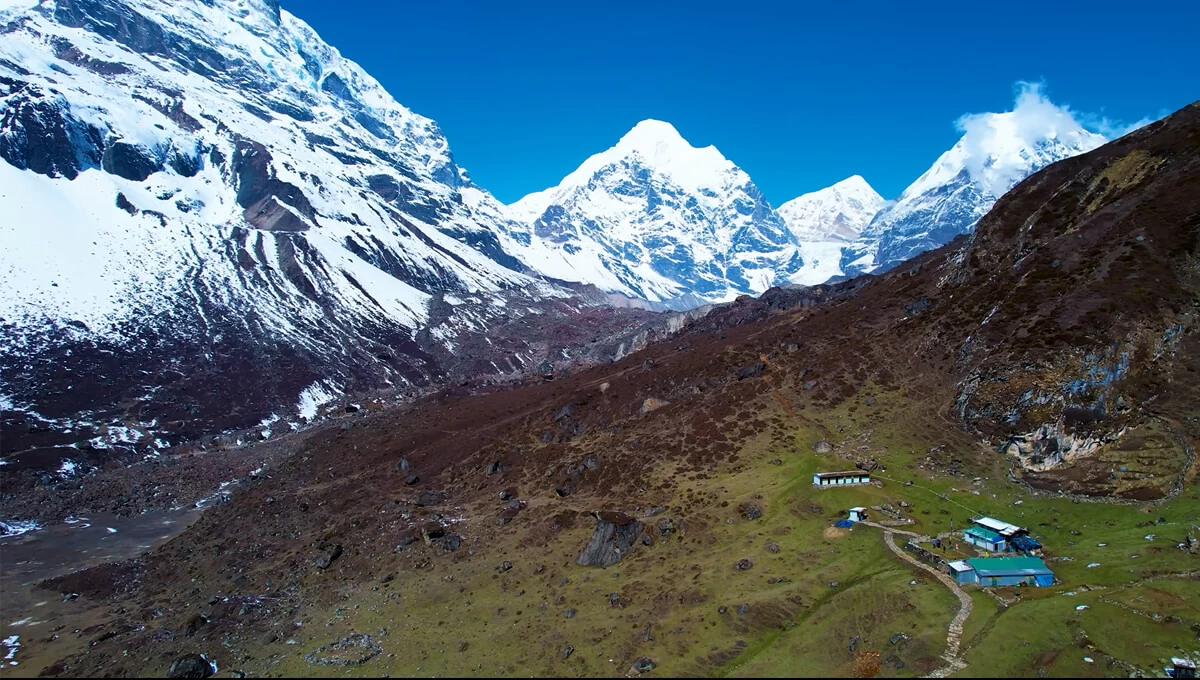
Snow-capped Himalayan peaks towering over a green valley trail on the Makalu Base Camp Trek
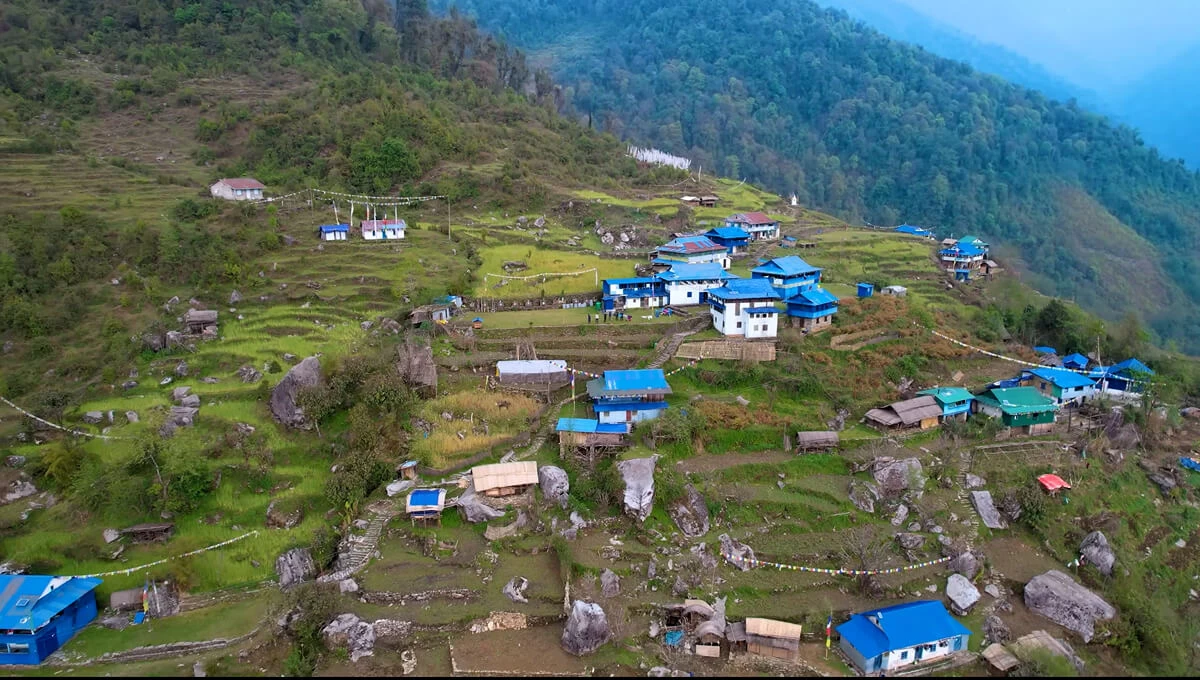
Aerial view of a terraced mountain village with blue-roofed houses along the Makalu Base Camp Trek
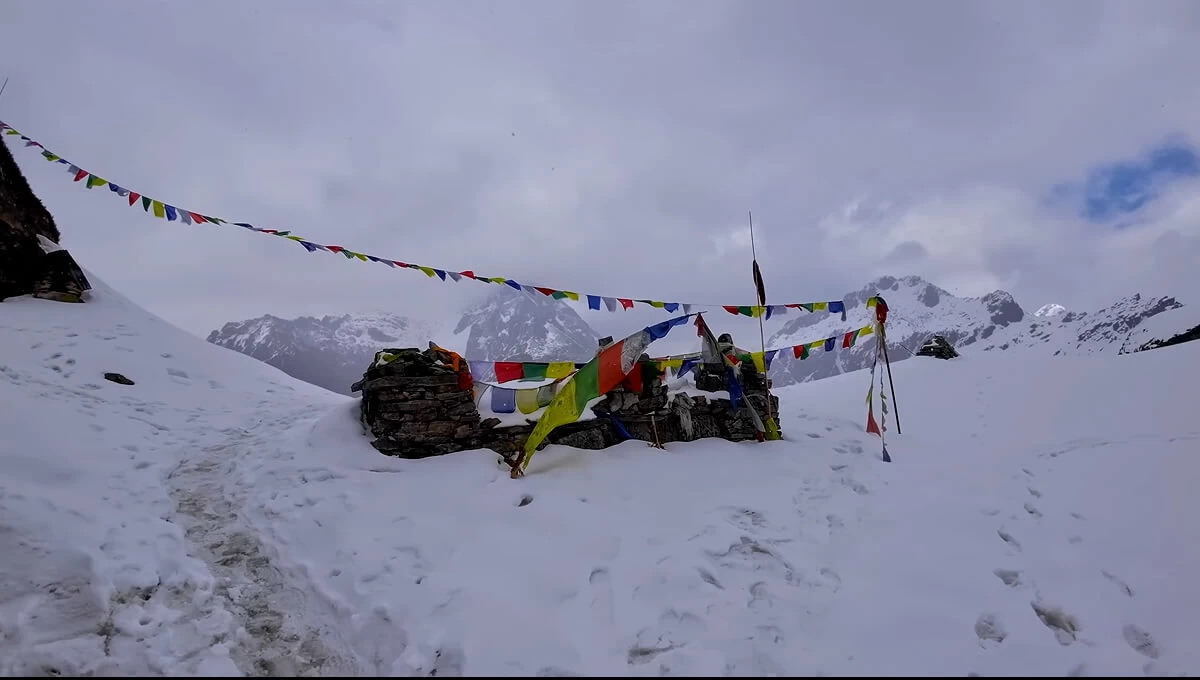
Snow-covered trail crossing Shipton La Pass on the Makalu Base Camp Trek

Makalu Base Camp Trek - 20 Days

31 reviews in Trip Advisor
11 reviews in Google Reviews
Recommended by 99% of travelers
Duration
20 Days
Trip Grade
Strenuous
Country
Nepal
Maximum Altitude
4,870 m (15,987 ft)
Group Size
1 - 15 Pax.
Starts
Kathmandu
Ends
Kathmandu
Activities
Trekking & Hiking
Best Time
Spring & Autumn

About Makalu Base Camp Trek  

While the Everest Base Camp has the crowds. Makalu Base Camp trek gets you the fifth-highest mountain in the world. The route leads through the Arun Valley and Makalu Barun National Park. Soon after Tumlingtar, the difference starts to become obvious when the roads give way to villages such as Num, Seduwa, and Tashigaon and further climbing into the Makalu region. 

From Tashigaon, you no longer walk through the lower hills. The route climbs through Kongma Danda, crosses the high sections around Shipton La, and then drops into the Barun Valley. This is where the surroundings change, with fewer settlements, harsh trails, and simple accommodation, and many exposed high-mountain trails. 

The communities along the lower route also give the journey some insights into the mountain lifestyle. You pass Rai villages around the Arun Valley before reaching the Sherpa settlements farther up the trail, including Tashigaon, which is regarded as the last permanent village before ascending higher. 

Eventually, trekking to Makalu Base Camp brings you to 4,870 m, which is just beneath the south face of Makalu. From the upper Barun Valley, the landscape shifts from forest and farmlands to alpine meadows and glacial terrain, with Makalu dominating the valley ahead. 

If you have done the Khumbu region trek, the physical difference is worth understanding before you book. The Makalu Base Camp trek difficulty comes less from the hard climb than from the steep ascents, high passes, long days, and basic facilities once you are above Tashigaon

And that’s the appealing part of this route, as you are not simply walking towards the famous mountain. You are following the Arun and Barun landscape from low valleys into the eastern Himalaya, with the trail itself becoming part of the experience. 

Important Highlights During Makalu Base Camp Trek

  • Start from Tumlingtar and Num, as you pass through Rai villages and Tashigaon, then climb into the quiet upper Makalu Barun National Park
  • The route from Khongma Danda and Shipton La gets serious, with steep climbs and high passes before descending towards Mumbuk
  • Experience the everyday mountain communities around Seduwa and Tashigaon, rather than visiting villages that are made for trekkers to stay overnight. 
  • The Upper Barun Valley gives way to alpine terrain, which is around Langmale Kharka, with chances of spotting Himalayan tahr and, if you are lucky enough, red panda as well. 
  • Stand at Makalu Base Camp at 4,870 m, which is located beneath Makalu. From here, the clear-morning views towards the mountain’s south face and surrounding eastern Himalayan peaks are just spectacular. Even if you reach a higher viewpoint along the route, Everest and Lhotse are also visible. 

How Difficult is the Makalu Base Camp Trek?

The Makalu Base Camp trek difficulty comes from the repeated steep climbs, long walking days, and the way the route keeps gaining and losing altitude. One of the toughest stretches starts around Tasahi Gaon and Khongma, where a roughly 6-hour climb takes you up to about 3,505 m. 

The next day involves crossing Shipton La at 4,150 m, before descending to Mumbuk. Then comes another demanding day, the Yangla Kharka to Langmale Kharka, around 7 hours with the overnight altitude reaching 4,420 m. Along the way, you also deal with the thin mountain air by this point, so the uphill climb feels very difficult from the lower Arun Valley. 

Overall, expect steep stone steps, uneven trails, long ascents, and descents, and several days of 5-6 hours on foot. This is what really makes cardiovascular fitness important, along with pacing that matters much once you get above 4,000 m. 

If you have done EBC, don’t assume the same preparation is enough for this trek. The route feels extremely tough when you get tired, and fewer places to stop and rest in comparison to the Everest trek. So, it is recommended to do some training on long uphill walks and stairs to build stamina. 

Best Time to Trek to Makalu Base Camp   

Most of the guides will tell you spring or autumn is best. But the most useful question is which one suits the kind of trek you want. For Makalu, the clearest and most dependable times are generally March to May and September to November, but both of them feel different on the trail. 

Spring is a better choice if you want warmer conditions and blooming rhododendron through the lower forests. March can still feel cold at the higher camps, while April and May usually give a proper balance of well-maintained trail and good mountain visibility. 

Autumn, in the same way, brings the clearest skies after the monsoon, mainly in October and November. The higher sections around Shipton La, Langmale Kharka and Makalu Base Camp can be cold in the morning, but clear weather can make this the preferable time for mountain vistas. 

Early March, which is winter in Nepal, can bring snow at the passes, while December can get extremely cold at the base camp. Monsoon months are also less favorable and reliable, with muddy trails, heavy clouds, and difficult conditions to tackle along the way. 

So, when deciding when to trek Makalu Base Camp, don’t choose only by the time you are free. Choose between warmer spring conditions, clearer autumn skies, and less off-season. 

What it Costs to Trek to Makalu Base Camp

The price of a Makalu trek is not just the number of the package. Your actual budget is shaped by permits, transportation, guides and porters, accommodation, and food along the route. The package covers the main trekking logistics, but keep some extra money aside for insurance, tips, drinks, snacks, and personal expenses. 

Group Size Price Per Person
1 person US$2,299
2 - 4 people US$1,999
5 - 10 people US$1,799
11 - 15 people US$1,699
16 - 20 people US$1,599

The biggest difference comes from group size. A solo trek costs more because transport, guide services, and other fixed expenses are not being shared among trekkers. For the government fees, foreign trekkers currently pay NPR 3,000 for the Makalu Barun National Park entry and NPR 2,000 for TIMS. 

Makalu Base Camp is also among the routes where a licensed guide and agency-issued TIMS are required under the current rules. There is also a restricted-area trekking permit for the applicable sections of Makalu Rural Municipality, currently US$20 per person per week for the first four weeks. 

Beyond the fixed fees, your actual spending depends on how long you stay in Kathmandu, what you buy on the trail, and whether you need extra nights because of flight or weather delays. 

Do You Need a Guide or Porter?

A licensed guide is mandatory for the Makalu Base Camp trek, but hiring a porter is optional. As per the current trekking rules, foreign trekkers are required to have a licensed guide that is arranged through a trekking agency. 

The guides are not only there to lead you through the Makalu region. They handle route navigation, arrange accommodation, help communicate with teahouse owners, secure permits and transport, and keep an eye on the altitude. If the weather turns harsh around the pass, the guide will decide whether to continue, wait, or turn back. 

The porter service is different from the guide ones. If you can carry your own backpack and are used to hiking with a full load, a porter might not be necessary for you. But many trekkers prefer to leave the heavier gear with a porter and walk with only a daypack. In this way, it’s easier for them to proceed through long ascents, especially around the higher section and final trek to Makalu Base Camp. 

Altitude and Acclimatization on this Route 

The main concern is not only the final Makalu Base Camp Trek altitude, which is located around 4,780 m. It’s the rapid change once you leave Tashigaon. You climb from 2,070 m at Tashigaon to 3,505 m at Khongma, then cross Shipton La at 4,150 m before reaching Mumbuk. 

This is why we have included a rest day at Khongma in the itinerary before crossing the higher passes. It gives you time to sleep at 3,500 m, take a short acclimatization walk, and see how your body is responding to above 4,000 m. 

As you continue towards Langmale Kharka at about 4,420 m and then Makalu Base Camp, altitude sickness becomes a real thing to consider. At such altitude, you might get headaches, fatigue, dizziness, nausea, or poor sleep. During such symptoms, tell your guide early so the situation can be handled on time before it gets harder to manage. 

One of the best ideas is to not race on higher sections. Keep a steady pace, drink regularly, eat properly, and avoid treating the acclimatization day fully by resting at a teahouse. 

Best Short Trips Around Makalu Base Camp

If 17 days feels too long, or you are already near base camp wondering whether to climb higher, there are a few options. From Khongma Danda, use the acclimatization day for Khongma Hill rather than being lazy and resting at the teahouse. 

Around base camp, this short climb towards 5,300 m gives better Everest and Lhoste views, while Swiss Base Camp at about 5,213 m is a longer and harder climb to push, with a closer look at Makalu’s south face. 

For something different, Barun Pokhari can work as an additional outing when conditions and the itinerary allow, but it should not be treated as a guaranteed one. At these elevations, weather and how you are feeling matter more. If a short Makalu hike is what you want around, the Makalu viewpoint trail can be a better alternative. 

Why Choose Our Team for Makalu Base Camp Trek?

The Makalu Base Camp Trek takes you from the lower Arun Valley into the remote Barun Valley, eventually reaching Makalu Base Camp at 4,870 m. Along the way, you need to pass through steep climbs, high passes, simple mountain teahouses, and stretches where basic facilities are few and far. So, good planning matters as much as fitness.  

  • Our guide knows the Makalu-Barun route, including the sections beyond Tashigaon and the high passes. 
  • We arrange the required Makalu-Barun National Park and other required trekking permits before you leave. 
  • We handle the airport pickup, road transfer to Num, and backup arrangement if the Tumlingtar flight is delayed. 
  • Our Makalu Base Camp itinerary includes a full rest day in Khongma to give your body time to adjust before the route climbs higher. 
  • We arrange teahouse stays in the upper sections, where accommodation becomes simpler, and there are fewer choices. 
  • Our guides keep an eye on your response to altitude, trail conditions, and changing weather as the trek progresses. 
  • If the flight, weather change, or trail conditions affect the schedule, we adjust the plan rather than rushing the group to stay on the planned itinerary. 
  • We don’t cut acclimatization day or recovery time simply to make the package shorter. 

Makalu Base Camp Trek - 20 Days Itinerary

Start Point: Kathmandu
End Point: Kathmandu
Expand All

Upon your arrival at the Tribhuvan International Airport, Kathmandu, you will be welcomed at the airport by the team of High Camp Adventure. Then, you will be transferred to your designated hotel in Kathmandu, where you can relax and unwind after your journey. Kathmandu is a perfect place to enjoy the mix of culture, history, and natural beauty, and explore the nearby areas in the evening. 

Max Altitude: 1,400 m (4,593 ft)Meals: Bed & BreakfastAccommodation: Hotel

On the second day, you will spend your time preparing for the trek, including checking your gear and briefing with your Guide. Then, you can explore some of Kathmandu’s major tourist attractions, such as the options to visit and explore the UNESCO World Heritage Sites like Swyambhunath (Monkey Temple), Pashupatinath Temple, Boudhanath Stupa, and historic Durbar Square. All the major sites provide a glimpse into Nepal’s rich culture and religious heritage, offering you a deeper understanding before you embark on your Makalu Base Camp Trek. 

Max Altitude: 1,400 m (4,593 ft)Meals: Bed & BreakfastAccommodation: Hotel

Today, you will begin your journey with an early morning flight from Kathmandu to Tumlingtar, a short-duration flight of approximately 40-45 minutes. The flight offers you impressive views of the Himalayan range, providing you with awesome vistas of the landscapes. While landing in Tumlingtar, you will continue your voyage as you embark on a drive to Num, which is at an altitude of 1,560 meters. The drive usually depends on the condition of the route, taking 3-4 hours, making your route through lush forests, terraced fields, lovely towns, and awesome scenery. You may get a chance to witness the local way of living, which offers you mesmerizing views of hills and valleys. As you reach Num, take some time to rest and prepare for tomorrow's trek, as this place is perfect for trekkers wanting peaceful surroundings in remote areas. 

Max Altitude: 1,560 m (5,118 ft)Meals: Breakfast, Lunch & DinnerAccommodation: Tea House

Making your journey from Num to Seduwa, which is 1,430 meters, taking about 5 hours to reach the last destination within that time frame, with steady trek and decline pathways. The trek will take you through gradual uphills as you pass through small village areas, offering you a great opportunity to witness the culture of this region. The trail traverses through a gradual descent via dense forests and valleys to Seduwa. Reaching Seduwa, a small but scenic village that offers you the perfect place to rest and enjoy the peaceful surroundings.

Max Altitude: 1,430 m (4,691 ft)Meals: Breakfast, Lunch & DinnerAccommodation: Tea House

Your trek will start from Seduwa to Tashi Gaon after an early morning breakfast. The journey traverses through a gradual ascent via dense forests and terraced fields, where you can experience a gradual shift in the landscape. As you trek higher, you can see magnificent views of the surrounding landscapes and hills from a distance. The trail passes through small settlement areas of the local Rai and Sherpa community, which offers you a great opportunity to witness their culture and traditions. Arriving at Tashi Gaon, a picturesque village, where the local Sherpa welcomes you with warm hospitality. Take proper rest and engage yourself with the locals of the area for a better experience.

Max Altitude: 2,070 m (6,791 ft)Meals: Breakfast, Lunch & DinnerAccommodation: Tea House

The journey from Tashi Gaon to Khongma starts with a gradual ascent through dense forests of rhododendrons and pine trees, which mainly bloom at the time of Spring. As you ascend, the trail becomes more rugged and steeper, with some rocky sections. During the trek, you make your way through some of the small areas, which offer you an opportunity to interact with the local communities. The higher you elevate, the more remote and tranquil the surroundings become, with some glimpses of the towering Makalu mountain, one of the highest peaks in the region. Along the way, you may encounter some small Stupas and prayer flags along the trail. Approaching Khogma, a stunning village, provides you with panoramic views of nearby mountains. 

Max Altitude: 3,505 m (11,499 ft)Meals: Breakfast, Lunch & DinnerAccommodation: Tea House

Today, you will have a well-deserved rest day at Khongma, helping your body to acclimatize to the higher altitude. This day is important, as you must reduce the risk of altitude sickness and ensure a hassle-free journey in the upcoming trek. You can take a short trek to some of the nearby ridges or viewpoints, which offer you dazzling views of surrounding mountains, including Makalu, the fifth-highest peak in the world. Explore around the Khongma village to take an opportunity to experience the local lifestyle of the area. Take some time to observe the daily routines of the Sherpa who resides there. Allow your body to adjust to the altitude, relax, and keep yourself hydrated.

Max Altitude: 3,505 m (11,499 ft)Meals: Breakfast, Lunch & DinnerAccommodation: Tea House

You will trek from Khongma to Mumbuk, through the high-altitude Shipton La Pass, situated at an altitude of 4,150 meters. The trail leads you through a challenging ascent, which gets steeper and rockier as you elevate higher. As you pass along the route, you get a magnificent view of the Makalu and Baruntse mountain ranges, adding a positive impact to your journey. Arriving at the pass, you get to see the panoramic vistas with several prayer flags on your way. After enjoying the views, you will head towards Mumbuk. The routes include some descent, with serene mountain landscapes, offering you a glimpse into the rural life of the Sherpa communities, where you will be accommodated with a tea house facility. Mumbuk offers a perfect place to rest before continuing your trek towards the Makalu Base Camp. 

Max Altitude: 4,150 m (13,615 ft)Meals: Breakfast, Lunch & DinnerAccommodation: Tea House

Trekking from Mumbuk to Yangla Kharka begins with a gradual descent towards the Yangla Kharka, passing through beautiful forests and alpine meadows. The route you navigate provides you with stunning views of the surrounding mountains and valleys, where you make your way via dense forests and move towards high-altitude terrains. Along the way, you make your way through small villages of the Sherpa and Rai locals, as well as chances to observe the local wildlife of the area. Upon your approach to Yangla Kharka, a remote location, you get an opportunity to rest and acclimate while engaging with the locals. This trek offers you a chance to witness the stunning views of the Makalu and other peaks from a distance.

Max Altitude: 3,580 m (11,745 ft)Meals: Breakfast, Lunch & DinnerAccommodation: Tea House

Your trek from Yangla Kharka to Laungmale Kharka starts with a steady ascent via rugged terrain, from alpine meadows to barren landscapes as you elevate higher. As you make your way uphill, the trekking routes reward you with magnificent views of surrounding peaks, including Makalu, and other deep valleys. The final segment of the Langmale Kharka is challenging, with awesome panoramic views of the surrounding mountain ranges. Once you arrive at Langmale Kharka, you will find peaceful surroundings, where you can rest and prepare for the final push toward the Makalu Base Camp. 

Max Altitude: 4,420 m (14,501 ft)Meals: Breakfast, Lunch & DinnerAccommodation: Tea House

Trekking from Langmale Kharka to Makalu Base Camp, elevated at 4,870 meters, covers a challenging yet rewarding journey to the Base Camp. Making your way from Langmale Kharka starts with an ascent through rocky and rugged terrain with some steeper ascents. The route winds through the high and densely forested areas, where you can see some yak grazing and small villages highlighting the local Sherpa and Rai lifestyle. After crossing small villages, you will finally approach Makalu Base Camp, which is usually surrounded by camps. Upon approaching the Makalu Base Camp, you can enjoy the scenic view of giant mountains such as the Lhotse, Everest, and some other high mountains. You will be accommodated in a peaceful and quiet camp, which offers you an unforgettable experience.

Max Altitude: 4,870 m (15,977 ft)Meals: Breakfast, Lunch & DinnerAccommodation: Tented Camp

Today is an extra day for you, as you will be provided with a leisure day at the Makalu Base Camp. Spend your time acclimatizing and exploring the nearby areas. This is perfect for taking a short walk to nearby viewpoints and engaging yourself in other activities. The best option is to take a hike to the Makalu Viewpoint, which provides you with striking views of the high-altitude mountains and a chance to take a close-up view of Makalu Massif, including other surrounding peaks. The mixture of stunning views, tranquility, and a unique chance to explore the areas makes it a memorable day for you in the heart of the Himalayas.

Max Altitude: 4,870 m (15,977 ft)Meals: Breakfast, Lunch & DinnerAccommodation: Tented Camp

The journey from Makalu Base Camp to Yangle Kharka passes through a gradual descent via diverse landscapes. The trail navigates through rocky terrain and alpine meadows before you make you enter lush forests. As you descend, you make your way through dense rhododendron forests, where you can encounter several unique species. Your route passes along the Barun River, where you can see herders with yaks and the serene environment, offering you a sense of calm. As you approach Yangla Kharka, you will be rewarded with awe-inspiring vistas of nearby ridges with distant glimpses of towering peaks like Makalu. Reaching Yangle Kharka is a perfect spot to rest and begin your tomorrow's journey, providing a peaceful and picturesque area.  

Max Altitude: 3,580 m (11,745 ft)Meals: Breakfast, Lunch & DinnerAccommodation: Tea House

Making your way from Yangle Kharka to Mumbuk begins with a gradual ascent through dense rhododendron forests and pine trees, which offers you a mix of refreshing changes in scenery. The route passes through several traditional Sherpa settlements, where you can experience a glimpse of local life. As you make your way towards Mumbuk, you will be rewarded by the open landscapes, with incredible views of the Barun Valley. Approaching Mumbuk, a village nestled in the heart of the mountains, provides a calm and restful place to relax and continue your next day’s journey. 

Max Altitude: 3,610 m (11,843 ft)Meals: Breakfast, Lunch & DinnerAccommodation: Tea House

Trekking from Mumbuk to Tashi Gaon traverses through diverse landscapes that pass from high-altitude terrain to lower areas. Your trek begins with a gentle descent via lush rhododendrons and pine forests, gradually transitioning to subtropical vegetation as you reach lower elevations. The trail passes through peaceful valleys along the Barun River. As you descend, you will make your way through small villages, offering a glimpse of local Sherpa life. Reaching Tashi Gaon, a charming village with traditional stone houses, where you will be welcomed with great hospitality by the locals of the tea houses. Take proper rest and immerse yourself in the peaceful atmosphere of the Himalayas.

Max Altitude: 2,070 m (6,791 ft)Meals: Breakfast, Lunch & DinnerAccommodation: Tea House

Making your journey from Tashi Gaon to Num is the final day of your Makalu Base Camp trek, as you will make your final descent with an exit from the Makalu region. The trail is well-maintained, taking you through terraced farms, quaint agricultural villages, and thick bamboo and oak trees. As you descend, the temperature gets warmer with lush vegetation and a chance to witness varieties of species. Along the routes, you can encounter various small streams and vibrant villages, which are mostly populated by the local Sherpa and Rai communities. The spectacular views of mountains and lower hills make your journey worth it. Upon arriving at Num, you can witness a modest village that acts as an entry point to the lower elevation areas. 

Max Altitude: 1,560 m (5,118 ft)Meals: Breakfast, Lunch & DinnerAccommodation: Tea House

Taking a drive from Num to Tumlingtar includes some dirt trails, with some sections of the road being quite rugged and steep, especially as you descend from the higher hills. The journey to Tumlingtar presents a striking change in the landscapes, transitioning from the mountainous region to the lower foothills of eastern Nepal. The drive passes through lush forests and small settlement areas, where you can witness a gradual change in the landscape from alpine to subtropical areas. The atmosphere gets hotter, offering you lush greenery with some impressive views of the Arun River Valley and surrounding hills. Reaching Tumlingtar, you will be offered basic amenities, as it will be the end of your trek through the remote Makalu region, where trekkers board flights back to Kathmandu.

Max Altitude: 518 m (1,699 ft)Meals: Breakfast, Lunch & DinnerAccommodation: Tea House

Taking a flight back from Tumlingtar to Kathmandu usually takes around 40-45 minutes, offering you impressive views of the aerial scenery of the eastern Himalayas, while you move from a lower elevation to the capital city. Your departure will be from the Tumlingtar Airport, where the flight takes you through scenic hills and valleys, providing you with a distinctive view of the terrain. As you land at the Domestic Terminal Airport in Kathmandu, the vibrant city where you will conclude your Makalu Base Camp Trek. You will be transferred to your hotel, where you can rest and explore nearby areas. 

Max Altitude: 1,400 m (4,593 ft)Meals: Bed & BreakfastAccommodation: Hotel

On Day 19, you have a reserve day in Kathmandu, giving you time to rest, explore, or do last-minute shopping. This day is a great chance to enjoy local food, visit cultural sites, or simply relax after your trek. In the evening, you can explore Thamel and enjoy some local Nepali cuisine for the last time. Whether you choose to explore or simply rest, the day ensures a smooth and stress-free journey. 

Max Altitude: 1,400 m (4,593 ft)Meals: Bed & BreakfastAccommodation: Hotel

Today is the final day of your departure, when you will be transferred to the International Airport for your final departure. Depending on your flight schedule, one representative from High Camp Adventure will help you transfer to the Airport. The drive to the Airport takes you through tha vibrant streets of Kathmandu, which offer you a final look at the city’s culture, busy market, and lively atmosphere before your final departure. Wishing you a safe and pleasant journey back home. If you ever need any trekking suggestions in the future, don’t hesitate to contact High Camp Adventure.

Meals: Breakfast
Let us help You Plan Your Perfect Holiday
Looking for a customized trip? Let us know your estimated holiday time, budget, travel style, etc. We will design an amazing personalized itinerary for you.

Cost Details

Includes

  • Pickup on arrival and transfer to Tribhuvan International Airport for your departure. 
  • Hotel stay in Kathmandu as mentioned (includes breakfast). 
  • Round-trip flight between Kathmandu and Tumlingtar. 
  • Road transportation from Tumlingtar to Num and back after the trek. 
  • Teahouse accommodation during the trek, including the overnight stay around Makalu Base Camp
  • Breakfast, lunch, and dinner during the trekking days. 
  • Makalu Barun National Park entry permit for the route. 
  • Trekkers Information Management System (TIMS) Card. 
  • A licensed trekking guide and porter throughout the trekking route. 
  • Basic trekking equipment such as trekking poles, down jacket, sleeping bag (should be returned at the end of the trek). 
  • Guide and porter expenses such as meals, accommodation, salary, insurance, and required equipment. 
  • Duffle Bag. 
  • Basic First-aid kit. 
  • Farewell Dinner. 
  • Applicable Government taxes
  • Company service charge

Excludes

  • International flights to and from Nepal are not included. 
  • Nepal Visa (you can pay the visa fee on arrival or through the visa application process). 
  • Personal expenses such as drinks, snacks, bottled water, WiFi, charging, laundry, and hot showers. 
  • Personal trekking gear like boots, gaiters, and personal equipment. 
  • Additional hotel accommodation caused by early arrival, late departure, or change in the planned itinerary. 
  • Tips for your guide, porter, and other trekking staff are not included. 
  • Anything that is not listed in the price inclusion section. 
  • Travel insurance that covers high-altitude trekking, medical treatment, and emergency helicopter evacuation. 

Dates & Availability

Select your preferred date
Sep 2026
Oct 2026
Nov 2026
Departure Date
Status
Price
Departure Date
Starts: September 26, 2026Ends: October 15, 2026
Status
Guaranteed
Price
US$1999

Please take a look at our fixed departure dates for this Makalu base camp trek. If they do not fit with your schedule, then please let us arrange an itinerary that is more suitable to you and your requirements.

Essential Information

Permits for the Makalu Base Camp Trek

The Makalu Base Camp trek requires the Makalu Barun National Park Entry Permit and the Trekkers Information Management System (TIMS) Card. Not only this, but to complete this trek, you must have a licensed guide who helps with safety, navigation, and securing the permit on your behalf. 

As per the Nepal Tourism Board Office, the National Park Fees are around NPR 3,000 per individual, while the TIMS Cost is around NPR 2,000 per person for group trekkers. On behalf of the trekkers, our team helps you arrange all the required permits before you leave from Kathmandu. In this way, the entire journey feels much more relaxed and comfortable without any hassle. 

How many days do you need for the Makalu Base Camp Trek?

If you are planning a full journey, we recommend keeping 20 days itinerary. This gives you enough time without rushing through the high-altitude sections. It also includes the days needed to reach the trailhead and get back to Kathmandu. Since you won’t be walking for 20 days straight. 

The itinerary has travel days, a rest day at Khongma to help with altitude adjustment, a day to explore around Makalu Base Camp, and a reserve day in Kathmandu. These breaks are useful, especially after several long days on the trail. 

The Kathmandu to Tumlingtar flight only takes around 40 to 45 minutes, but the overall travel is much longer because of the drive to and from Num. Even the mountain weather can also affect the flight schedule. If you have less time, there are even short Makalu routes that don’t go all the way to base camp. 

Accommodation on the Makalu Base Camp Trek?

For the Makalu Base Camp trek, accommodation is mostly in small family-run teahouses with basic rooms and dining areas. The rooms are furnished with simple beds and blankets, and shared toilets. In the same way, as you go higher after Tashi Gaon, things get much more basic. 

At Khongma, Mumbuk and Yangla Kharka, the number of accommodations gets limited, so you don’t have much choice about where you sleep. The rooms are small and shared facilities are common here. In higher places such as Langmale Kharka and Makalu Base Camp, accommodation is even simpler, with basic teahouse arrangements. The dining room is usually where everyone gathers in the evening. It’s warm and a vibrant place to interact with the locals and enjoy a warm dinner. 

What food can you expect on the trek?

Most of the day, the food is kept simple and filling. Dal bhat, noodles, soup, eggs, basic Tibetan-style dishes, and fried rice are common options at the teahouses. At the lower villages, you may have a few more options, while higher up, you choose from whatever the lodge can prepare that day. 

For food on the Makalu Base Camp trek, don’t expect a large menu at every stop. A warm bowl of soup or a plate of dal bhat can be exactly what you want after several hours outside, especially on the colder days.

Packing for the Makalu Base Camp Trek?

For doing this base camp trek, you need to pack for two different parts of the route. The lower Arun Valley can feel warm during the day, while Khongma and higher sections can be cold, especially in the morning and after sunset. Below are the essentials that are required for trekking to Makalu Base Camp. 

Clothing 

  • Moisture-wicking base layers 
  • Fleece or warm mid-layers 
  • Insulated jacket 
  • Waterproof jacket and trousers 
  • Trekking pants 
  • Warm hat and gloves 

Footwear 

  • Well broken-in trekking boots with good grip
  • Few extra pairs of trekking socks 
  • Camp shoes or sandals 

Sleeping Items

  • Good quality sleeping bag for higher overnight stops 
  • Sleeping pad for extra comfort. 

Personal Equipment 

  • Reusable water bottle
  • Hydration bladder 
  • Water purification tablets 
  • Toiletries 
  • UV protection sunglasses
  • Sunscreen with SPF 
  • Personal medications 
  • Small first-aid kit 

Is there Wi-Fi, Electricity, and a mobile network along the trail?

You may get a mobile signal around the lower villages, but connection becomes less as you move beyond Tashi Gaon and into the higher sections. Some lodges may have internet or a local connection, but it’s only enough for scrolling through social media. 

Charging on the Makalu Base Camp Trek also gets harder as you move higher. While electricity becomes limited and charging facilities may not be available at every stop, we highly suggest having a portable power bank. 

Makalu Base Camp Trek Trail Condition

The trail changes quite a bit as you move higher. Around Num, Seduwa, and Tashi Gaon, you walk on village paths, stone steps, forest trails, and sections that pass through the cultivated hillsides. Above Tashi Gaon, the ground becomes rugged. The climb towards Khongma involves plenty of stone steps, while the route beyond the ridge becomes more exposed. 

Reaching Shipton La, you can expect uneven rocky ground that demands careful footing more than ascending quickly. After crossing the pass, the route now encompass through forests sections while moving towards Mumbuk. From here, you move further into the Barun Valley, where thin vegetation and more alpine scenery lead to the Makalu Base Camp. 

Weather Conditions along the way 

The weather keeps on changing several times during the same day. Down around Tumlingtar and Arun Valley, daytime conditions can be relatively warm, while the air starts to feel much cooler once you reach Tasi Gaon and Khongma. 

As you near the passes around Shipton La, it can be cold and windy. Once you reach around Langmale Kharka and Makalu Base Camp, mornings can be particularly cold. Snow is possible at higher elevations, while rain is more likely on the lower section. 

What Should You Know about safety and emergency evacuation?

The main thing to understand about Makalu Base Camp Trek safety is that you travel through a remote area. Once you move beyond the lower villages, medical facilities and reliable communication become limited. 

Altitude, changing weather, and difficult trail sections are the main things to take seriously. Still, our guide always keeps an eye on how trekkers are coping, and if someone becomes unwell, the guide will assist with some alternative options. 

Even evacuation is dependent on the conditions. A helicopter may only be used only when appropriate. But emergency evacuation in Makalu is not as simple as you think. Many trekkers assume that making one phone call and having the aircraft immediately is possible. But in reality, different factors such as visibility, wind, and other operational restrictions may delay the flight. 

Biggest Mistakes to Avoid on the Makalu Base Camp Trek

A few mistakes can make this trek much harder than it needs to be. The biggest ones are usually simple planning mistakes, not just the lack of fitness. Here are things that need to be considered and avoided to plan a safe Makalu Base Camp journey. 

  • Underestimating the climb to Khongma can be risky. So, take the first part of the trek slow, as the long uphill climb can make the initial section feel more demanding at the beginning. 
  • Even though Khongma is a rest day, don’t just spend the time at the teahouses, go for short hikes and explore around the area. 
  • Download offline maps and carry a trekking map with you for safe navigation. 
  • Keep some extra days in your itinerary, as flights to and from Tumlingtar can be delayed. 
  • Don’t try to hide worsening symptoms just to keep the group moving. In case of altitude-related symptoms, inform your guide or team members.
  • Walking at a steady pace can feel much better than wasting your energy early in the initial days. 
  • The Makalu route is not well-developed like Everest treks, but the route only has basic and limited facilities available. 
  • Carry enough Nepalese rupees for drinks, snacks, charging, and other personal expenses, as ATM services are not available once you get deep into the route. 

Travel Insurance 

For this trek, we strongly recommend having travel insurance that specifically covers high-altitude trekking. Don’t just check whether Nepal is included. Look at the actual altitude limit and activities covered in the policy. 

For travel insurance for Makalu Base Camp, check that your policy covers: 

  • Trekking up to at least 4,870 m, the altitude of Makalu Base Camp. 
  • Emergency medical treatment during the trek. 
  • Helicopter evacuation 
  • Trip cancellations or interruption, if you want protection against having to end the trip early. 
  • Flight delays or missed connections, if these are included in the policy. 

This matters because ordinary travel insurance can have a trekking altitude limit that is too low for this route. Before you leave, read the exclusions as carefully as the benefits. Keep a digital and printed copy of the policy, along with the emergency assistance number.

Makalu Base Camp Trek - 20 Days FAQs

The Makalu Base Camp Trek is one of the remote and challenging trekking trails in the eastern part of Nepal, which leads you to the Base Camp of Makalu, known as the fifth-highest peak in the World. The trek includes a perfect blend of natural beauty, varied landscapes, and incredible Himalayan views. 

The best time for the Makalu Base Camp is in the Spring (March to May) and Autumn (September to November) seasons. These two seasons offer you clear skies, moderate temperatures, and stable weather conditions, enriching your trekking experience with unforgettable memories. Make sure to avoid the Winter (December to February) because of freezing temperatures and heavy snow, and the Monsoon (June to August) due to heavy rainfall and chances of landslides.

The Makalu Base Camp trek is usually considered a moderately challenging trek in terms of difficulty. The journey includes a high-altitude trek, reaching an elevation of up to 5,000 meters (16,404 feet). Therefore, good physical fitness and preparation are essential for completing the Makalu Base Camp trek. 

To ascend to the Makalu Base Camp Trek, trekkers must obtain the Makalu Barun National Park Entry Permit, Conservation Area Entry Permit, and the TIMS Card. All these permits can be obtained from Kathmandu through a registered trekking agency on your behalf.

The Makalu Base Camp Trek usually takes around 19 to 21 days, depending on the pace and route you take to ascend to the Base Camp. However, as per High Camp Adventure, the itinerary covers a total of 19 days, including time to acclimatize and ensure safety.

Trekkers have options to independently trek to the Makalu Base Camp. However, it is advisable to hire a Guide for those who don’t have prior trekking experience. A Guide will assist you with the proper routes, ensuring safety, and managing logistics.

Tea houses and Guest houses are mostly offered to trekkers during the Makalu Base Camp trek as accommodation. All the accommodations have a basic room ith comfortable beds on a shared washroom basis. As you trek higher, the accommodations become more simpler, with basic amenities.

Porter for the Makalu Base Camp trek is not compulsory; however, hiring a Porter can help you provide a comfortable and hassle-free experience in the higher elevations. The trek includes some physically demanding challenges, where trekking with a porter can be a better choice as they carry your heavy backpacks.

Along the trekking routes, trekkers will be offered Nepali cuisines, which include Dal Bhat, Momo, Noodles, Chowmein, and some Western choices such as pasta or fried rice. Make sure to carry some snacks and energy bars.

Yes, the Makalu region is generally known to be a safer trekking destination in Nepal. This region is one of the remote locations where finding things as per the needs and preferences can be tough.

Yes, there are various small settlement areas and towns where you will be provided with your accommodations. Some of the major stops are Seduwa, Khongma, Mumbuk, Tashi Gaon, and Num.

The route to the Makalu Base Camp navigates through remote areas where there is not any facility of ATMs. Therefore, it is advisable to withdraw cash from Kathmandu or Tumlingtar or exchange their currency.  It is advisable to bring enough Nepali rupees for the entire trek, including extra for emergencies.

Yes, mobile networks are available in some lower-altitude villages, but as you ascend higher, there is limited coverage of mobile networks. Most of the tea houses provide WiFi, but it is often unreliable and expensive.

Need Help? Call Us+977 9851031822