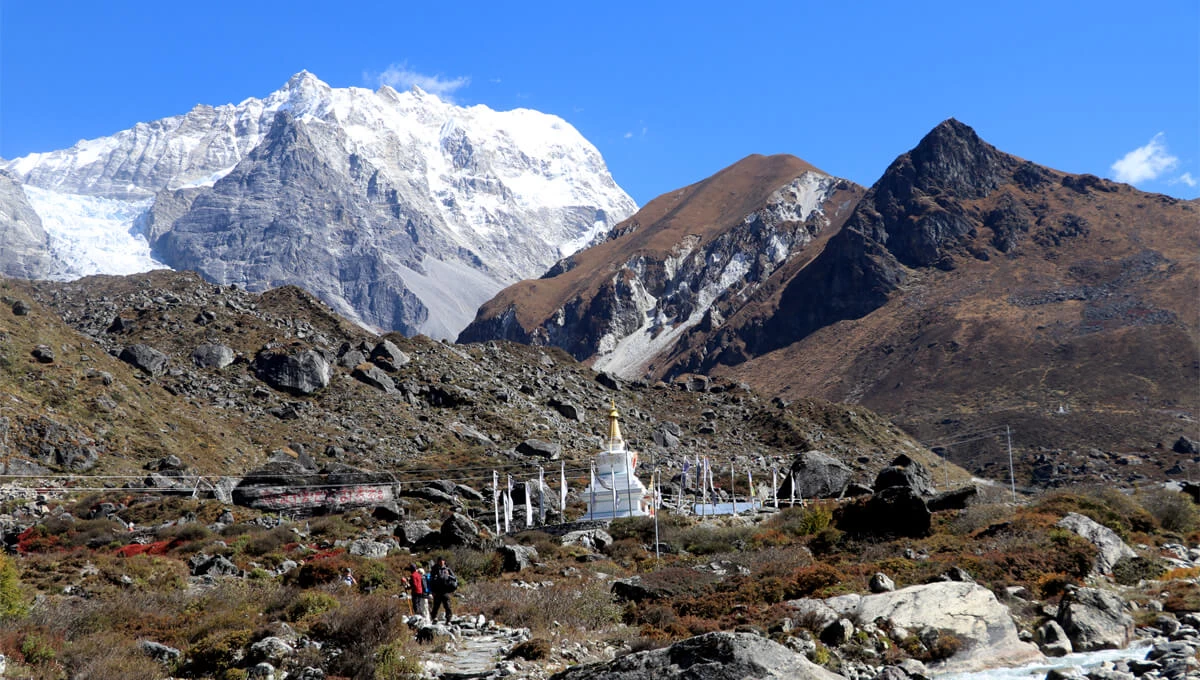
Mountain Langtang Lirung
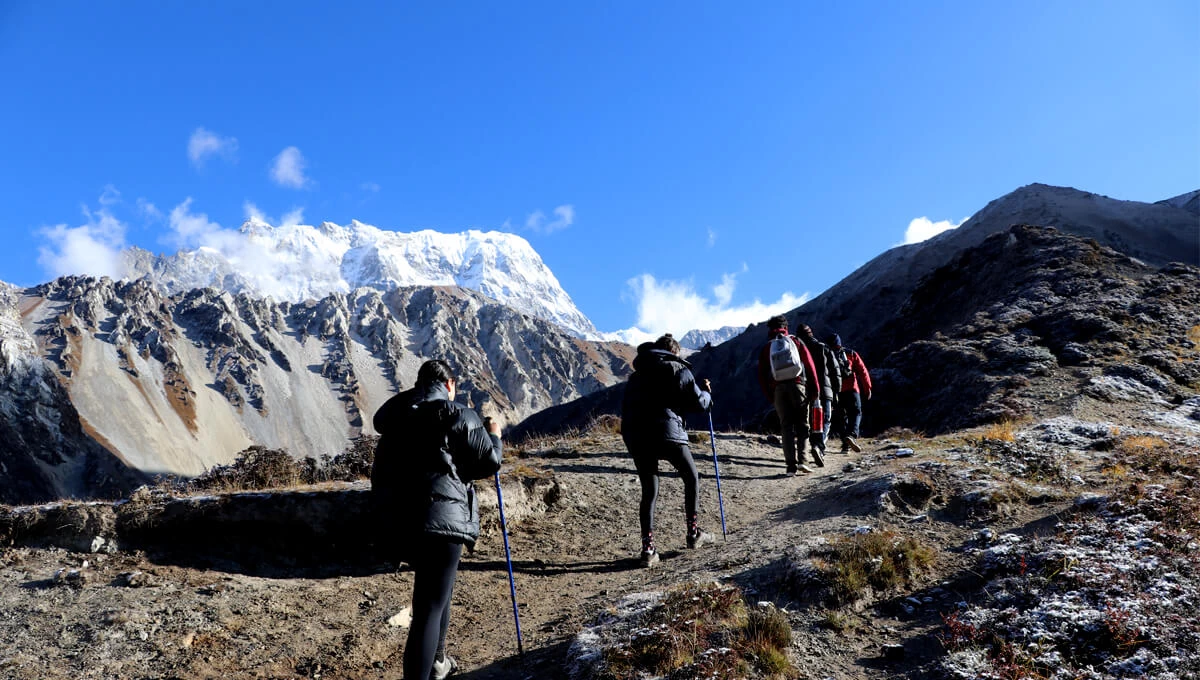
Heading to Tserko Ri View Point
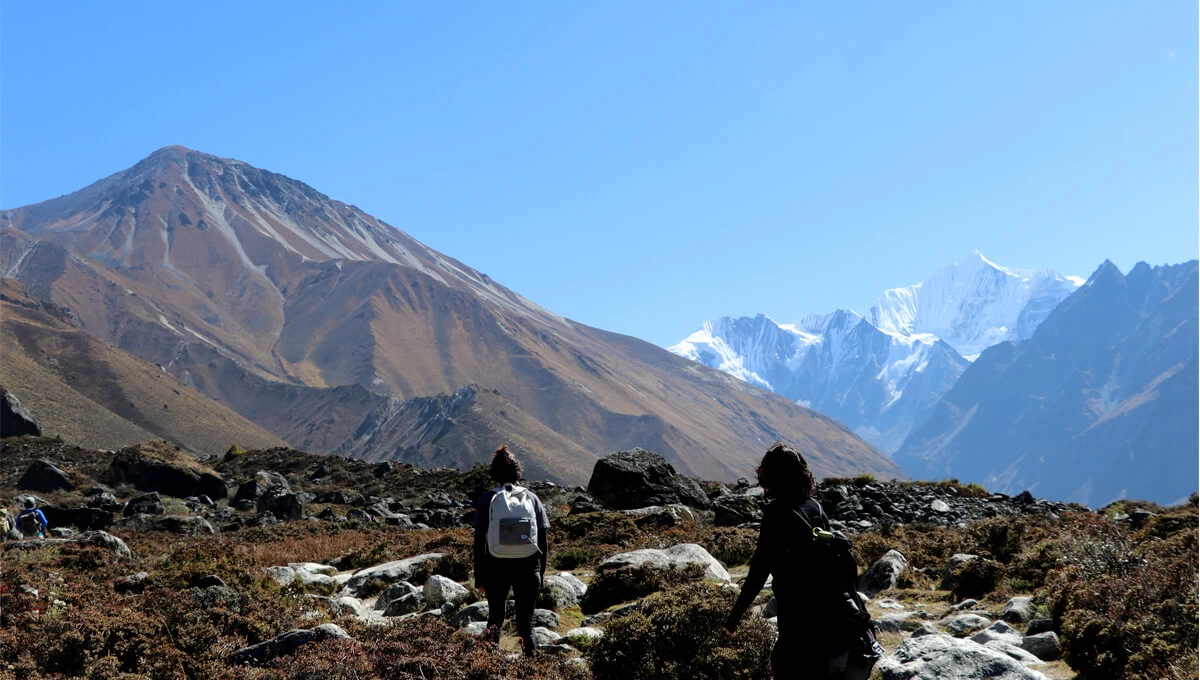
Spring Trek in Langtang

Langtang Valley Trek - 10 Days

31 reviews in Trip Advisor
11 reviews in Google Reviews
Recommended by 99% of travelers
Duration
10 Days
Trip Grade
Moderate
Country
Nepal
Maximum Altitude
5,033 m (16,512 ft)
Group Size
1 - 15 Pax.
Starts
Kathmandu
Ends
Kathmandu
Activities
Trekking & Hiking
Best Time
Spring and Autumn

Langtang Valley Trek Overview 

After guiding travelers through the Langtang Valley Trek for many years, we have come to understand that every season and every journey offers something a little different. While the mountains are undoubtedly spectacular, it’s often the quieter moments like walking through traditional Tamang villages, sharing conversations with local communities, and watching the landscape change. This is why we encourage travelers to experience Langtang at a comfortable pace rather than simply focusing on reaching the destination. 

Our 10-day Langtang Valley Package is the perfect choice for those wanting to experience the adventure. As you leave from Kathmandu, the mountain lifestyle starts to be visible on the way. The sound you get to hear most during the first few days isn’t people talking, but the peaceful river flowing beside. It follows the trail for hours and quietly becomes part of the walk before you even realise it. On the way, the trip takes quiet forests, Tamang villages, and peaceful mountain landscapes, leading you to Kyanjin Gompa. Here, each day on the trail feels different, which makes the Langtang Valley Trek Itinerary even more enjoyable and safe, especially for first-time travelers. 

One question we often hear from trekkers is about the Langtang Valley Trek difficulty. In our experience, the trek is achievable for anyone with reasonable fitness and someone with a positive mindset. The time you gain altitude, it gives your body time to adjust naturally. Our guides believe that to have a comfortable trek, proper preparation and local knowledge are important. Rather than just leading through the routes, our guides share stories about the mountains, explore local traditions, and help trekkers understand the region in a more detailed way. 

We also believe that planning should be simple. Long before the first day of the trek, the planning begins. That’s when questions about the Langtang Valley Trek cost, permits, accommodation, meals, transportation, and the best time for the Langtang Valley Trek. Instead of leaving you to search through dozens of websites, we gather the information we regularly share with our own trekkers, making it easier to prepare and know what to expect before the journey even begins. 

If the kind of journey you are looking for is one where the trail feels just as memorable as the destination, the Langtang Valley Trek Nepal is well worth considering. It is a trek that gives us time to connect with the mountains, experience the warmth of Tamang culture, and enjoy each day without rushing. When the journey comes to an end, it is often the quiet moments along the trail that make it feel absolutely worth it. 

What Makes the Langtang Valley Feel Different from Other Himalayan Treks

The mountains do not appear all at once. For the first couple of days, the forests are the main focus. Then, almost without noticing, the valley opens up, and the peaks begin to stay in view for much longer time. 

What we enjoy most about the Langtang trek is its slow pace. So, avoiding the large crowds, step into the region that attracts fewer trekkers, along with an opportunity to pass through beautiful forest trails, cross suspension bridges, and simply spend your time in the charming Tamang villages. During your stay here, everyone gets enough time to look around, explore, and simply sit and have a conversation with the locals. 

One of the major highlights of doing this trek is getting a chance to witness a gradual change in the landscape each day. Your walk simply starts in a green valley with forests and rivers, which later on gets replaced by the wide open landscape. By the time you reach Kyanjin Gompa, something has changed. The long climbs feel behind you, the valley feels much wider, and many trekkers find themselves sitting outside a little longer to simply take everything in. 

We do believe that trekking in Langtang is not only about reaching a destination but equally an opportunity to enjoy the beauty of this region. For trekkers looking for an authentic Himalayan experience that feels genuine rather than crowded, the Langtang continues to be one of Nepal’s most rewarding destinations. 

Highlights of the Langtang Trek Nepal: What Makes It So Special

  • Walk through the peaceful forests that are filled with blooming rhododendron, oak, and pine trees. 
  • From the time you begin your trek to the end, enjoy ever-changing views as the trail leads from green valleys to snow-capped peaks. 
  • Enjoy time at the Kyanjin Gompa, which is a great spot to sit and enjoy a closer look at the towering peaks around as well as impressive glaciers. 
  • On the next day, take on a short hike to Tserko Ri, which is enough to make the Langtang Trek feel more rewarding, as the golden sunrise you get to watch is even more fascinating. 
  • Spend a peaceful stay at the local mountain teahouse on the way, which lets you enjoy the warm hospitality provided by them. 
  • As the trail enters Langtang National Park, you get to notice how the surroundings gradually start to be quieter and more untouched. 
  • Appreciate the beauty of this region, as the people, culture, and a deeper connection to the Himalayan region are what make the journey feel even more special. 

Is trekking to Langtang Valley the Right Adventure for You?

Not every trek is the right fit for every traveler, and that’s perfectly okay. After spending years on the trail, we've seen that choosing the right trek often makes a bigger difference than choosing the most popular one. This Himalayan trek in Nepal is often recommended for those who want to experience the Himalayas without committing to some of Nepal’s longer and more demanding routes.  

This journey is especially for those who want a comfortable walk and a chance to explore more about the region. If that sounds like the kind of journey you are looking for, Langtang is likely to feel like the right fit. 

We welcome everyone from first-time trekkers and solo travelers to couples, groups of friends, and families with older children. You don’t need mountaineering experience to enjoy this journey. So, with a good level of fitness, a positive attitude, and willingness to overcome the mountain challenges, the trek feels even more valuable. 

If your idea of a great trek includes quiet trails, genuine conversation with local people, peaceful mountain villages, and waking up to incredible Himalayan views instead of crowds, the Trek to Langtang Valley is exactly that.

What Makes the Langtang Trek Nepal Challenging and Rewarding?

The Langtang Valley Trek is not challenging because of technical climbs or difficult mountain trails. It is all due to walking for several days, where you gain altitude and spend long hours on the mountain routes. The trail is not the same all the way through. Some sections are a little steeper, while others are rocky, so take your time, rather than trying to keep a fast pace. Even allowing time to adjust to the altitude can often make every day on the trail feel easier. 

What makes the trek rewarding is how every day feels like a discovery. One moment you walk through forest trails, and the next you feel yourself being surrounded by a wide valley, glaciers, and towering peaks, and even reaching Kyanjin Gompa and standing on Tserko Ri after the climb offers a real sense of achievement that feels well earned at the end. 

From what we have seen over the years, success on the Langtang Trek is not about being the fastest or strongest. It is about staying patient, listening to your body, and enjoying the experience it offers you. With reasonable fitness, proper preparation, and a positive mindset, most trekkers find the challenge manageable, and the memories stay with you even at the end of this trek. 

Walking Through the Langtang Valley Trek Route: What to Expect on the Way

One thing many trekkers notice is how quickly the atmosphere changes after leaving Syabrubesi. The busy road soon gets replaced by the sound of the Langtang River, forest trails, and quiet surroundings that make the trek feel so different. Instead of rushing towards the next stop, take your time and enjoy the journey as the landscapes start to unfold around you.  

A day or two later, we get to notice a gradual change in the landscape without thinking much about it. The forests begin to thin out, the valleys grow wider, and the distant peaks become part of the day’s walk instead of something we only admire from afar. The small Tamang villages appear on the way, where a warm cup of tea and simple conversation with local families often become the moments we remember most. 

By the time you reach Kyanjin Gompa, you see that the journey feels different from the day you left Syabrubesi. The next morning, an early climb to Tserko Ri brings you even closer to the mountains, and once you are at the top, you probably find yourself wanting to stay a little longer to enjoy the peaceful surroundings. 

Understanding the Langtang Valley Trek Cost for 2026/2027

The Langtang Trek Cost is mainly determined by the group size. Over the years, we found that traveling with more people naturally helps reduce the cost per person, as expenses like transportation, guide services, and other trekking arrangements are shared among the group. 

Whether you are planning the trek on your own, with family, or alongside friends, we make sure the pricing remains clear and transparent from the beginning. That way, you know exactly what’s included before you book, allowing you to focus on preparing for the journey rather than worrying about the costs. 

Group Size Price Per Person
1 Person US$699
2 - 5 People US$549
6 - 10 People US$499
11 - 15 People US$449
16 - 20 People US$399

The Real Reason Trekkers Fall in Love with the Langtang Valley  

It does not usually happen at the highest viewpoint or when we first see the mountains. It happens somewhere in between. Maybe while you share a cup of tea with the local families, pass through quiet forests, or simply watch the snow-capped peaks in the morning. These are the moments that truly make trekking to Langtang Valley feel more personal. 

After years of guiding travelers through the Langtang Valley Trek, we learned that the trail offers something different to everyone. Although every group follows the same trail, they return with unique moments. The mountains may stay the same, but the people you meet, the changing landscapes, and the experience on the way make every step feel unique. 

That’s what really keeps drawing trekkers back to the Langtang Valley. The overall journey is not just about reaching Kyanjin Gompa or standing on Tserko Ri. It is a chance to experience the genuine connection, explore the mountain areas, and the feeling that you experience instead of simply passing through them. 

Why the Langtang Valley Continues to be One of Nepal’s Best-Kept Secrets

The first thing many trekkers say is, “Why didn’t we discover this trek before ?” While Everest and Annapurna attract most of the attention, the Langtang Valley Trek quietly offers something many travelers just search for. The trail feels calmer, the villages are smaller, and there’s more time to enjoy the journey without feeling rushed. 

One of the things we always appreciate about Langtang is how genuine the experience feels here, just as you stand. The trail passes through tall pine and rhododendron trees that provide shade for a morning walk, crosses mountain streams, and stops in welcoming Tamang villages where daily life has not changed much over the years. 

Over the years, Langtang has remained a favourite among experienced trekkers as well. This region is not meant to be the highest or busiest trekking destination in Nepal. Instead, it quietly wins people over with peaceful trails, local culture, and the feeling that we discovered. 

Best Time to Experience the Langtang Valley: Season By Season

We have guided the Langtang Valley Trek in every season, and one thing we have learned is that the best season depends on the kind of experience you are hoping to have. Some trekkers enjoy clear mountain views, while others prefer quieter trails and the changing landscapes each day. Therefore, every day blesses you with something unique. 

The most preferred time is spring (March to May), offering blooming landscapes all around you. It offers well-maintained trails, comfortable temperatures, vibrant rhododendron forests, and long daytime hours. This is what makes it a preferred choice for first-time travelers in this region. 

The same goes for the autumn season, ranging from September to November. It provides crisp mountain vistas, crystal-clear skies, and trails that are in excellent condition. The surrounding peaks are equally mesmerizing to see, which makes the walk more remarkable. Both of these seasons are equally popular for good reasons, but they are not the only times worth considering. 

Winter equally attracts trekkers, offering peaceful trails and a unique side of the Himalayas, especially for those who don’t mind colder mornings. During the monsoon, the lower valleys seem greener, although rain can make some sections of the trail more challenging. 

We often recommend to trekkers that the best time to trek Langtang is not about the weather. It fully depends on choosing the season that can match the experience you are looking for and being prepared before taking on. 

What Experience Has Taught Us About Trekking to Langtang Valley 

Every trekking company follows the same trail, but the experience often comes down to the people you plan your journey with. Over the years, we learned that it’s usually the small details, and not the itinerary, that make trekkers feel comfortable and well looked after. Here are a few things our team focuses on throughout the Langtang Valley Trek. 

  • We ensure you walk at your pace and not the itinerary’s, as everyone walks differently, so rushing the group is never an option.
  • Every evening, the guide talks about the next day’s walk plan, expected trail conditions, and what you can look forward to. 
  • Many experienced trekkers take a few sips of water every time the group stops for a short break. It is a simple habit, but by the end of the day it often makes a noticeable difference. 
  • Packing less usually means enjoying more. Carrying only what you truly need makes the trail easier and lets you focus on the scenery instead of the weight on your back. 
  • Local knowledge makes a real difference. So, knowing when to start walking, where to take a break, and how mountain conditions change throughout the day can make trekking easier. 
  • Weather and trail conditions can change without much notice. That’s why flexibility is one of the most important things you need. 
Langtang Valley Trek - 10 Days Itinerary

Start Point: Kathmandu
End Point: Kathmandu
Expand All

A member of our team will pick you up at the international airport in Kathmandu. Later, we will transfer you to your designated hotel inside Kathmandu Valley. The team representative will help you with the check-in procedure and take proper rest to acclimatize yourself. In the evening, you will be exploring the Swyambu temple, Boudha, as well as Patan Durbar Square which is the ancient Durbar and Stupas of Nepal.

Meals: breakfast, lunch, dinner providedAccommodation: Hotel

The drive from Kathmandu to Syabrubesi is a thrilling and picturesque journey of about 120 kilometers taking about 7-8 hours depending on the condition of the road. The route during the journey takes you through the breathtaking views of the Trishuli River and lush hills making your drive more enjoyable. It takes you through Nepal’s rugged landscape enhancing your trekking experience.

Max Altitude: 1,530 M (4,665 ft)Meals: breakfast, lunch, dinner providedAccommodation: Tea house

The trek from Syabrubesi to Lama Hotel is around 25 kilometers taking you through different types of landscapes, such as forest trails and river valleys with a gradual climb as you enter the Langtang Valley taking about 6 to 8 hours to reach. During the journey, you can witness stunning views, scenic rivers, and small villages enhancing your trekking experiences.

Meals: breakfast, lunch, dinner providedAccommodation: Tea house

The trek from Lama Hotel to Langtang Valley starts with a steady ascent through a diverse landscape, including lush forest and terraced fields leading you to the beautiful Langtang Village. As you get closer to Langtang Village, you’ll experience a gradual increase in altitude and a process to acclimatize for higher elevations. During the trek, you will see scenic views of the Langtang Valley and mesmerizing views of the surrounding peaks fulfilling your journey.

Max Altitude: 3,430 M ( 11,250 ft)Meals: breakfast, lunch, dinner providedAccommodation: Tea House

The trek from Langtang Valley to Kyanjin Gompa involves a moderate ascent through a beautiful landscape with stunning views of the Langtang Himalayas, passing through dense alpine forests and rugged terrain. Approaching Kyanjin Gompa, a Buddhist monastery, provides a significant experience of the culture in this region, offering panoramic views of surrounding peaks and other high mountains, enhancing your trekking experiences.

Max Altitude: 3,870 M (12,696 ft)Meals: breakfast, lunch, dinner providedAccommodation: Tea house

After an early morning breakfast, you’ll hike toward Tserko Ri which is a viewpoint located in the Langtang Valley. The trek is considered a challenging trek due to the strong wind and rough trail offering you stunning panoramic views of the Himalayas including the surrounding peaks. Tserko Ri is a famous viewpoint for its spectacular sunrise views between the snow-capped peaks creating a magical experience for you. Some of the mountain views you can see include Langtang Lirung, Dorje Lakpa, Shishapangma, Langtang Himal Range, etc.

Max Altitude: 5,033 M (16,512 ft)Meals: breakfast, lunch, dinner providedAccommodation: Tea house

The journey from Kyanjin Gompa to Lama Hotel involves trekking downhill through Langtang Valley. The route takes you through some of the beautiful scenery you enjoyed while ascending during the trek offering you mesmerizing views of the Langtang Himal Range. During the trek, you will pass through dense forests with several suspension bridges along the Langtang River making your journey full of experiences. Throughout the journey, you will find several tea houses that provide local foods and drinks. Upon reaching Lama Hotel in the afternoon, you get a chance to engage yourself with the local people enhancing your trekking experiences.

Max Altitude: 2,480 M (8,136 ft)Meals: breakfast, lunch, dinner providedAccommodation: Tea House

The hike from Lama Hotel to Syabrubesi via Sherpa Gaon takes you through the classic Sherpa community offering you breathtaking scenery and a local way of living experience in the Langtang Valley of Nepal. The route takes you through dense forests along the Langtang River adding excitement to your trip via Sherpa Gaon. Sherpa Gaon is a beautiful village where you can get the experience of traditional Sherpa culture. Syabrubesi is the main entry point to the Langtang Valley with stunning views of the surrounding peaks. You also get a chance to witness the diverse landscape, including the rhododendron forests and river valleys making your trek memorable with full of adventure. During the trek, you need to cross several river crossings and go through dense forests with stunning views of surrounding hills.

Max Altitude: 1,460 M ( 4,790 ft)Meals: breakfast, lunch, dinner providedAccommodation: Tea house

The journey from Syabrubesi to Kathmandu offers a picturesque yet demanding route through a varied landscape with mesmerizing views of mountain views. The route takes you through the Prithvi Highway which is used to connect various areas of Nepal. Along the way, you’ll pass through breathtaking mountain scenery, stepped farmlands, and picturesque towns. Your Langtang Valley trek finally ends here in Kathmandu.

Meals: breakfast, lunch, dinner providedAccommodation: tea house

Your journey finally ends on the 10th day with the High Camp Adventure and its team. Hope you had a wonderful time and experience in Nepal with our team. One representative from our team will drop you at the International Airport as per your flight schedule.

Let us help You Plan Your Perfect Holiday
Looking for a customized trip? Let us know your estimated holiday time, budget, travel style, etc. We will design an amazing personalized itinerary for you.

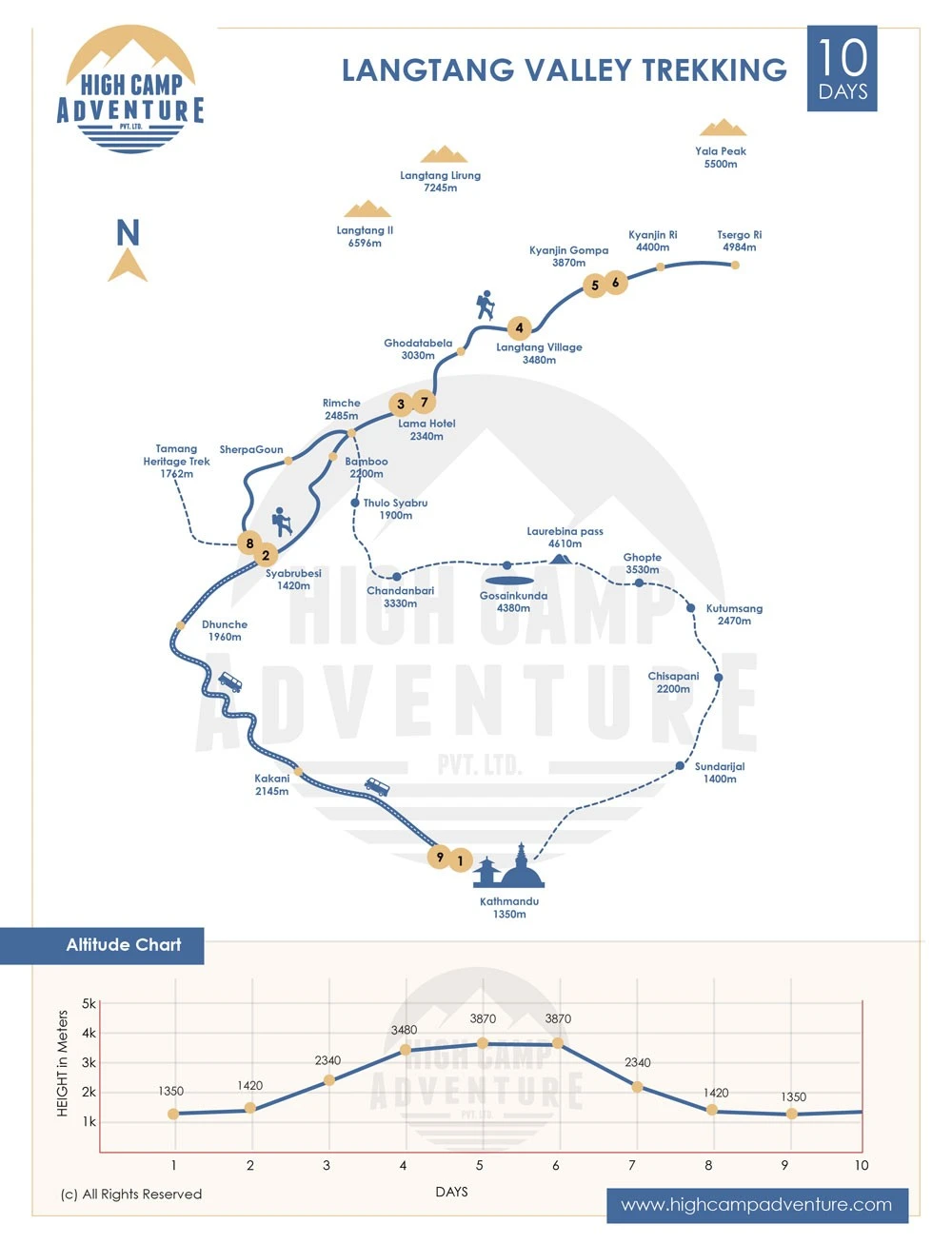
Route Map

Langtang Valley Trek Map

Cost Details

Includes

  • Airport pickup on arrival and airport drop-off on departure in a private vehicle in Kathmandu. 
  • Two nights' accommodation in Kathmandu with breakfast included. 
  • Private or shared ground transportation between Kathmandu and Syabrubesi, and return as per the itinerary. 
  • Accommodation in comfortable local tea houses during the trek. 
  • Three meals a day (breakfast, lunch, and dinner) throughout the trek.
  • Unlimited tea or coffee with breakfast during the trek. 
  • An experienced, government-licensed English-speaking trekking guide. 
  • Assistant guide for larger groups when required. 
  • One porter for every two trekkers (maximum 20-25 kg combined luggage). 
  • Guide and porter salaries, meals, accommodation, transportation, insurance, and personal equipment. 
  • Langtang National Park Entry Permit. 
  • Trekkers Information Management System Card (TIMS). 
  • First aid kit carried by the guide. 
  • Duffle bag for use during the trek (returned after the trip). 
  • Government taxes and all official service charges. 
  • Trip completion certificate. 
  • Farewell dinner in Kathmandu. 

Excludes

  • International airfare to and from Nepal. 
  • Nepal Entry Visa Fees.
  • Lunch and dinner in Kathmandu, except the farewell dinner if included. 
  • Personal trekking equipment and clothing. 
  • Tips for the trekking guide, porter, and driver. 
  • Extra accommodation in Kathmandu due to early arrival, late departure, or changes to your travel plans. 
  • Personal trekking equipment and clothing. 
  • Snacks, chocolates, soft drinks, bottled water, and alcoholic beverages. 
  • Hot showers, WiFi, mobile charging, and laundry services in tea houses.
  • Costs resulting from delays, road closures, natural disasters, political events, strikes, severe weather, or any circumstances beyond our control.  
  • Travel insurance covering high-altitude trekking, medical treatment, helicopter evacuation, trip cancellation, and personal belongings. 

Dates & Availability

Select your preferred date
Aug 2026
Sep 2026
Oct 2026
Nov 2026
Dec 2026
Jan 2027
Feb 2027
Departure Date
Status
Price
Departure Date
Starts: August 15, 2026Ends: August 24, 2026
Status
Guaranteed
Price
US$549
Departure Date
Starts: August 21, 2026Ends: August 30, 2026
Status
Guaranteed
Price
US$549
Departure Date
Starts: August 29, 2026Ends: September 07, 2026
Status
Guaranteed
Price
US$549

These are upcoming fixed departure dates. If you are looking for a different date, please feel free to contact us.

Essential Information

Itinerary Disclaimer

During the exceptional case, we may have to make some possible changes to the given Langtang Valley trek itinerary because of unfavourable weather conditions, landslides, or any unforeseen circumstances for the comfort of every trekker. Therefore, we request you to have some patience during such unexpected situations throughout the trek.

Airport Pick-up and Drop-off

We give high importance to making your journey convenient and comfortable throughout the trek. Hence, a complimentary pickup and drop-off facility is provided to our hikers. Upon reaching the International Airport, we transfer you to your designated hotel, making your journey safe and comfortable. We ensure to give our trekkers a great experience of trekking from start to finish, guaranteeing a dependable and enjoyable trip.

Safety and Security

The overall Langtang Valley Trek is safe and secure, as this region lies near Kathmandu, which can be easily completed in 10 Days. The carefully planned Langtang Valley Trek 10 Days itinerarys a perfect chance to explore the beauty of the Langtang region and visit some of the most popular sites, where numerous trekkers have already visited. What really makes the Langtang Valley Trek safe is the easily accessible routes, well-managed accommodations, favorable temperatures, and specially journey with an experienced Guide and a local Porter, adding an extra comfort and security to your trek. 

Langtang Valley Trek Packing List

When you are trekking in the Langtang Valley, the packing list can be more hectic before the start of the trek. Packing is done according to your personal needs and preferences to ensure you have a successful and comfortable trekking experience. Before the journey, pack all your necessary needs and items needed during the trek. Some of the important packing lists you need are mentioned below:

  • Clothing and Footwear: moisture-absorbing thermal tops/ bottoms, quick-drying trekking trousers and shirts, waterproof and windproof jacket and pants, warm and waterproof gloves, multiple sets of trekking socks that absorb moisture, a scarf to protect your face from sun exposure, sturdy and waterproof trekking boots which are comfortable for you.
     
  • Gears and personal items: sleeping bags, hiking poles, sleeping pad, water bottles, map, waterproof backpacks, first aid kit, sunscreens, toiletries, towel, personal medicines, portable power bank, sunglasses.

The list of packing before starting the trek depends on the time and duration, your needs and preferences to enhance your trekking experiences.

Accommodations and Meals

Accommodation during the Langtang Valley Trek includes your stay at local teahouses, usually run by the local families of this region. However, in Kathmandu, you are accommodated in a 3-star hotel with all necessary amenities provided. The teahouses along the way are perfect for an overnight stay, offering you clean rooms, twin beds, warm blankets, and shared bathrooms, mainly at higher altitudes. If you want the raw experience of trekking in the Himalayas, teahouse accommodation might be the one you want for an amazing journey. 

Similarly, meals along theLangtang Valley Trek Route are mostly provided by the teahouses, where you make your stay. The meals are delicious and provide you energy for long walking days, where you even get to taste the wide range of Nepali cuisines. At lower altitudes, meals are often provided with options such as Nepali and Western style, whereas at higher elevations, meals are basic with Dal Bhat, noodles, pasta, fried rice, and energy-providing food cooked from local ingredients. 

Permits and Documents

For the Langtang Valley trek, you need to obtain several permits during the trek to ensure you have a safe and smooth trekking experience. The two permits are as follows:

Trekkers Information Management System Card (TIMS Card):

The TIMS Card is the most important permit before starting the trek. This card helps trekkers ensure safety and security during the trek to the Himalayan Region as it manages and monitors trekking activities in Nepal. This card can be obtained from the Nepal Tourism Board (NTB) office in Kathmandu. If you are trekking with a registered agency, then they will help you manage this card for your comfort.

TIMS Card Permit Fees

  • NRP 2000 For Group Trekkers
  • NRP 3000 For Solo trekkers

Langtang National Park Permit:

The Langtang National Park Permit is one of the important permits that need to be obtained before you enter the National Park. This permit can be obtained at the entrance gate of the National Park or even from the National Tourism Board office in Kathmandu. The Langtang National Park Permit is issued for trekkers to ensure safety measures and protection of the National Park. High Camp Adventure and its team will help you obtain the permit before you start your journey.

Langtang National Park Permit Fees

  • NRP 3000 (USD 30) For Foreigners
  • NRP 1500 (USD 15) For SAARC Nations
  • NRP 100 For Nepali citizens

For those who are planning to carry their Drone Camera, you need permission from the Nepal Tourism Board, Department of Tourism, Ministry of Home Affairs, and Civil Aviation Authority of Nepal (CAAN). Without a permit from those authorities, you cannot fly a drone, as it is an illegal act.

Guides and Porters

Engaging with an experienced Guide and local Porter is a must for the Langtang Valley Trek. As, the journey includes reaching at higher altitude, having them can be very much essential, mainly during emergencies. If you are a beginner trekker, having them is highly recommended, as they help you make your journey even more comfortable and assist during challenging conditons. 

Porter for the Langtang Valley Trek helps to carry your heavy baggages, which can be burden for you at times. Therefore, having a local porter can help you walk freely without worrying about your heavy luggage, as they are the locals of this region. They even can help you navigate through well-marked routes. So, having a registered Guide and a local porter for the Langtang Valley Trek is highly recommended to ensure your safety and comfort, makign the trek even more special and rewarding. 

Travel Insurance

Travel Insurance for the Langtang Valley Trek is a mandatory thing which should be done by trekkers, as this can be essential at the time of emergencies. However, before engaging travel insurance, make sure to know what the policy covers, as it must include coverage for high-altitude conditions, emergency evacuations, medical treatment, lost luggage, and trip cancellations. Having ensured with travel insurance can help you a peace of mind and make your journey even more enjoyable. 

Visa Requirements

To trek in Nepal, you require a tourist visa, which can also be obtained upon arrival at Tribhuvan International Airport in Kathmandu. You can obtain your tourist visa for 15, 30, or even 90 days duration, with the option to renew more. Make sure your visa duration is sufficient for your entire stay, including any emergency extension needed for you. To obtain a visa, you require your passport, a passport-sized photo, and the form with appropriate details filled up to date. The cost of a visa depends on your duration of stay in Nepal.

Challenges and Considerations

Altitude Sickness

Trekking to the Langtang Valley, a high altitude spot can be challenging, mainly due to risks of altitude sickness as you elevate higher. Beginners with no prior experience, can get high chances of altitude sickness, if they don't adjust to the higher altitude properly. 

  • Symptoms: headache, vomiting, nausea, difficulty in breathing, loss of appetite, dizziness, rapid heartbeat, swelling of hands and legs, etc.
     
  • Preventive measures: hydrate yourself, maintain your pace during the trek, eat a proper, balanced diet, and acclimatise yourself. In case of an emergency, inform your guide, and avoid sleeping pills

So, during the trek, be careful of altitude sickness, as it can cause a major problem. Maintain your pace throughout the trek and let your body adjust to higher alitude, drink plenty of water, and inform your guide or team in case of an emergency. 

Weather Condition

During the Langtang Valley Trek, as you reach higher altitude, the unpredictable weatehr conditons can be a major threat, as mountain weather can change rapidly at times. So, before you begin your trek, make sure to check weather conditions, however, the guide provides you with an alternative during such situations, so engaing with an experienced guide is a must. As unpredictable mountain weather can impact your walk, making the trail challenging. So, it is highly recommended to choose the peak times to trek the Langtang Valley, helping you make the journey even more amazing and with full of unforgettable memories. 

Steep and Challenging Trail

The Langtang Valley Trek offers some of the most challenging trails at the higher elevations. One of the most demanding sections of the trek is the Kyanjin Ri, which lies near the Kyanjin Gompa, providing you with magnificent panoramic views of the Langtang Range. The path is filled with rocks and bumps, making the trek quite challenging.

Langtang Valley Trek - 10 Days FAQs

The Langtang Valley trek is a stunning odyssey that includes many of Nepal’s natural and cultural highlights. It is a great opportunity for trekkers looking to soak in the beauty of the Himalayas with few crowds. The trek offers you a great way to experience the tranquility of Langtang National Park, where varied vegetation and wildlife can be found. Furthermore, the trek gives you to chance to engage with the local Sherpa and Tamang who are well-known for their great hospitality during the trek.

The trek to Langtang Valley usually takes 10 days, depending on the itinerary you are provided and the trekker’s pace. The 10-day trek includes time for acclimatization and places to explore during the trek. In case of an emergency, there can be some possible changes in the given itinerary for your safety and convenience.

The Langtang Valley trek is an achievable trek for most trekkers with a decent level of fitness but you should be responsible in the preparation and how you go through these challenges during the trek. The challenges include high elevations and rough terrains but proper acclimatization and safety can make your trek easy and comfortable throughout the journey.

Yes, during the trek you need two permits which can be obtained from the National Tourism Board Office in Kathmandu easily. The first one is the TIMS card which helps you during the trek for your safety and security. The second is the Langtang National Park Permit which can be obtained at the entry point of the National Park. This permit is important because it helps you to trek through the protected areas of Nepal.

Note: Trekkers with a Drone Camera should have a permit to fly their drones in those areas from the Nepal Tourism Board, Civil Aviation Authority of Nepal (CAAN), and Ministry of Home Affairs.

The best season to trek the Langtang Valley is during the time of pre-monsoon (Spring) and post-monsoon (Autumn). These two seasons are considered the best time to trek because they offer you mesmerizing views of the surrounding mountains, moderate temperatures, and clear skies enhancing your trekking experience.

If you are an experienced trekker you can trek individually, but for beginners, it is better to trek with a guide as they help you throughout the trek making your journey safe and comfortable. An experienced guide can provide you with valuable information about the route, culture, and traditions of that region. The guide will also help you manage your permits and documents to ensure you have a safe and secure journey.

Your journey to Langtang Valley begins from Kathmandu which is the capital city of Nepal offering you a great opportunity to experience Nepal’s culture and traditions making your journey full of excitement from the first day. Explore different places like Swyambhu Stupa, Bhaktapur Durbar Square, Patan Durbar Square, and many more.

Your trek officially starts from Syabrubesi which is a small town, located around 120 kilometers north of Kathmandu. It usually takes around 7 to 8 hours via private jeep to reach there. However, if you want to experience the local bus, you can take it from Gongabu Bus Station from 6-8 am to reach Dhunche and change to another bus to reach Syabrubesi.

During the trek, you will be provided a Tea house with basic facilities. All these Tea houses are selected based on safety, comfort, and ratings. Meals provided to you during the trek include breakfast, lunch, and dinner which are freshly prepared by the tea house owners.

During the trek, packing should be according to your needs and preferences for a safe and comfortable journey. Some of the important items needed are warm clothes, good quality trekking boots, sleeping bags, trekking poles, rain gear, personal medicine, and sun protection cream.

What Our Guests Say?

Need Help? Call Us+977 9851031822