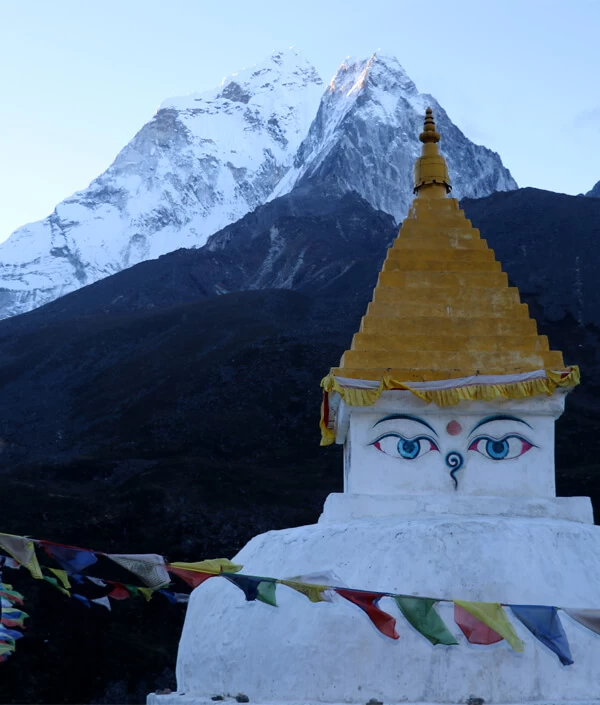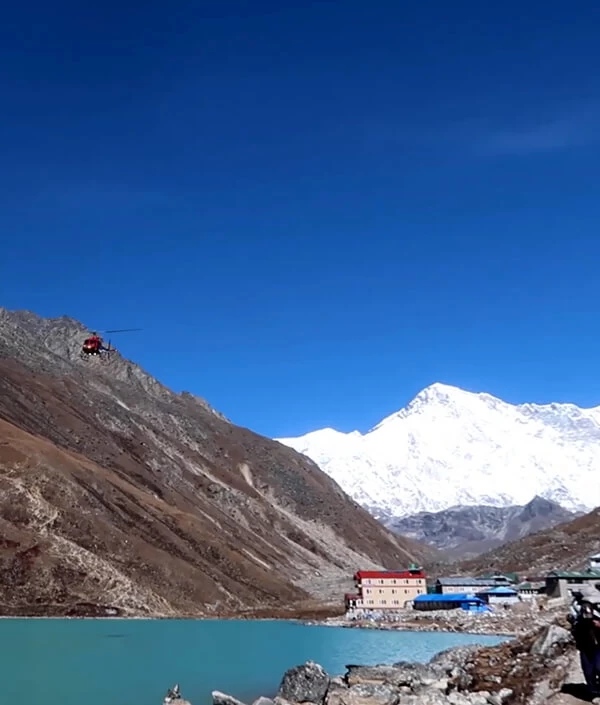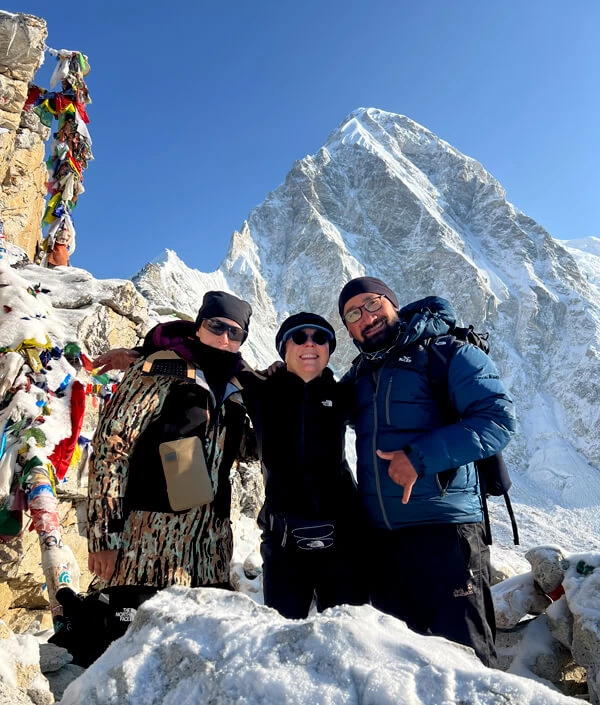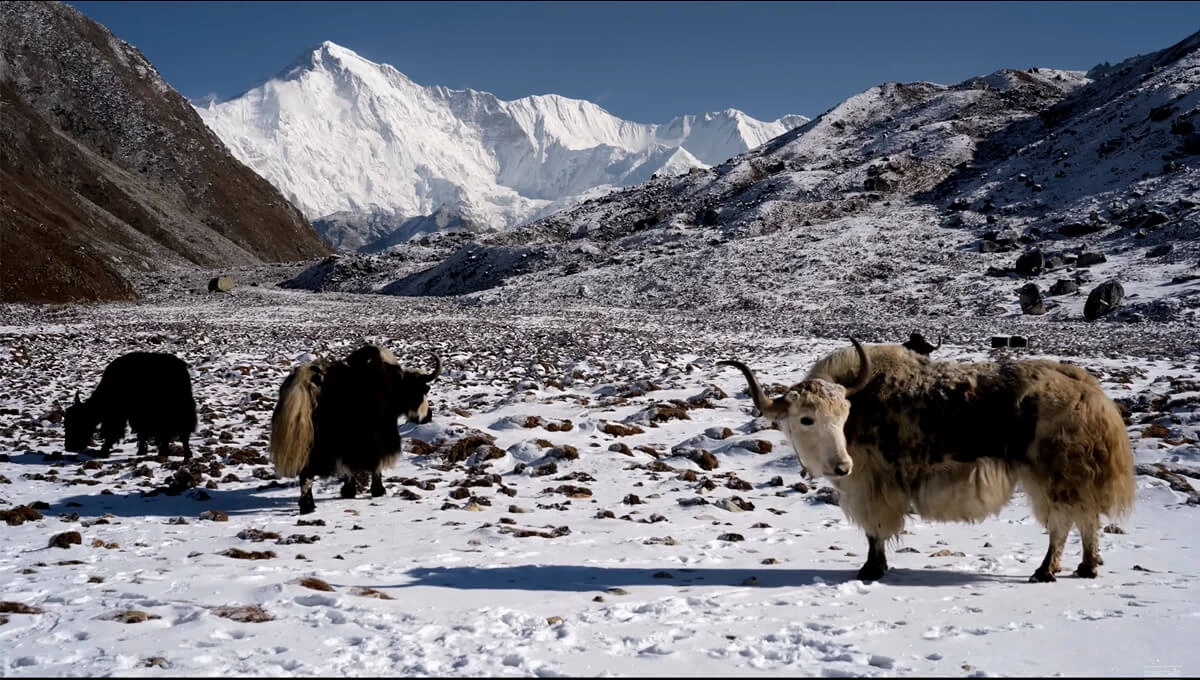
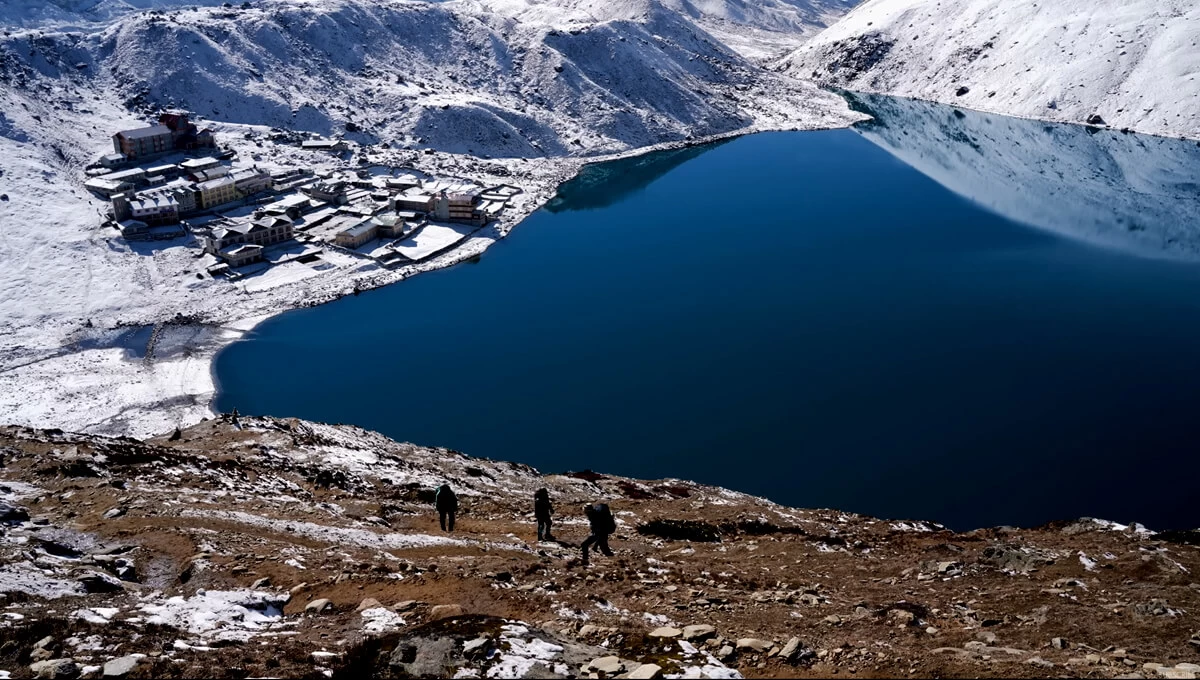
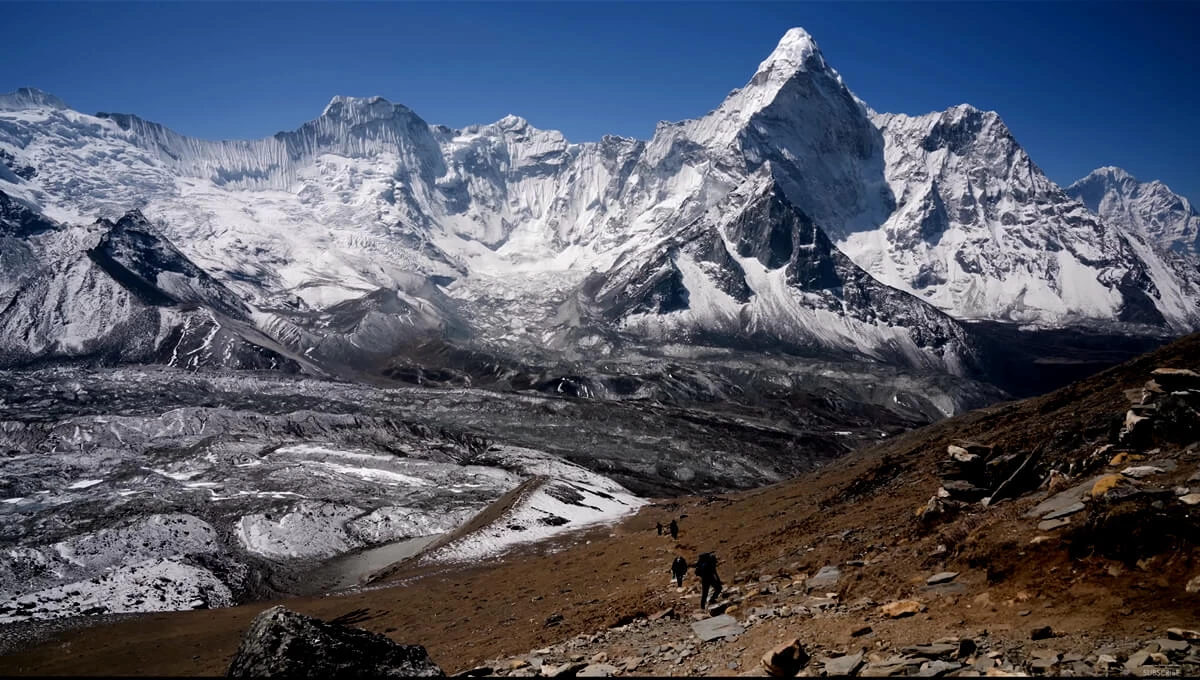
Mountain seen from Gokyo
Gokyo Lake And Village
Way to Kongma La Pass

Everest Three Pass Trek - 18 Days

31 reviews in Trip Advisor
11 reviews in Google Reviews
Recommended by 99% of travelers
Duration
18 Days
Trip Grade
Technical Challenging
Country
Nepal
Maximum Altitude
5,545 M (18,192 ft)
Group Size
1-15
Starts
Kathmandu
Ends
Kathmandu
Best Time
Spring and Autumn

Everest Three Pass Trek Overview

The Everest Three Pass Trek is a complete trekking adventure in the Everest region, which takes you beyond the classic trail. The journey covers crossing the three high Himalayan passes, Kongma La (5,535 m), Cho La (5,420 m), and Renjo La (5,388 m). Along the way, we even get a chance to visit Everest Base Camp, stand on Kala Patthar for the mesmerizing sunrise views, and explore the peaceful Gokyo Lakes.  

Having enough time to spend in the Khumbu region, we know this trek is more than just reaching high altitude. Every day on the trail rewards to new landscapes, as you pass from pine forests and suspension bridges to glaciers, turquoise lakes, and rugged mountain passes. The best part about the trail is that we get to witness the changing scenery that makes the journey engaging from the very start. Here, the warm hospitality in the local teahouses is what really makes each stop feel fabulous.

Although the Everest High Passes Trek seems more challenging than the classic Everest Base Camp Route, it is still doable with basic preparation. Not just that, we even need to maintain a constant pace and ensure a well-planned itinerary that can easily help us adjust to the higher altitude on the way. 

The carefully planned Everest Three Pass Trek Itinerary includes proper adjustment days to help your body acclimatize to higher altitude and enjoy the trek without any rush. So, if you are someone looking for a trek that combines adventure, breathtaking scenery, and a deeper exploration of the Everest region, this Everest Three Pass Trek in Nepal is the perfect match. 

We have designed this mountain adventure for trekkers who want to experience the Himalayas but not through the usual route. So, by taking on these high mountain passes, you get to create enough memories that will last long after you return home. 

Important Highlights of Three Passes Trek 

  • Get a sense of accomplishment upon crossing the three tough Himalayan passes, Kongma La, Cho La, and Renjo La Passes. 
  • Stand at the base of the world’s highest mountain peak, Everest Base Camp at 5,364 meters, which gives a chance to enjoy the beauty of Mt. Everest from close by. 
  • Take on a short morning hike to Kala Patthar (5,545 m), which is the popular viewpoint to witness the best sunrise views of Mount Everest. 
  • Explore the stunning Gokyo lakes, a series of beautiful turquoise lakes that is surrounded by snow-capped peaks.
  • Cross through the incredible Khumbu Glacier and get a closer look at the popular Khumbu Icefall. 
  • Spend your time exploring the vibrant Sherpa town of Namche Bazaar, also the major gateway to Everest. 
  • Trek through the Sagarmatha National Park, also a UNESCO World Heritage Site in Nepal, which serves as a place where Himalayan wildlife is preserved. 
  • Visit the popular Tengboche Monastery, one of the largest and most spiritual monasteries in the Khumbu region. 
  • Enjoy a beautiful walk as you cross through long suspension bridges, as most of them are decorated with colorful prayer flags. 
  • Follow our well-planned Everest Three Pass Trek Itinerary, as we do have proper acclimatization included for a safe and enjoyable adventure. 

Why Choose the Everest Three Pass Trek?

The Everest Three Pass Trek is one of the perfect choices for trekkers who want to experience more than the classic Everest Base Camp route. Even reaching the base camp, as well as taking a short hike to Kala Patthar, is included in this one complete package. 

This adventure even crosses the three famous high passes, Kongma La, Cho La, and Renjo La, along with Gokyo Lake. This is what really makes the journey feel even more special and rewarding, as the changing landscapes and panoramic mountain views are also seen on the way. 

Unlike the standard Everest Base Camp Trek, this route gives a complete circuit experience instead of just following the same trail while you descend. Along the way, we get to spend time exploring in the Sherpa villages, quiet valleys, glaciers, and high mountain passes that many trekkers miss while they do Everest Base Camp only. 

Everest Three Pass Trek Route Details 

The Everest Three Pass Trek begins with a scenic flight from Kathmandu to Lukla, also the major gateway to the Everest region. From here, we move further alongside the Dudh Koshi River and reach Phakding before climbing to the lively Sherpa town of Namche Bazaar. After proper acclimatization day here, we continue to Tengboche, home to the famous Tengboche Monastery. In the same way, the next day, we trek through Pangboche and Dingboche, which is great for the increasing altitude. 

From Dingboche, the journey gets more challenging as we head to Chhukung and cross the first high pass, Kongma La before reaching Lobuche. The route now leads to Gorakshep, where we hike to Everest Base Camp and later climb Kala Patthar for the best panoramic views the next day. 

From Dzongla, we cross the spectacular Cho La Pass (5,420 m) to reach the beautiful Gokyo Valley and see the turquoise lakes. After an early morning hike to Gokyo Ri (5,357 m), we cross the final pass, Renjo La (5,388 m), with breathtaking views of Everest, Lhotse, Makalu, and Cho Oyu

Now, we begin the descent through the quiet village of Lungden before rejoining the route at Namche Bazaar. This route is best for experiencing the complete circuit of the Everest region, as it combines high mountain passes, glaciers, alpine lakes, Sherpa culture, and other stunning scenery. 

Everest Three Pass Trek Cost Details for 2026/2027

Whether you are planning to trek solo, with friends, or be a part of larger groups, we offer affordable pricing without compromising on safety services. Our Everest Three Pass Trek Cost includes experienced local guides, carefully planned logistics, comfortable teahouse accommodation during the trek, and all the essentials needed for a relaxing Himalayan adventure. 

Group Size Price Per Person
1 Person US$1,799
2 - 4 People US$1,699
5 - 10 People US$1,649
11 - 15 People US$1,599
16 - 20 People US$1,549

If you want private departures, customized itineraries, or have any questions about the Everest Three Pass Trek Package, feel free to book this trip or send an inquiry. We are always there to help you choose the best option for your travel plans and ensure you get fully prepared for Nepal’s most rewarding experiences.

Everest Three Pass Trek Difficulty  

From our experience, the Everest Three Pass Trek is as much about patience as it is about fitness. Crossing Kongma La, Cho La, and Renjo La means spending several days above 5,000 meters, where the thin air makes the climb feel demanding. The trail even includes rocky paths, glacier crossings, and long walking days, but none of them require technical climbing skills. 

Take your time and listen to your body, as this is far more important than walking fast. We even found that trekkers who prepare well and follow a steady pace usually enjoy the journey much more than those who focus only on reaching the destination. 

That’s why our itinerary includes proper acclimatization days in Namche Bazaar and Dingboche, giving your body time to adjust before heading higher. 

Your Journey to Lukla: Flight Information, Baggage & Weather Tips

The Everest High Passes Trek begins with a short flight to Lukla, and it’s often the moment when the adventure truly starts to feel real. As the flight leaves the city behind, the landscape quickly changes from rolling hills to snow-capped Himalayan peaks. No matter how many times you have taken this flight, watching the mountains appear through the window never gets old.

During the busy spring and autumn trekking season, most flights operate from Ramechhap Airport because of the heavy traffic in Kathmandu. In the quieter months, flights usually depart directly from Kathmandu. The flight itself takes around 30 to 35 minutes, but offers one of those experiences that many trekkers remember long after the trek is over. 

The mountain weather in the Himalayas can change quickly, so flight delays are even possible. So, we recommend keeping at least one extra day in your travel schedule in case of unexpected changes. Most airlines allow 15 kg of checked baggage and 5kg hand luggage, and if flights are cancelled for a longer period, a chartered helicopter may be available, but needs to pay extra for it. 

Why Book the Everest Three Pass Trek with High Camp Adventure?

Over the years, we have learned that a successful trek is not just about reaching the destination. We know that every trekker walks at a different pace and faces different challenges along the way, so we take the time to plan each trip carefully rather than simply following a fixed schedule. The team keeps things simple, communicates clearly, and stays flexible when mountain conditions change. 

  • Our guides are Sherpas who are familiar with the trails of the Everest area; they are also familiar with the climatic patterns and gain practical knowledge about altitude issues.
  • Our itinerary has adequate acclimatization days so that your body gets used to the altitude and walks comfortably during each day.
  • At High Camp Adventure, we concentrate much more on safety and have health checks on a regular basis, as well as flexible decisions in relation to weather and trail conditions.
  • We do have a local team that likes to tell stories related to their Sherpa culture, mountain life, and places you visit. This makes your adventure much more significant.
  • We guarantee our clients clear prices without any hidden costs, so that you can know all the details before you book.
  • We will give you proper assistance from your initial inquiry until you leave Kathmandu.

Everest Three Pass Trek - 18 Days Itinerary

Start Point: Kathmandu
End Point: Kathmandu
Expand All

You first arrive at Tribhuvan International Airport in Kathmandu, where one of our team members will be waiting to welcome you. After a short drive to your hotel, you have time to settle in, rest after your flight, or step outside and get your first glimpse of the city’s lively streets. 

In the evening, we meet for a relaxed trek briefing to go over the itinerary, check your gear, and answer any questions you may have. From our experience, this is a great chance to get to know your guide and fellow trekkers before heading into the mountains. 

Meals: BreakfastAccommodation: Hotel

You start the day early with a flight to Lukla, either from Kathmandu or Ramechhap, depending on the season and airline schedule. It is a short flight, but you still remember the experience long after the trip is over. As the mountains come into view and the plane begins its approach to Lukla, that’s when the adventure really feels mesmerizing. 

After meeting your guide and trekking crew, you begin your walk towards Phakding. This day’s trek follows the Dudh Koshi River, passing through small Sherpa villages, crossing suspension bridges, and winding through peaceful forests. You will be walking at a normal pace, as it allows enough time to enjoy the surroundings' beauty as well. 

Max Altitude: 2,840 M (9,317 ft)Meals: breakfast, lunch, & dinnerAccommodation: Guest house

After having your breakfast, you continue walking alongside the Dudh Koshi River and crossing through beautiful suspension bridges and small Sherpa villages. This is the day you finally enter the Sagarmatha National Park, offering a gradual change in the landscapes, and if the weather is clear enough, you catch your first view of Mount Everest. 

The climb to Namche Bazaar is the longest part of the day, so take frequent breaks and keep yourself hydrated. By the time you reach Namche Bazaar, you spend time in the vibrant Sherpa town, offering you modern amenities. In the evening, spend your time at the cafes, local bakeries, and simply enjoy the beautiful views in every direction.

Max Altitude: 3,440 M (11,286 ft)Meals: breakfast, lunch, & dinnerAccommodation: Tea house

On day 04, you will have an extra day for acclimatization in Namche Bazaar. Even though this is a rest day, you take an early morning hike to Everest View Hotel. This is perfect for your body to adjust to the higher altitude as well as enjoy the stunning views of the snow-covered mountains from a distance. On clear days, you easily get to witness Mount Everest, Ama Dablam, and other surrounding peaks. 

After spending your memorable time here, you begin your descent back to Namche Bazaar. Spend your time interacting with the locals, exploring the Sherpa museum, and taking a short walk around the town. 

Max Altitude: 3,440 M (11,286 ft)Meals: breakfast, lunch, & dinnerAccommodation: Tea house

On day 05, you start the journey from Namche Bazaar and head towards Tengboche. Along the way, you get to witness the mesmerizing views of Everest, Ama Dablam, Lhotse, and Nuptse. The route takes you alongside the hillside before descending to the Dudh Koshi River, as you cross the beautiful suspension bridge. 

On the way, you pass through peaceful forests that make the walk superb from the moment you leave Namche. Upon reaching Tengboche, take a moment to visit Tengboche Monastery, offering a stunning backdrop of snow-capped peaks.

Max Altitude: 3,867 M (12,687 ft)Meals: breakfast, lunch, & dinnerAccommodation: Tea house

Your journey on day 06 starts with a morning trek from Tengboche and reaches Dingboche. During clear skies, the mountain views are superb, which makes you stop for a minute just to appreciate the stunning beauty of the snow-capped peaks. The trail gradually leads through rhododendron forests and small Sherpa settlements before crossing the Imja Khola. As you continue higher, you notice the trees slowly disappear, and the landscapes become more open and rugged.

This is the day when many trekkers begin to feel the change in altitude, so there’s no benefit in walking fast. Take it slow, with a steady pace, as it helps you enjoy the journey and gives your body time to adjust. 

Max Altitude: 4,410 M (14,470 ft)Meals: breakfast, lunch, & dinnerAccommodation: Tea house

Today is another important day, as it lets your body adjust before heading to even higher elevation. Even though this is a rest day for you, after having your breakfast, you hike to Nangkartshang Peak, one of the best viewpoints around Dingboche. Today’s walk includes a steady climb, but the moment you reach the top, it offers a look at the breathtaking peaks like Everest, Makalu, Lhotse, Ama Dablam, and other surrounding peaks. 

Once you have spent some time enjoying the views, you return to Dingboche for a relaxed afternoon. From our experience, these acclimatization days often become some of the most enjoyable parts of the trek. 

Max Altitude: Nangkartshang Peak (5,083 m)Meals: breakfast, lunch, & dinnerAccommodation: Tea house

Your journey from Dingboche to Chhukung is short, as it gives you enough time to enjoy and walk at a slow pace. So, feel free to take photos, take frequent breaks, interact with the locals, and fully enjoy your walk on day 08. The route involves walking through the Imja Valley, with every step offering you the beauty of the mesmerizing landscapes. As you walk, you feel yourself surrounded by the towering peaks and a trail that has a lot more to appreciate. 

Many trekkers enjoy this day because it gives both the body and mind a chance to settle before crossing the first high pass. Once you reach Chhukung, the afternoon is yours to rest, take in the mountain views, and prepare for the next day as you cross Kongma La Pass.

Max Altitude: 4,730 M (15,520 ft)Meals: breakfast, lunch, & dinnerAccommodation: Tea house

Today is one of the biggest days of the Everest Three Pass Trek, so you usually need to get an early start. The climb to Kongma La Pass is long and steady, and because you are already above 4,700 meters, it is good if you maintain a consistent pace and walk a little slowly. 

Once you reach the top of Kongma La, you have plenty of time to enjoy the views before beginning the descent towards Lobuche. It is a long day, but also one of the most rewarding ones. By the time you arrive in Lobuche, you have crossed your first high pass and gained a real sense of what makes this trek so special. 

Max Altitude: Lobuche (4,940 M) and Kongma La Pass (5,535 M)Meals: breakfast, lunch, & dinnerAccommodation: Tea house

Today is the day many trekkers have been looking forward to. After having breakfast, you make your way to Gorakshep, as you leave your heavier bag at the teahouse and continue towards Everest Base Camp. The trail follows the edge of the Khumbu Glacier, with rocky terrain, so be extra careful at times. 

As you stand at the Everest Base Camp, the feeling you get is amazing. While you won’t see the summit of Mount Everest from here, being surrounded by the Khumbu Icefall and some of the world’s other highest peaks gives a stunning experience. 

Max Altitude: 5,364 M (16,207 ft)Meals: breakfast, lunch, & dinnerAccommodation: breakfast, lunch and dinner provided

We begin our journey early before sunrise, as this is the best time to hike up to Kala Patthar, the highest point of the trek. The climb is short but steep, and at this altitude you need to consider walking at a slower pace. Standing here, you get to catch the first golden rays of sunlight that is rising over Mount Everest, which creates a peaceful environment, as trekkers are busy witnessing the amazing natural beauty. 

With great time at Kala Patthar, you now return to Gorakshep for breakfast, before making your trek towards Dzongla. The trail is much quieter than the Everest Base Camp route, as you notice a gradual change in the landscapes.

Max Altitude: 5,545 M(Kala Patthar) to 4,800 M(Dzongla)Meals: breakfast, lunch, & dinnerAccommodation: Tea house

On day 12, this is equally one of the most exciting days of your trek, as you cross the high-altitude mountain pass, Cho La Pass, which is also a popular section of the Everest High Passes. You leave from Dzongla early, as the weather near the high-mountain pass is stable in the morning. The climb is steady as some parts of the trail are rocky, so we recommend taking your time and focusing on each step rather than looking at how much is left to climb. 

The moment you stand at the top of the pass, you get plenty of time to enjoy the stunning mountain vistas before starting your descent towards the Gokyo Valley. Here, the trail starts to open up, the scenery changes again, and the turquoise waters of the Gokyo Lakes start to appear. After crossing the tough Cho La Pass, arriving in Gokyo Lakes feels more rewarding. 

Max Altitude: 4,800 M (Dzongla) to 5,420 M (Cho La Pass)Meals: breakfast, lunch, & dinnerAccommodation: Tea house

On this day, you will be taking a short morning hike to Gokyo Ri, one of the most favourite viewpoints in the Everest region. The climb is steady, so you don’t need to rush too quickly. From the top, you are treated to the incredible views of Everest, Lhotse, Makalu, Cho Oyu, and the vast Ngozumpa Glacier. Many trekkers are even surprised by how peaceful it feels up here compared to some of the busier viewpoints on the trail. 

After spending your enjoyable time in Gokyo Ri, you begin your return to Gokyo and spend the rest of the time exploring the turquoise Gokyo Lakes. The bright blue water, quiet surroundings, and slower pace are what really make this a great place to enjoy the area’s beauty. 

Max Altitude: 5,357 M (17,575 ft)Meals: breakfast, lunch, & dinnerAccommodation: tea house

Today, you cross the final high pass of the Everest Three Pass Trek: the toughest, Renjo La Pass. Your morning on this day starts early, as you take an uphill walk through uneven and tough trails that might be difficult to ascend at the beginning. 

From the top of Renjo La Pass, the views you see are wide open across Everest, Lhotse, Makalu, Cho Oyu, and the beautiful Gokyo Lakes below. After spending some time at the pass, you start descending towards the peaceful village of Lungden. This is a great spot to relax and look back on the times you successfully crossed the three mountain passes. 

Max Altitude: 5,388 M (17,667 ft)Meals: breakfast, lunch, & dinnerAccommodation: Tea house

After well-deserved days at higher altitude, today you finally begin your descent to lower sections. The day begins after a fulfilling breakfast from Lungden and then proceeds further towards Namche, the vibrant Sherpa town of the Khumbu region. The trail includes passing through small settlements, stone-walled fields, and quiet valleys that make the ending of Everest Three Passes even more memorable. 

The moment you get closer to Namche, the route feels quite familiar and the town starts to appear from a distance. 

Max Altitude: 3,440 M (11,286 ft)Meals: breakfast, lunch, & dinnerAccommodation: Tea house

Your return journey from Namche Bazaar to Lukla is equally rewarding, as you descend with a sense of accomplishment upon crossing all three high passes in the Everest. On your return towards Lukla, the route takes you through quiet Sherpa villages, forest trails, and a last crossing of the suspension bridge. The descent from Namche mostly feels easier and more comfortable, but equally needs to stay aware. 

After a rewarding trek of 6 to 7 hours, you finally make your way to Lukla, one of the major gateways and a peaceful mountain town in the Everest. Here, you get time to enjoy the surrounding beauty, watch the stunning hills, and spend your time with the locals. 

Max Altitude: 2,860 M (9,158 ft)Meals: breakfast, lunch, & dinnerAccommodation: Tea house

Your day 17 includes taking a return flight from Lukla and reaching Kathmandu or Ramechhap, which fully depends on the season and air traffic conditions. During this mountain flight, take a moment to look out of the window, as the views of the snow-covered mountains, green hills, and small settlement areas are what really make the return feel more memorable for you. 

As you arrive at the domestic airport in Kathmandu, our team will help you reach the hotel. The rest of the day is extra for you, so you can explore around Kathmandu, enjoy a hot shower, and recall the memories of the mountains. 

Meals: breakfast, lunch, & dinnerAccommodation: Hotel

After completing your Everest Three Pass Trek, your journey finally comes to an end. Depending on your flight time, one of our team members will transfer you to Tribhuvan International Airport for your return journey. It is equally important to reach the airport 3 hours before your final departure, as most of the peak seasons attract a high number of trekkers, which can take more time on the immigration process.

Let us help You Plan Your Perfect Holiday
Looking for a customized trip? Let us know your estimated holiday time, budget, travel style, etc. We will design an amazing personalized itinerary for you.

Route Map

Everest Three Pass Trek Map

Cost Details

Includes

  • Pickup and Transfer to and from Tribhuvan International Airport to your hotel in Kathmandu. 
  • 3-star hotel accommodation during your stay in Kathmandu for 2 nights, including delicious breakfast. 
  • Twin-sharing teahouse accommodation for your Gokyo Lake Trek with separate bathrooms in Lukla, Namche, and Phakding. 
  • Standard and delicious meals throughout the trek (breakfast, lunch, and dinner) with tea and coffee options. 
  • Includes all your international and domestic airport transfer options in a private vehicle, depending on your group size. 
  • Flight from Kathmandu / Ramechhap - Lukla - Kathmandu/ Ramechhap. 
  • In case your flight operates from Ramechhap, road transportation from Kathmandu to Ramechhap on a shared tourist vehicle is provided. 
  • Fresh fruits each day after dining during the trek. 
  • Sagarmatha National Park Area Permit Fees. 
  • Khumbu Pasang Lhamu Rural Municipality Permit. 
  • Government-licensed, experienced, and English-speaking local Sherpa guides who belong to the Everest region and have years of expertise on mountain trails. 
  • Local porter who carries your heavy luggage during the trek. 
  • Trekking items such as sleeping bag, down jacket, and trekking poles (should be returned at the end of the trip).
  • Trekking Map. 
  • Basic first-aid kit. 
  • Purified drinking water during the trek, but it is also recommended to carry water purification tablets. 
  • Farewell Dinner before your final departure from Kathmandu. 
  • Government fees and the company’s service charge. 

Excludes

  • International airfare to and from Nepal is not included. 
  • Nepal Visa Fee (the tourist visa issued on arrival is possible to be obtained from the airport). 
  • Personal trekking equipment like clothing, trekking boots, daypacks, and other personal gear. 
  • Laundry services during the trek are paid for separately. 
  • Tips for guide, porters, and other supporting staff are not included. 
  • Hot showers and charging facilities at teahouses. 
  • Personal expenses such as shopping, phone calls, souvenirs, and other personal purchases. 
  • Additional nights in Kathmandu or Lukla during any types of delays. 
  • Travel insurance that covers trekking at high altitude and emergency evacuation. 
  • Additional costs caused by severe weather, road closures, natural disasters, political disturbance, or other circumstances beyond our control. 

Dates & Availability

These are upcoming fixed departure dates. If you are looking for a different date, feel free to contact us.

Essential Information

Airport Pickup and Drop-Off Service

At High Camp Adventure, we have provided airport pickup and drop-off services to our clients as a complimentary service. During your arrival in Kathmandu, our team representative will be there at the airport to welcome you and transfer at your designated hotel. In the same way, for your morning flight to Lukla, we ensure a timely transfer to the Domestic Airport, ensuring your further journey is safe and comfortable as well.

Lukla Flight Delays and Alternatives

The important thing you get to learn during this trek is that the flights to and from Lukla depend entirely on mountain weather. Even on a clear morning in Kathmandu, conditions around Lukla can change quickly, so delays and cancellations are always possible. That’s why we recommend keeping at least one extra day in your travel plans, especially if you have an international flight after the trek.

If flights are delayed for a longer period, a shared helicopter can sometimes be arranged, depending on weather conditions and seat availability. But the cost of the shared helicopter is not included in your package cost and should be paid extra for it. While this can cost you more than a regular flight, it can be a good option if you are short on time. We will surely keep you updated throughout the process and help you choose the best available option if your travel plans need a change. 

Accommodation and Food Options

One of the things many trekkers enjoy most is the experience of staying in the local teahouses. At the end of each day, it’s nice to take off your boots, sit beside the warm dining room stove, and share stories with other trekkers over a cup of tea. The rooms are simple, usually with two beds, a blanket, and the basics you need for a good, comfortable sleep. As you climb higher, the facilities become simpler, but that’s all part of spending time in the Himalayas. 

When it comes to food, you get surprised by the variety available along the trail. Every day, you find freshly prepared meals such as Dal Bhat, noodles, fried rice, pasta, soups, potatoes, eggs, porridge, and pancakes. Getting a warm meal after a long day of walking always tastes better in the mountains. We also encourage eating well and drinking plenty of water, as it helps you stay energized and adjust comfortably to the altitude. 

Guides and Porters for Everest High Passes Trek

One thing we have noticed over the years is that people often remember their guide just as much as the mountains. During your trek to Everest Three Pass, the guide ensures that you walk at a comfortable pace, take frequent breaks, and stop at the best places for the best mountain views. On the way, you get to hear stories about Sherpa traditions, see local lifestyles, and navigate through village areas. This lets you get a deeper connection with the Everest region and know more about this popular place. 

Our porters are an equally important part of the journey. They carry your main duffle bag, so you can enjoy the Everest Three Pass Trek with just a light daypack and focus more on the experience. We have even worked with the same trusted local guides and porter for years, and many have spent their lives walking these trails. 

Gear and Packing Required 

Packing for the Everest High Passes Trek is something many trekkers worry about before they arrive, but it’s not that complicated. You don’t need to bring more gear, as just having the right gear as well as packing is enough. The weather in the Himalayas can change from warm sunshine to cold winds within a few hours, so dressing in layers is always the best approach. 

Clothing

  • Base layers to keep your body warm throughout the journey. 
  • Thermal top and bottom layers for extra warmth. 
  • Light insulating fleece jacket. 
  • Down jacket to stay warm even at higher altitude. 
  • Waterproof and windproof trekking pants and jacket to protect from rain, snow, and high wind. 
  • Quick-dry and sweat-absorbing T-shirts. 
  • Warm hat and beanie 
  • Sun hat or a cap to protect from strong mountain sun. 
  • Warm gloves to keep your hands warm. 

Footwear 

  • Well-broken in and comfortable trekking boots that provide good ankle support and grip on uneven trails. 
  • Camp shoes or sandals to wear at teahouses
  • Wool trekking socks
  • Extra pairs of lightweight socks 
  • Gaiters

Backpack and Storage 

  • Daypack that should be at least 30 - 35L to keep your daily essentials 
  • Duffle bag, mostly carried by porters. 
  • Rain covers to keep your backpack dry 

Sleeping Gear

  • High-quality sleeping bag that can be good for four seasons
  • Sleeping bag liner

Personal Items

  • To protect from strong sunlight and snow glare, wear sunglasses with UV protection
  • Sunscreen with SPF
  • Lip balm to prevent dry and cracked lips
  • Reusable water bottles and water purification tablets
  • Headlamp with extra batteries
  • Trekking poles that can be easily adjusted 
  • Quick-dry towel
  • Wet wipes and hand sanitizer
  • Charging cables and universal adapter for electronic devices 
  • First Aid and Personal Medication 
  • Personal prescription medicines 
  • Basic first aid kit 
  • Diamox, but only use after consulting your doctor. 
  • Pain relief medication 
  • Blister treatment 
  • Bandages and adhesive tape for small injuries. 

When is the Best Time to Do the Everest Three Pass Trek?

For trekking the Everest Three Passes, it is advisable to attempt it during spring (March to May) and autumn (September to November). Most of the time, the weather during these seasons is stable, the skies are crystal-clear, and the mountain views are at their best. This is what really helps you make the journey feel rewarding and easier to access through the trails. 

That does not mean the trek cannot be done at other times of the year. Winter is also possible, but only fewer trekkers attempt and the trail even feels more peaceful. To do this adventure in winter, you must have proper winter gear, as the cold temperatures and snowfall on the way can feel challenging. 

During the monsoon, the rain can create some difficulty on the journey, as well as lower trails being more slippery, while clouds often hide the mountain views. So, if you are trekking for the first time, we highly suggest planning your Everest Three Passes Trek in spring or autumn. The conditions at this time are usually stable and offer the best chance of enjoying everything. 

Altitude and Acclimatization 

The Everest Three Pass Trek reaches above 5,500 meters. At such altitude, the air starts to be thinner; that’s where acclimatization plans feel more important. In places like Namche Bazaar and Dingboche, we do have proper acclimatization days included that can give your body time to acclimatize. 

We always tell our trekkers to walk steadily, drink plenty of water, eat well, and let their bodies adapt naturally. So, following a gradual pace and listening to your guide’s advice is one of the best ways to enjoy the Everest High Passes in safe and comfortable style. Be sure, as reaching the destination is important, but each step on the way matters even more. 

Facilities on the Trail 

The facilities along the Everest Three Pass Trek are simple but comfortable enough for the journey. On the way, knowing what to expect before you start your journey from Kathmandu helps you travel with confidence and enjoy the trek without unnecessary surprises. 

Drinking Water 

To avoid the risk of altitude sickness, it is highly recommended to stay hydrated and keep drinking water. On the way to Everest Three Pass, you get enough chances to refill your water bottles at the teahouses, but it is equally important to treat them with water purification tablets.

Bottled water is also available in many villages, although using a reusable bottle is a better option, especially at higher altitude. 

Toilets and Bathroom facilities

The toilet facilities become more basic as you climb higher into the mountains. Most teahouses have shared toilets, and in the higher villages, squat toilets are the most common ones. Carrying your own toilet paper, hand sanitizer, and a few wet wipes will make things much easier. It’s all part of trekking in the Himalayas, and most people quickly get used to the simple facilities after some days. 

Internet, WiFi, and Mobile Network 

You will still be able to stay connected along the routes of the Everest Three Pass Trek, but the moment you step into higher areas, it can be limited. Most teahouses offer paid WiFi, although the connection can be slow, especially at higher altitudes. Mobile coverage is available in many villages, but the signal is less reliable as you climb. There are even trekkers who actually enjoy taking a break from their phones and spending more time in the mountains around them. 

Money, ATMs, and Extra Expenses

Once you leave Kathmandu, ATMs become very limited, so it is best to carry enough Nepalese Rupees for your personal expenses before your trek begins. You need to carry cash for things like drinks, snacks, WiFi, charging electronic devices, hot showers, and small personal purchases. Having enough cash with you makes the journey much more relaxed, as digital payments and ATMs are rarely available in the higher villages. 

Hot Showers and Laundry Facilities

Most teahouses offer hot showers for an extra charge, although the water is usually heated by gas or solar power rather than electric systems. The higher you go, the more showers become less frequent because of the colder temperatures. Even laundry services are available in some lower villages, but they are limited up there. So, we recommend packing enough clothing for the trek and leaving laundry until you return to Kathmandu. 

Safety Tips for Doing the Three Passes Trek

The Everest Three Pass Trek can be challenging, but does not have to feel overwhelming. Most trekker who enjoy this trek the most are not always the fastest; they are the ones who listen to their bodies, take their time, and stay prepared. Following simple habits each day can make your trek safe, more comfortable, and far more enjoyable. 

  • Take your time, as walking at a slow and steady pace is always a better choice. 
  • Even if you don’t feel thirsty, staying hydrated can help your body adjust to the altitude even more perfectly. 
  • Inform your guide if you have a severe headache, feel tired, or notice any changes in your body; it's always better to mention it early. 
  • Morning can be freezing, afternoons may feel warm, and the weather can change without much warning. 
  • Eat regular meals, even if your appetite is smaller than usual at higher altitudes. 
  • Wear layers instead of one heavy jacket. Most of the time, the temperature can change several times during the day. 
  • Keep your daypack light and carry only what you need until the next teahouse. 
  • Leave one extra day in your travel plans. This is because Lukla flights often get delayed or cancelled during weather changes. 

Travel Insurance

Travel insurance is one of those things you need, so before starting your journey from Kathmandu, ensure you have it. The Everest Three Pass Trek takes you above 5,000 meters, where weather changes quickly, and unexpected situations can occur. So, having the right insurance lets you focus more on enjoying the trek. 

But before, be sure that your policy must cover high-altitude trekking, emergency medical treatment, and helicopter evacuation. Even though most of our trips go exactly as planned, having the right insurance can give you peace of mind and lets you enjoy the adventure with much more confidence. 

Everest Three Pass Trek - 18 Days FAQs

Yes, the Everest Three Pass Trek is considered one of the most challenging treks in Nepal. The long walking days, crossing high mountain passes, and elevated heights are what make it more demanding than the EBC Route.

Most trekkers complete the Everest Three Pass Trek in 18 days. This includes arrival, departure, and acclimatization days at higher altitudes. So, it is equally important to follow a well-planned itinerary that can make the journey feel enjoyable as well as increase the chances of completing the three passes.

Yes, it is. While both treks take you into the Everest region, the Everest Three Pass Trek includes crossing Kongma La, Cho La, and Renjo La, all above 5,300 meters. The days are usually longer, and the trails are more demanding. 

Most trekkers think of doing this trek during spring (March to May) and autumn (September to November), when the weather offers the best trekking conditions. The weather seems quite stable for your trek, with mountain views offering perfect visibility, and the trail seems better maintained. 

Absolutely. You need the Sagarmatha National Park Entry Permit as well as the local Khumbu Pasang Lhamu Rural Municipality Permit. Both of them can be arranged for you before the trek, so you don’t have to worry about any paperwork.

Most flights to Lukla are fully dependent on the mountain conditions. So, until the weather is clear enough for a safe landing at Tenzing Hillary Airport, Lukla, the flight gets delayed. But if longer delays happen, we will keep you updated and help with the best available alternative. 

The highest point of the Everest Three Pass Trek is Kala Patthar (5,545 m), which offers stunning close-up views of Mount Everest. The next ones are the highest mountain passes: Kongma La (5,535 m), Cho La (5,420 m), and Renjo La (5,388 m).
 

The trek crosses Kongma La, Cho La, and Renjo La, which are the highest mountain passes in the Everest region. Each of these passes has its own character, from rocky climbs to glacier crossings and wide Himalayan views. 

Yes, even a first-timer can complete the Everest Three Pass Trek, but they must be in good physical condition and have proper preparation. From what we have seen, even many beginners finish successfully by maintaining a steady pace, following the schedule and acclimatization, and listening to what their guide says throughout.

We recommend carrying enough Nepalese Ruppes before leaving Kathmandu. As the cash is required for your personal expenses such as drinks, snacks, WiFi, hot showers, charging electronic devices, and small purchases. 

Abosuutely. If you have extra time or specific plans, the itinerary can often be adjusted to suit your schedule, fitness level, or interests. So, it is better to discuss the options before your trek begins and recommend the most suitable route. 

You May Also Like

Mount Thamserku
Trekkers Choice

Everest Base Camp Trek - 14 Days

Price From
US$1449US$1599
Explore
Mount Cho Oyu and Gokyo Lake

Gokyo Lake Trek - 12 Days

Price From
US$1099
Explore
Everest Base Camp with Gokyo Lake Trek view from Kala Patthar

Everest Base Camp with Gokyo Lake Trek - 17 Days

Price From
US$1499
Explore
Need Help? Call Us+977 9851031822